Can You Use the Pokémon Logo on a TCG Vending Machine? Trademark Rules Explained
You cannot legally use the official Pokémon logo as branding or decoration on a vending machine without a license from The Pokémon Company or Nintendo, because the logo is a registered trademark and unauthorized decorative use creates infringement risk even if the machine only sells genuine Pokémon product. Operators can, however, truthfully describe the product they’re selling using the Pokémon name under a legal principle called nominative fair use. The distinction between naming a product and branding a machine with the logo itself is the entire legal question, and this guide breaks down exactly where that line sits.
Not legal advice. Trademark law involves fact-specific analysis, and enforcement approaches can vary by rights holder. This article explains general principles of U.S. trademark and nominative fair use law as they commonly apply to reselling licensed merchandise. Confirm your specific branding and marketing plans with a trademark attorney before launch. For related compliance topics, see this overview of whether it’s legal to sell Pokémon in a vending machine.
Is Using the Pokémon Logo on a Vending Machine Legal?
Using the official Pokémon logo as decorative branding on a vending machine without authorization is not legal, because trademark law protects the logo’s use in commerce specifically to prevent unauthorized parties from implying affiliation, sponsorship, or endorsement. Selling genuine Pokémon TCG product through the machine is legal and doesn’t require a license, but wrapping the machine in the official logo or character artwork crosses from selling a product into using a brand’s identity without permission. Understanding what Pokémon vending machines are clarifies why the machine itself is standard retail equipment, while the branding applied to it is a separate legal question entirely.
Who Owns the Pokémon Trademark and Logo
The Pokémon name, logo, and character designs are trademarks and copyrighted works owned by The Pokémon Company, with Nintendo and Game Freak holding related rights through their joint ownership structure. This ownership means any commercial use of the logo, character artwork, or stylized wordmark requires either a license agreement or falls under a narrow legal exception like nominative fair use, which permits limited use for specific, non-branding purposes.
Nominative Fair Use: What You Can Legally Do
Nominative fair use allows a seller to reference a trademark by name to accurately describe genuine goods, without implying the trademark owner endorses or sponsors the seller’s business. This doctrine exists because consumers need an accurate way to know what product they’re buying, and prohibiting all mention of a brand name would make honest resale impossible.
Referring to Genuine Product You’re Selling
An operator can accurately state that a machine sells “Pokémon Trading Card Game booster packs” in plain text, because this description identifies genuine product rather than implying official partnership. This is the same principle that allows a resale retailer to say a booster box contains Pokémon cards without needing a license, as long as the products sold are authentic. Sourcing Pokémon booster boxes and bundles through verified channels ensures the product being described is genuine, which is a legal prerequisite for relying on nominative fair use at all.
The Limits of Fair Use
Nominative fair use covers only what’s reasonably necessary to identify the product, meaning plain descriptive text is protected while reproducing the stylized logo, character art, or brand color scheme as machine decoration typically is not. Fair use also fails the moment the use suggests sponsorship or endorsement, which is exactly what wrapping a machine in official-looking branding tends to do, regardless of intent.
What Counts as Trademark Infringement on a Vending Machine
Infringement risk increases sharply once branding moves from describing the product to visually mimicking the brand itself. Two patterns account for most of the risk operators actually face.
Using the Official Logo as Machine Branding
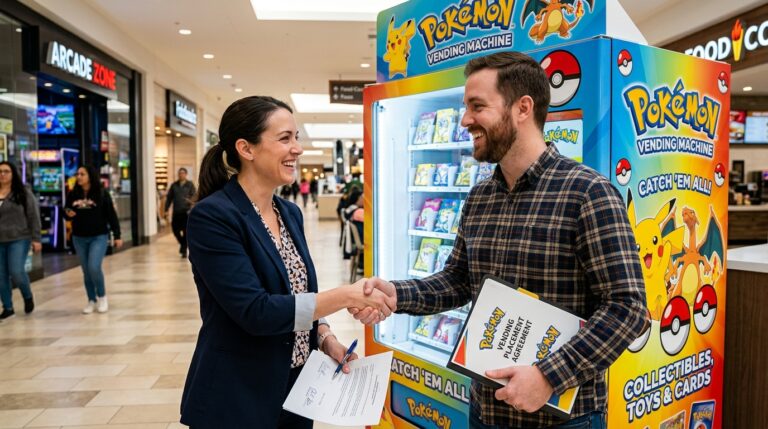
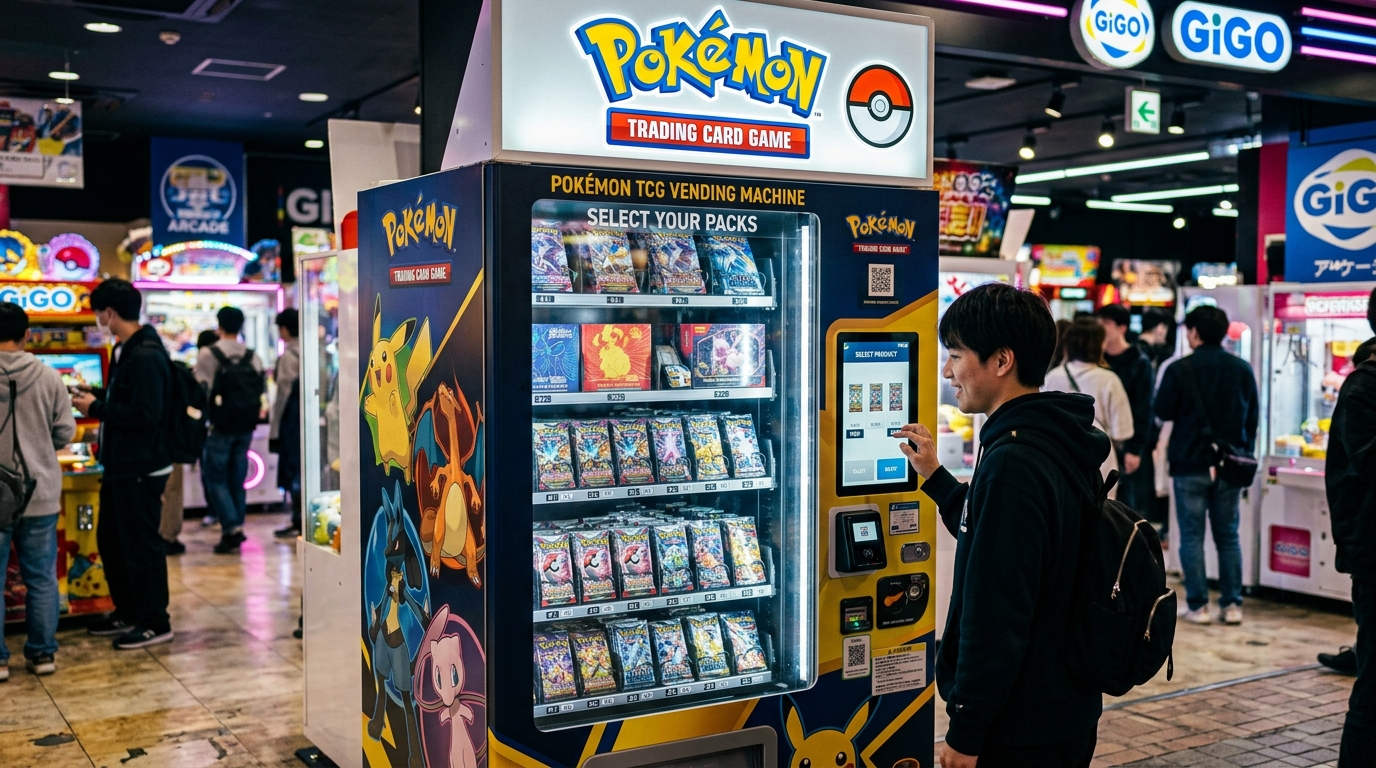
Printing the official Pokémon logo, its distinctive typeface, or character artwork across the machine’s exterior goes beyond identifying the product and functions as brand-level marketing, which requires a license. This is true even if every card inside the machine is authentic, because the infringement concern attaches to the unauthorized use of the mark itself, not to the legitimacy of the inventory.
Implying Official Partnership or Endorsement
Language or imagery suggesting a machine is “officially licensed by Pokémon” or affiliated with The Pokémon Company creates a false endorsement claim if no such relationship exists. This applies to marketing copy, social media promotion, and physical signage equally, since the legal concern is consumer confusion about sponsorship, not the specific medium used to create it.
Fair Use vs Infringement: Side-by-Side Comparison
| Use Case | Legal Status | Why |
|---|---|---|
| Plain text: “Pokémon TCG booster packs sold here” | Generally protected (nominative fair use) | Accurately describes genuine product, no branding implication |
| Official Pokémon logo printed on machine exterior | Infringement risk | Uses the mark as decoration/branding, not product description |
| Character artwork wrapped around the machine | Infringement risk | Unauthorized use of copyrighted character designs |
| “Officially licensed” claim without a license | Infringement risk (false endorsement) | Implies a sponsorship relationship that doesn’t exist |
| Generic trading card imagery, no logo or characters | Low risk | Doesn’t use protected marks or copyrighted artwork |
Safer Alternatives to Using the Official Logo
Operators who want strong visual branding without infringement risk have workable alternatives that don’t depend on the official logo at all.
Descriptive Text vs Logo Graphics
Clean, descriptive text such as “Trading Card Vending” or “TCG Booster Packs Available” communicates what the machine sells without touching protected trademarks. This approach also ages better than logo-based branding, since it isn’t affected by licensing disputes or brand guideline changes down the line.
Licensing Options
A formal license from The Pokémon Company is the only way to legally use the official logo and artwork as branding, and this route is typically reserved for large-scale commercial partnerships rather than individual vending operators. Understanding Pokémon vending machine pricing as a baseline helps operators evaluate whether pursuing formal licensing makes financial sense compared to simply using compliant, description-based branding instead.
Branding Your Machine Around Pokémon: Pros and Cons
- Descriptive, Non-Logo Branding
- Unauthorized Logo/Character Branding
Compliance Checklist for Machine Branding
Before finalizing machine signage or wraps, confirm branding uses descriptive text rather than the official logo or character artwork, avoid any language implying official partnership or licensing that doesn’t exist, and verify all inventory sold is authentic, since fair use protection only applies to genuine product in the first place.
- Text, Not Logos
- No Endorsement Claims
- Authentic Inventory Only
Where to Learn More About Vending Compliance
Trademark compliance is one part of a broader operational picture that includes licensing, tax registration, and restocking logistics; the Pokémon vending machine restock guide and how Pokémon vending machines work cover the operational side in detail. Operators researching how existing machines are branded and placed can also check an active location directory, along with guidance on how buyers search for machines near them and how to evaluate placement locations.
Trading Card Vending Machine Pokémon Card Vending Machine Large Trading Card Vending Machine
Frequently Asked Questions
Can I put the Pokémon logo on my vending machine?
Not without a license. The official logo is a registered trademark, and using it as decoration or branding on a machine without authorization creates infringement risk even if the products sold are genuine.
Who owns the Pokémon trademark?
The Pokémon name, logo, and character designs are owned by The Pokémon Company, with Nintendo and Game Freak holding related rights through their joint ownership structure.
What is nominative fair use in trademark law?
Nominative fair use allows a seller to reference a trademark by name to accurately describe genuine goods, without implying the trademark owner endorses or sponsors the seller’s business.
Can I say “Pokémon cards sold here” on my vending machine?
Yes, plain descriptive text identifying genuine product is generally protected under nominative fair use, as long as it doesn’t imply official partnership or reproduce the stylized logo.
Is it legal to call my vending machine “officially licensed” if it isn’t?
No. Claiming official licensing or partnership without an actual license agreement creates a false endorsement claim, separate from any trademark issue with the logo itself.
Can I use Pokémon character artwork on my machine if I’m selling real cards?
No. Character artwork is separately protected by copyright, and using it decoratively goes beyond nominative fair use even when the underlying product being sold is authentic.
How can I get an official license to use the Pokémon logo?
Licensing is typically negotiated directly with The Pokémon Company and is usually reserved for large-scale commercial partnerships rather than individual vending operators.
What’s a safer alternative to using the Pokémon logo on my machine?
Descriptive text such as “Trading Card Vending” or “TCG Booster Packs Available” communicates what the machine sells without touching protected trademarks or artwork.
Does selling authentic Pokémon cards protect me from trademark issues?
Selling authentic product is required for nominative fair use to apply, but it doesn’t automatically protect unauthorized use of the logo or artwork as machine branding. The two issues are related but separate.
What happens if I get a cease-and-desist for using the Pokémon logo?
A cease-and-desist typically demands you stop the unauthorized use immediately. Consulting a trademark attorney promptly and complying with a legitimate request is the safest next step rather than ignoring the notice.