Can You Legally Sell Pokémon in Vending Machines? What the Law Says
Yes, selling Pokémon cards through a vending machine is legal in the United States when the operator sells authentic, officially licensed product and complies with standard vending business regulations, including business licensing, sales tax collection, and local vending permits. The legal risk isn’t in the vending format itself; it’s in counterfeit inventory, missing tax registration, or skipping local permit requirements that apply to any vending business. This guide breaks down exactly what compliance looks like, where the legal gray areas actually are, and what to check before launching a machine.
Not legal advice. This article explains general regulatory concepts that commonly apply to vending and trading card retail in the United States. Laws vary by state, county, and city, and some areas covered here (particularly around randomized product packaging) are still evolving. Confirm requirements with a business attorney and your local licensing authority before launching a machine.
Is Selling Pokémon Cards Through a Vending Machine Legal?
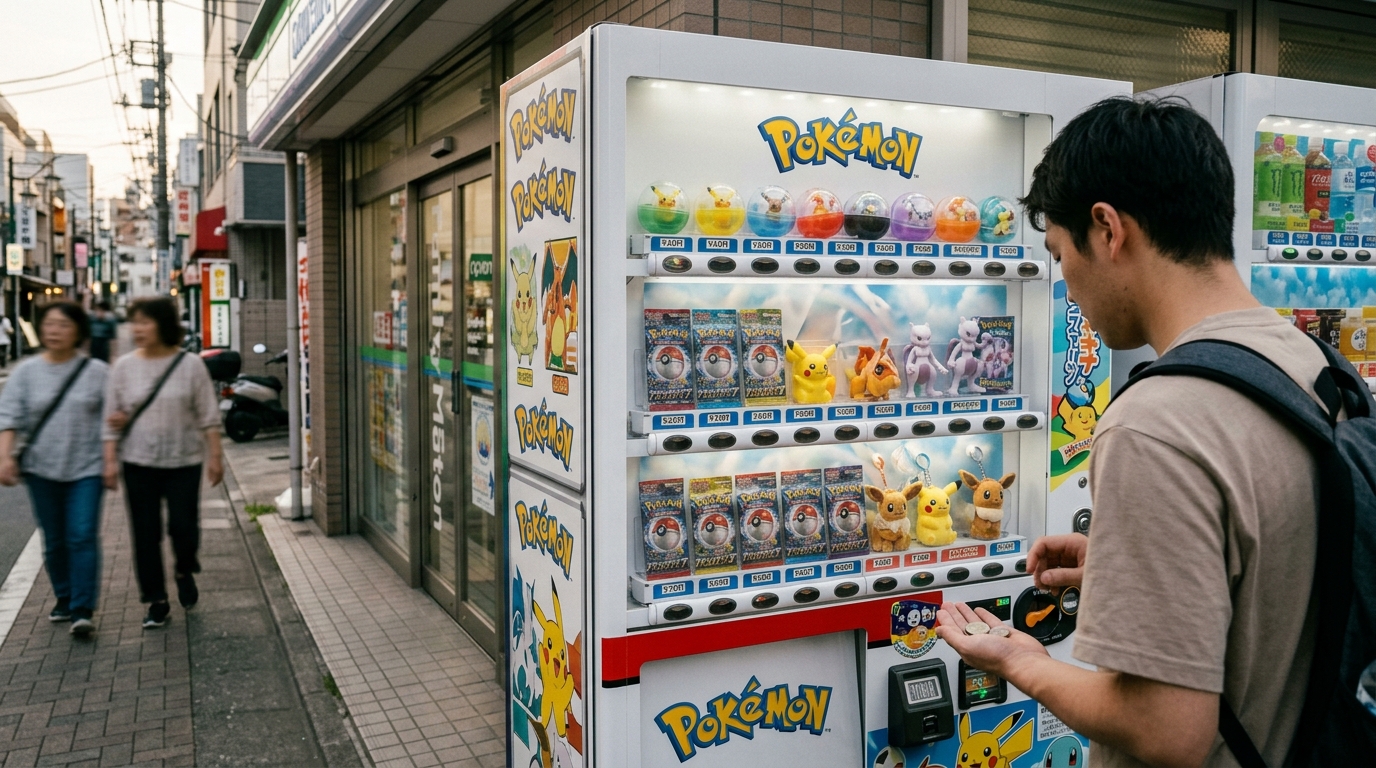
Selling Pokémon cards via vending machine is legal because trading cards are ordinary retail merchandise, not a regulated or age-restricted product category like alcohol or tobacco. The activity falls under general vending and retail business law rather than any Pokémon-specific statute, which means the compliance burden is the same one any vending operator already carries: licensing, tax, and location agreements. Understanding what Pokémon vending machines are helps frame why they’re treated as standard retail equipment under most local vending ordinances rather than a novel or restricted category.
Legal Requirements for Operating a Pokémon Vending Machine
Three compliance areas apply almost universally across U.S. jurisdictions, regardless of what product a vending machine dispenses.
Business Licensing and Vending Permits
Most cities and counties require a general business license plus a separate vending machine permit or decal for each unit in operation. Requirements differ significantly by jurisdiction, so an operator running machines across multiple cities may need a distinct permit in each location rather than a single statewide registration. Understanding how Pokémon vending machines work at the operational level makes it easier to map which licensing category a machine falls under when applying locally.
Sales Tax Collection and Remittance
Vended goods are taxable retail sales in the vast majority of states, meaning an operator must register for a sales tax permit and remit collected tax on schedule. Some states apply special vending machine tax rules, such as calculating tax as if included in the sale price rather than added at checkout, which changes how an operator prices inventory to stay compliant. This directly affects margin calculations covered in the Pokémon vending machine pricing guide, since tax treatment varies by state and shifts effective profit per unit sold.
Location and Property Agreements
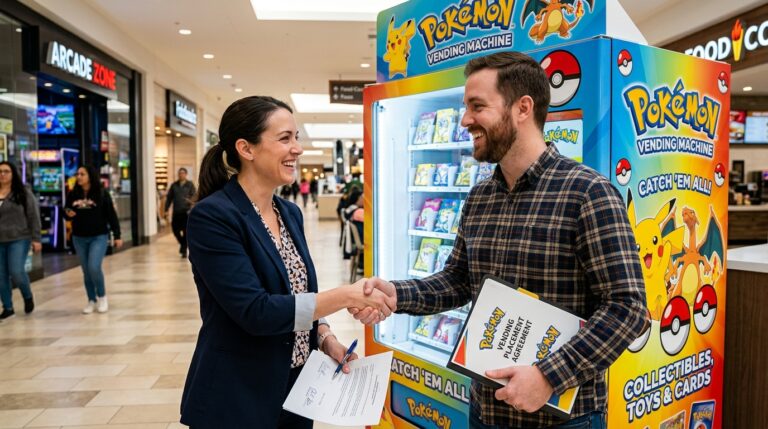
A vending machine placed on someone else’s property requires a placement or lease agreement regardless of what it sells, and operating without one can constitute trespass or a lease violation even if every other license is in order. This agreement typically also governs liability, insurance requirements, and who’s responsible for utilities or damage, making it a legal document as much as a business one.
Authentic Product vs Counterfeit: Why It Matters Legally
Selling counterfeit Pokémon product exposes an operator to trademark and copyright infringement liability under federal law, separate from any vending-specific regulation. The Pokémon Company and its licensing partners actively enforce IP rights against counterfeit sellers, and vending as a sales channel doesn’t provide any legal shield from that enforcement.
Authentic vs Counterfeit Product: Legal Exposure Compared
Authentic, Licensed Product
No trademark or copyright exposure. Sourced through legitimate distribution, which also protects buyer trust and repeat business. Standard consumer protection rules apply, same as any retail product.
Counterfeit or Unlicensed Product
Federal trademark and copyright infringement liability. Risk of cease-and-desist action, seizure, or civil suit from rights holders. Reputational damage that affects every machine an operator runs, not just one location.
Sourcing sealed, authentic inventory such as Pokémon booster boxes and bundles through verified channels is the most direct way an operator avoids this exposure entirely, since product authenticity is established at the point of purchase rather than left to chance.
Are Randomized Card Packs Considered Gambling?
Physical Pokémon booster packs have not been broadly classified as gambling products under current U.S. law, because the buyer receives a tangible, resellable item of guaranteed base value regardless of which specific cards they get. This distinguishes physical card packs from purely digital loot boxes, where some jurisdictions have introduced or debated specific regulation due to the absence of any physical resale value.
How This Differs From Loot Box Regulations
Digital loot box debates center on the fact that a losing outcome has zero resale value, which is the core trigger for gambling-adjacent scrutiny in several international jurisdictions. A physical trading card pack always delivers a physical product that retains some market value, even if it’s not the specific chase card a buyer wanted, which is the primary legal distinction regulators and courts have drawn so far. This is an evolving area of consumer protection law, and an operator should treat it as a topic to monitor rather than a settled question closed to future regulation.
State and Local Variations to Watch For
| Compliance Area | Typical Variation | Why It Matters |
|---|---|---|
| Vending machine permits | City or county-issued, often per-machine | Operating unlicensed machines risks fines or forced removal |
| Sales tax treatment | Some states tax vended goods differently than counter retail | Affects pricing and margin calculations per unit |
| Placement/lease terms | Set by property owner, not government, but legally binding | Non-compliance can trigger removal or liability disputes |
| Consumer protection rules on randomized packaging | Limited but evolving in some states and countries | Worth monitoring even though physical packs aren’t currently classified as gambling in most U.S. jurisdictions |
Compliance Checklist Before Launching a Machine
Before placing a machine, confirm the business license and vending permit are active for the specific city or county, register for a sales tax permit and understand the applicable vending tax treatment, and finalize a written placement agreement with the property owner covering liability and access terms. Sourcing verified, authentic inventory closes the remaining major legal exposure point, since licensing and tax compliance mean little if the product itself creates IP liability.
- License & Permit
- Tax Registration
- Verified Inventory
Common Legal Mistakes New Operators Make
New operators most often skip the per-machine permit requirement, assuming a single business license covers every unit across multiple locations, which isn’t the case in most jurisdictions. A second common mistake is placing a machine without a written agreement, relying instead on a verbal arrangement with a venue owner that offers no legal protection if the relationship changes. Sourcing inventory from unverified resellers to cut costs is the third major risk, since it’s the fastest way to introduce counterfeit product liability into an otherwise compliant operation.
Where to Learn More and Get Compliant Equipment
Understanding restocking cadence also ties into compliance, since consistent, documented restocking supports accurate sales tax reporting over time; the Pokémon vending machine restock guide covers how often machines typically need refilling based on location traffic. Operators researching where competitors already run compliant machines can also reference an active location directory, along with guidance on how buyers search for machines near them and how to evaluate placement locations, both useful for understanding how existing operators structure legitimate, licensed placements.
Trading Card Vending Machine Pokémon Card Vending Machine Large Trading Card Vending Machine
Frequently Asked Questions
Is it legal to sell Pokémon cards through a vending machine?
Yes. Trading cards are ordinary retail merchandise, not a restricted product category, so selling them through a vending machine is legal as long as the operator holds proper business licensing, collects sales tax, and sources authentic product. This is not legal advice — confirm specifics with a local attorney.
Do I need a special license to sell Pokémon cards in a vending machine?
No Pokémon-specific license exists. Operators need the same general business license and vending machine permit required for any vending business in their city or county.
Do vending machine sales of trading cards require sales tax collection?
In most U.S. states, yes. Vended goods are generally taxable retail sales, though some states apply special rules for how tax is calculated on vending transactions.
Is selling counterfeit Pokémon cards through a vending machine illegal?
Yes. Selling counterfeit or unlicensed product exposes an operator to federal trademark and copyright infringement liability, regardless of the sales channel used.
Are randomized Pokémon booster packs considered gambling?
Physical booster packs are not broadly classified as gambling under current U.S. law, since buyers always receive a tangible product with resale value. This differs from digital loot box debates and remains an evolving area worth monitoring.
Do I need permission from a property owner to place a vending machine?
Yes. A written placement or lease agreement with the property owner is required regardless of what the machine sells, and operating without one can constitute trespass or a lease violation.
Does every vending machine need its own permit?
In most jurisdictions, yes. A single business license typically doesn’t cover multiple machines automatically — many cities and counties require a separate permit or decal per unit.
Can Pokémon vending machine laws vary by state?
Yes. Licensing requirements, vending tax treatment, and permit structures differ by state, county, and city, so an operator running machines in multiple locations may face different requirements in each.
How do I make sure my Pokémon card inventory is legally sourced?
Purchase sealed product only through verified, authorized distribution channels rather than unverified resellers. This confirms authenticity at the point of purchase and removes the largest legal exposure point for an operator.
Should I consult a lawyer before starting a Pokémon vending machine business?
Yes. While the general compliance framework is well established, licensing and tax rules vary enough by location that a local business attorney can confirm exact requirements before launch.