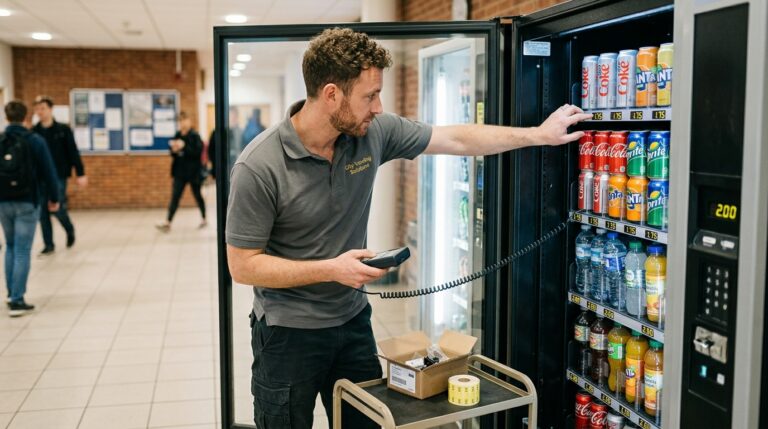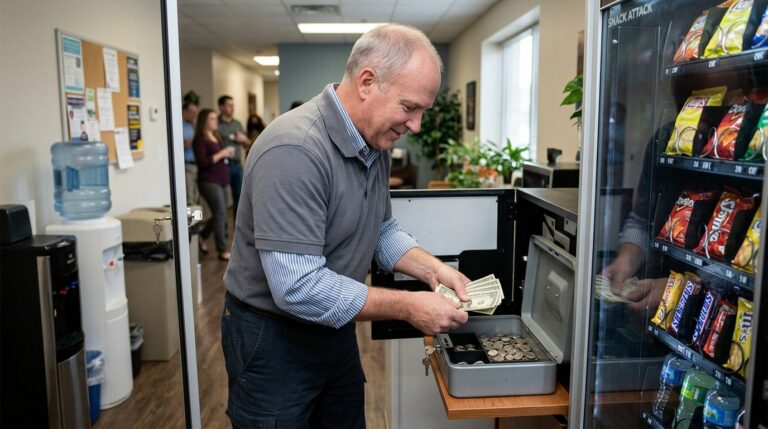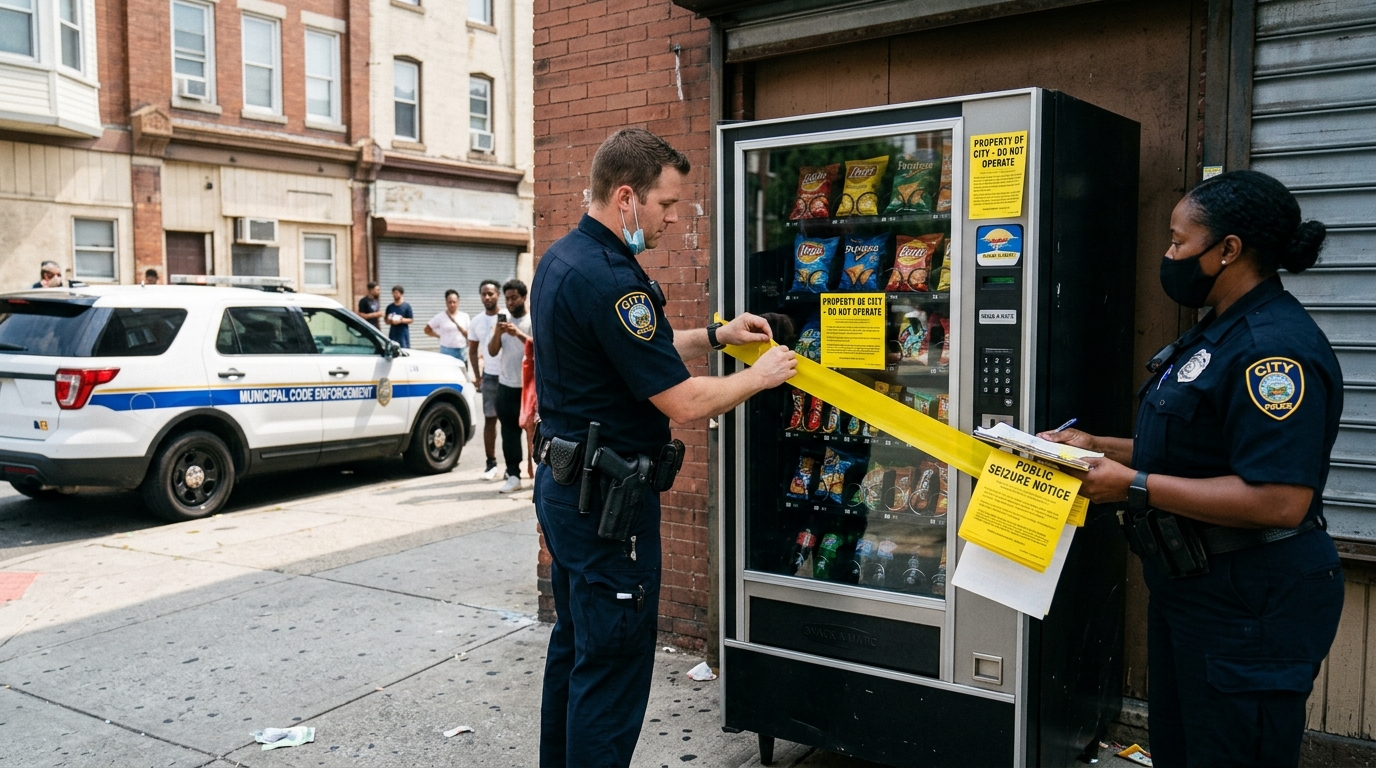
Do You Need a License to Operate a Smart Combo Vending Machine?
Yes, operating a smart combo vending machine generally requires a general business license, a vending machine permit for each unit, and sales tax registration, because vending is treated as a standard retail activity under most city and county regulations. Machines that dispense food or beverages often add a fourth requirement: a health department permit, since perishable and refrigerated items fall under food safety oversight that non-food vending doesn’t trigger. This guide breaks down exactly which licenses apply, how they differ by state, and what to confirm before launching a machine.
Not legal advice. Licensing requirements vary significantly by state, county, and city. This article explains general regulatory categories that commonly apply to vending businesses in the United States. Confirm exact requirements with your local licensing authority or a business attorney before launch.
Licensing Requirements for Smart Combo Vending Machines
A smart combo vending machine requires the same foundational licenses any vending business needs: a general business license, a per-machine vending permit, and sales tax registration. Because these machines typically dispense both snacks and refrigerated beverages, they usually also require a local health department permit, since food and beverage vending falls under health code oversight that purely non-food vending, like a trading card machine, doesn’t trigger.
What Is a Smart Combo Vending Machine?
A smart combo vending machine is a connected unit that dispenses multiple product categories, most often snacks and drinks, through independently managed compartments and cashless payment technology. Understanding what a smart combo vending machine is clarifies why its licensing profile differs from single-category machines: dispensing both refrigerated and shelf-stable products in one unit means it’s evaluated against food-vending regulations even if only part of its inventory is perishable.
Types of Licenses and Permits Operators Typically Need
Three licensing categories apply almost universally to vending operators in the United States, regardless of what specific products a machine sells.
General Business License
Most cities and counties require a general business license to legally operate any commercial activity, vending included, within their jurisdiction. This is typically the first registration step and is usually tied to the operator’s business entity rather than any individual machine.
Vending Machine Permit/Decal
Beyond the general business license, most jurisdictions require a separate permit or physical decal for each individual vending machine in operation. This means an operator running multiple machines across different addresses needs a distinct permit per unit, not a single blanket registration covering the entire fleet.
Sales Tax Registration
Vended goods are taxable retail sales in most states, so operators must register for a sales tax permit and remit collected tax on a regular filing schedule. Some states apply vending-specific tax calculation rules that differ from standard counter retail, which affects how an operator prices products to stay compliant.
Does Product Type Affect Licensing Requirements?
Product type is the single biggest factor separating a straightforward vending license process from one that also requires health department involvement.
Food and Beverage Health Permits
Machines dispensing perishable or refrigerated food items typically require a health department permit and are subject to periodic inspections covering refrigeration temperatures, cleanliness, and food handling compliance. This requirement stems directly from the machine’s product mix, not its technology: a smart combo unit’s refrigerated beverage or snack compartment is exactly the kind of perishable storage health codes are designed to regulate. Understanding how a smart combo vending machine works, particularly its independently controlled refrigeration zones, helps explain why inspectors evaluate temperature control as a core compliance point during health permit review.
State and Local Variation
| License Type | Typical Variation | Why It Matters |
|---|---|---|
| Vending machine permit | City or county-issued, often per-machine | Operating without it risks fines or forced removal |
| Sales tax registration | Vending tax treatment varies by state | Affects pricing and compliance obligations |
| Health department permit | Required in most jurisdictions for food/beverage machines; inspection frequency varies | Non-compliance can trigger fines or machine shutdown |
| Business license renewal | Annual or biennial depending on jurisdiction | Lapsed licenses can halt legal operation mid-year |
Licensing Requirements vs Placement Agreements
| Aspect | Government Licensing | Placement Agreement |
|---|---|---|
| Issued by | City, county, or state government | Property or venue owner |
| Legal basis | Business and health regulations | Private contract law |
| Required for | Legal operation of the vending business itself | Legal presence on a specific property |
| Consequence of skipping | Fines, forced closure, penalties | Trespass or lease violation, forced removal |
These two requirements are independent of each other; being fully licensed by the government doesn’t grant permission to place a machine on private property, and a signed venue agreement doesn’t substitute for required government permits. A clear smart combo vending machine placement agreement should be finalized alongside, not instead of, standard licensing.
Steps to Get Licensed Before Launching a Machine
Start by registering the business entity and obtaining a general business license in the city or county where the machine will operate, then apply for a vending machine permit specific to that unit. Next, register for a sales tax permit and confirm whether the state applies vending-specific tax calculation rules. If the machine dispenses food or beverages, contact the local health department to schedule the required inspection before the unit goes live at a location. Site selection should happen in parallel with this process; reviewing established criteria for the best locations for smart combo vending machines helps confirm a prospective site is worth the licensing effort before committing.
- Register the Business
- Permit Each Machine
- Schedule Health Inspection
Common Licensing Mistakes New Operators Make
New operators most often assume one business license covers every machine across multiple locations, which isn’t the case in most jurisdictions requiring per-machine permits. Skipping the health department step is another common error specific to food and beverage combo machines, since operators sometimes assume vending equipment is exempt from the same inspection standards applied to restaurants, which it typically isn’t for perishable product. Branding decisions can also intersect with compliance in ways operators overlook; reviewing this guide to custom wrap and branding on vending machines alongside licensing steps helps confirm exterior branding doesn’t obscure required permit decals or inspection signage, which some jurisdictions mandate stay visible.
Operating Fully Licensed vs Skipping Steps
Fully Licensed Operation
No risk of fines, forced removal, or shutdown. Builds trust with venue owners evaluating a placement proposal. Health-permitted machines pass routine inspections without disruption to sales.
Skipping or Delaying Licensing
Exposure to fines and potential forced machine removal. Venue owners may terminate placement agreements over compliance concerns. Health code violations on food-vending units carry added liability risk.
Where to Learn More
Licensing is one piece of a broader operational picture that includes site selection, branding, and placement agreements, each covered in more depth elsewhere in this series. Confirming every requirement before installation, rather than after a machine is already generating complaints or inspection issues, remains the most reliable way to avoid disruption to a new deployment.
FAQ
Do I need a license to operate a smart combo vending machine?
Yes, most jurisdictions require a general business license, a per-machine vending permit, and sales tax registration. Machines dispensing food or beverages typically also need a local health department permit. This is not legal advice — confirm exact requirements locally.
Does every vending machine need its own permit?
In most jurisdictions, yes. A general business license typically doesn’t cover multiple machines automatically — a separate permit or decal is usually required per unit.
Why do smart combo vending machines need a health department permit?
Because they typically dispense refrigerated or perishable food and beverage items, which fall under health code oversight covering temperature control, cleanliness, and food handling compliance.
Is sales tax required on smart combo vending machine sales?
In most U.S. states, yes. Vended goods are generally taxable retail sales, though some states apply special vending-specific tax calculation rules.
Does a placement agreement replace the need for licensing?
No. A placement agreement with a property owner grants permission to operate on that specific site, but it’s separate from government-issued business, vending, and health licenses, which are still required independently.
Do licensing requirements vary by state for vending machines?
Yes, permit structures, health inspection frequency, and vending tax treatment all differ by state, county, and city, so requirements in one location may not match another.
How often are food-vending machines inspected?
Inspection frequency varies by local health department, but most jurisdictions conduct periodic inspections covering refrigeration temperatures and cleanliness for machines dispensing perishable products.
What happens if I operate a vending machine without the required permits?
Operating without proper permits can result in fines and forced removal of the machine, and food-vending units without a health permit may face additional penalties tied to health code violations.
Can branding or a wrap cover required permit decals on a vending machine?
It shouldn’t. Some jurisdictions require permit decals and inspection signage to remain visible, so wrap design needs to account for this before installation.
When should I apply for licenses relative to choosing a machine location?
Licensing and site selection should happen in parallel, since confirming a location is viable before completing the full permit and health inspection process avoids wasted licensing effort on a site that doesn’t work out.