Smart Combo Vending Machine Placement Agreement: What to Include and Why
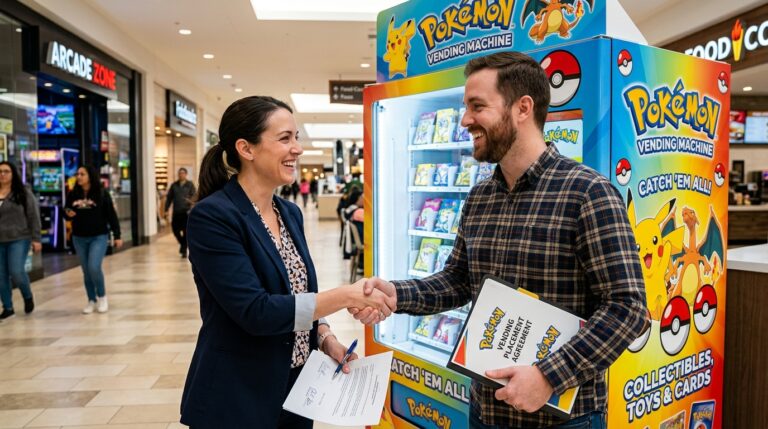
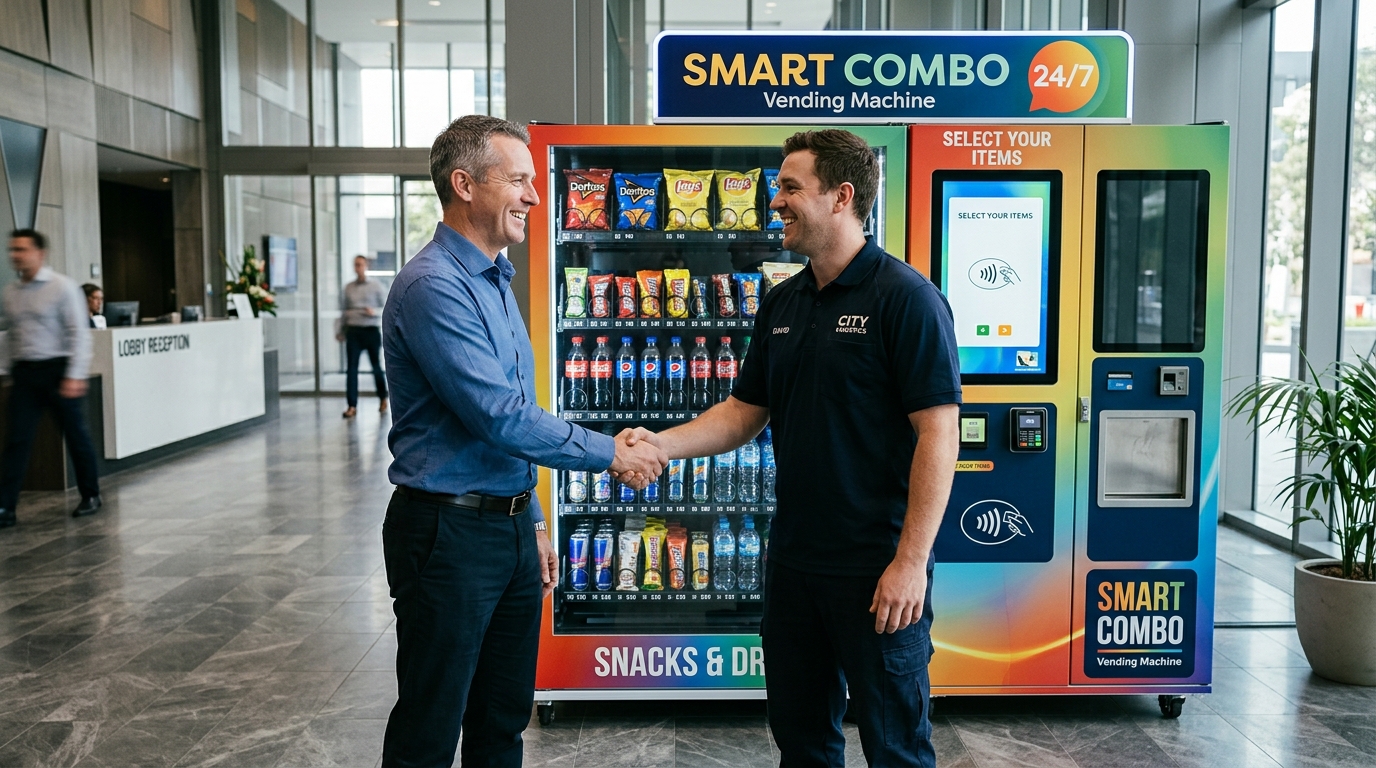
A smart combo vending machine placement agreement is a written contract between an operator and a venue owner that governs revenue terms, access rights, liability, and maintenance responsibilities for a machine installed on the venue’s property. It exists because a handshake arrangement offers no legal protection to either party if the relationship changes, a machine gets damaged, or a dispute arises over who’s responsible for what. This guide breaks down every clause a solid agreement should include and the red flags that signal a bad deal before you sign one.
Not legal advice. This article explains common clauses and structures found in vending placement agreements for general education. Contract terms should be reviewed by a business attorney before signing, since specific language and enforceability vary by state.
What Is a Vending Machine Placement Agreement?
A vending machine placement agreement is the contract that grants a vending operator legal permission to install and service a machine on someone else’s property, in exchange for a revenue share, flat fee, or other agreed compensation to the venue. Understanding what a smart combo vending machine is clarifies why these agreements tend to be more detailed than a single-category machine’s contract, since combo units combine refrigeration, multiple product categories, and sometimes an ad display, each adding its own maintenance and liability considerations.
Why a Written Agreement Matters
A verbal arrangement offers no enforceable protection if the venue changes management, disputes revenue calculations, or wants the machine removed without notice. A written agreement fixes the terms both parties agreed to, which prevents the relationship from being renegotiated informally every time circumstances shift. This becomes especially relevant once a machine is already installed and generating consistent revenue, since removal on short notice directly costs the operator lost income and relocation expense.
Key Clauses Every Placement Agreement Should Include
A complete agreement addresses compensation, duration, access, liability, and maintenance, since gaps in any one of these areas tend to surface as disputes later, usually at the least convenient moment for the party left unprotected.
Revenue Share or Flat Fee Terms
Most agreements structure compensation as either a percentage of gross sales, commonly in the 10 to 20 percent range, or a fixed monthly fee paid regardless of sales volume. Revenue share aligns incentives between operator and venue but requires transparent sales reporting, while a flat fee simplifies accounting at the cost of the venue not benefiting directly from strong sales months.
Term Length and Termination Rights
Agreements typically run one to three years with an automatic renewal clause, paired with a termination notice period, often 30 to 60 days, that either party must honor before ending the arrangement. Short notice periods protect operators from losing a productive location abruptly, while giving venues a reasonable exit if the machine underperforms expectations.
Access and Restocking Rights
The agreement should specify when and how the operator can access the machine for restocking and servicing, including whether that requires advance notice, security check-in, or specific business hours. Vague or overly restrictive access terms directly undermine restock reliability, which affects sales regardless of how strong the location’s foot traffic is.
Liability and Insurance
A liability clause allocates responsibility if the machine causes property damage or injury, and typically requires the operator to carry commercial liability insurance naming the venue as an additional insured party. This protects the venue from being solely exposed to claims arising from equipment they didn’t install or maintain directly.
Maintenance Responsibilities
The agreement should clearly separate what the operator maintains, generally the machine itself, from what the venue is responsible for, typically the surrounding space, power supply, and general site conditions. Understanding how a smart combo vending machine works helps clarify this split further, since refrigeration components, payment terminals, and telemetry hardware all fall squarely under operator responsibility rather than the venue’s.
Exclusivity Clauses
Some agreements include an exclusivity clause preventing the venue from hosting a competing vending machine during the contract term, protecting the operator’s sales volume from being split by a second unit in the same location.
Placement Agreement vs Standard Lease
| Aspect | Placement Agreement | Standard Commercial Lease |
|---|---|---|
| Space transferred | No, operator retains equipment ownership only | Yes, tenant gains exclusive use of space |
| Compensation structure | Revenue share or flat fee | Fixed rent, typically |
| Typical term | 1–3 years | Often 3–10 years |
| Maintenance scope | Limited to the machine itself | Broader, often includes the leased space |
Common Negotiation Points Between Operators and Venues
Revenue share percentage is usually the first negotiation point, with venues in high-traffic locations able to command a higher share given the guaranteed exposure they provide. Termination notice length is a close second, since operators want enough runway to relocate a machine if a venue exits, while venues want the flexibility to remove underperforming equipment without a long lock-in period. Exclusivity terms can also become a sticking point if a venue already hosts other vending equipment from a different operator.
Branding and Signage Clauses
Agreements should specify whether the operator can apply custom branding or wraps to the machine’s exterior and whether the venue retains approval rights over the design. This guide to custom wrap and branding on vending machines covers what’s typically involved in a wrap application, which is useful context when negotiating this clause, since some venues have their own signage policies that a machine’s branding needs to respect.
Legal Compliance Referenced in the Agreement
A well-drafted agreement typically references the operator’s responsibility to maintain all required business licenses, vending permits, and health inspections independently of the placement contract itself, confirming the venue isn’t assuming any regulatory liability by hosting the machine. A broader overview of the law for smart combo vending machines covers these underlying compliance requirements in more depth, which the placement agreement should reference rather than attempt to replace.
Red Flags to Watch For Before Signing
An agreement with no defined termination notice period exposes an operator to abrupt removal with no recourse, regardless of how well the machine is performing. Vague revenue reporting terms, without a defined reporting cadence or audit right, make it difficult to verify a venue is receiving accurate payment under a revenue-share structure. An agreement silent on liability and insurance leaves both parties exposed if a dispute arises after an incident, which is exactly the scenario a written contract is meant to prevent in the first place.
- Missing Termination Terms
- Vague Revenue Reporting
- Silent Liability Clause
Sample Agreement Structure
| Section | Purpose |
|---|---|
| Parties and property description | Identifies the operator, venue, and exact installation location |
| Compensation terms | Defines revenue share percentage or flat fee and payment schedule |
| Term and renewal | States contract length, renewal conditions, and termination notice period |
| Access and restocking | Specifies allowed access hours and any check-in requirements |
| Maintenance and liability | Allocates responsibility for equipment upkeep, insurance, and damage claims |
| Branding and signage | Covers wrap or display customization and any venue approval rights |
| Compliance reference | Confirms operator responsibility for licenses, permits, and inspections |
Site selection should happen before finalizing this structure, since the terms worth negotiating often depend on how strong the location actually is; reviewing established criteria for the best locations for smart combo vending machines helps confirm a site is worth pursuing before investing time in contract negotiation.
Where to Learn More
A placement agreement works alongside, not instead of, standard business licensing and health compliance, and a detailed breakdown of that specific contract is available directly at this smart combo vending machine placement agreement guide for readers who want a deeper structural walkthrough.
FAQ
What is a smart combo vending machine placement agreement?
It’s a written contract between a vending operator and a venue owner that governs revenue terms, access rights, liability, and maintenance responsibilities for a machine installed on the venue’s property.
What percentage of sales do venues typically get in a revenue-share agreement?
Revenue share is commonly in the 10 to 20 percent range, though the exact figure depends on location traffic and negotiating leverage between the operator and venue.
How long does a typical vending machine placement agreement last?
Most agreements run one to three years, often with an automatic renewal clause paired with a defined termination notice period.
Who is responsible for maintaining the vending machine under a placement agreement?
The operator is typically responsible for the machine itself, including refrigeration, payment terminals, and telemetry hardware, while the venue is responsible for the surrounding space and power supply.
Does a placement agreement require liability insurance?
Most agreements require the operator to carry commercial liability insurance naming the venue as an additional insured party, protecting the venue from exposure to claims tied to the equipment.
What is an exclusivity clause in a vending placement agreement?
An exclusivity clause prevents the venue from hosting a competing vending machine during the contract term, protecting the operator’s sales volume from being split by a second unit.
How is a placement agreement different from a commercial lease?
A placement agreement doesn’t transfer exclusive use of space the way a lease does; the operator retains ownership of the equipment and typically pays through revenue share or a flat fee rather than fixed rent.
Can a venue reject the branding or wrap design on a vending machine?
Yes, agreements often give the venue approval rights over branding or signage, since some venues maintain their own visual standards for equipment placed on their property.
What termination notice period is standard for a placement agreement?
A 30 to 60 day notice period is common, giving both parties reasonable time to plan for the machine’s removal or the arrangement’s end.
Does the placement agreement cover business licenses and permits?
A well-drafted agreement references the operator’s independent responsibility to maintain required licenses and permits, but it doesn’t replace those government-issued requirements.