Legal & Setup | Importing Equipment | By the VAdviced Team | September 2026
Somebody comes back from Tokyo or Milan having seen a vending machine that does something no American machine does, works out that buying one direct from the manufacturer costs a fraction of the domestic price, and starts looking at shipping quotes. It is one of the most common conversations we have with people entering this industry.
The shipping quote is the cheapest part and the least of the problems. What almost nobody realises is that the moment one of those vending machines crosses the border with your name on the paperwork, federal law stops treating you as a buyer.
It starts treating you as the manufacturer. With every obligation that word carries.
General information, not legal advice. Import, energy, safety and environmental requirements change and interact in ways that depend on your specific equipment. Use this to understand the shape of the obligations, then get advice before committing to a purchase.
Where this comes from: setting up vending businesses legally is what we do, and the import question comes up constantly because the price difference on paper looks so attractive. This is what sits behind it.
The Rule Almost Nobody Knows About
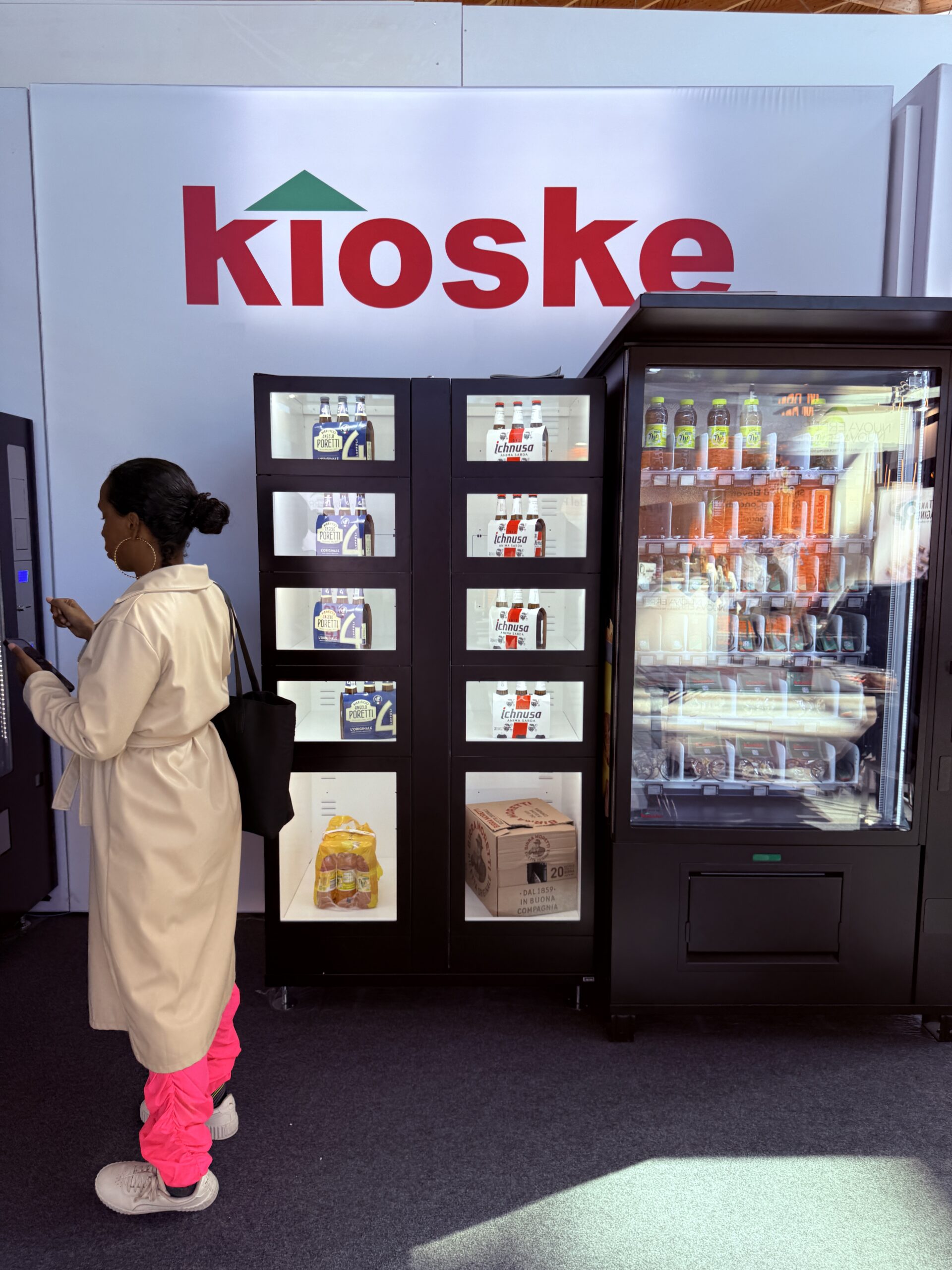
Refrigerated beverage vending machines are federally regulated equipment in the United States, and have been for well over a decade.
Under the Energy Policy and Conservation Act, the Department of Energy sets binding energy conservation standards for what the regulations call a refrigerated bottled or canned beverage vending machine, defined as a commercial refrigerator that cools bottled or canned beverages and dispenses them on payment. The standards sit in Title 10 of the Code of Federal Regulations, Part 431, Subpart Q, and they are expressed as a maximum daily energy consumption relative to the machine’s refrigerated volume.
There are defined equipment classes, currently Class A, Class B, Combination A and Combination B, with a combination machine being one containing both refrigerated and non refrigerated compartments. Compliance has been mandatory since 2012, with amended standards phased in since.
Here is the part that matters to anybody thinking about importing. The standards apply to equipment manufactured in or imported into the United States, and DOE’s certification requirements state plainly that manufacturers, including importers, must certify compliance. That is not a technicality. It means an importer carries the same testing and certification duty as the factory that built the machine.
What that obligation actually looks like: the machine has to be tested using DOE’s prescribed test procedure, the results have to demonstrate compliance with the standard for its equipment class, and a certification report has to be filed with the Department before the equipment is distributed in commerce. For one imported machine, the cost of doing that properly will frequently exceed the saving that made importing look attractive in the first place.
This is precisely why domestic suppliers exist and why equipment across a range like the beverage vending machines at VMFS USA arrives already carrying that compliance rather than handing it to you as homework.
Electrical Safety Is Not Optional, Even Though It Is Not Federal
There is no single federal law requiring a vending machine to carry a safety listing mark. There is, however, an entire ecosystem that behaves as though there is, and the practical result is the same.
- Local electrical inspectors. Many jurisdictions adopt codes requiring that equipment connected to building systems be listed by a recognised testing laboratory. An unlisted machine can simply be refused.
- Insurers. Read your policy carefully. A fire traced to unlisted equipment is a conversation you do not want to have with an adjuster, and coverage can be affected.
- Property owners. Institutional sites in particular, meaning schools, hospitals, universities and large corporate landlords, routinely require listing marks before anything is plugged into their building. That rules out a large share of the best placements, and it is one of the first things our partners at VPlaced check when they put an operator in front of an institutional site.
- Your own liability position. If something goes wrong with equipment you imported and nobody certified, you are the responsible party and the absence of a listing will be the first thing raised.
A European or Japanese conformity mark is not a substitute. Those marks demonstrate compliance with those regions’ requirements, not with the standards a North American inspector or insurer expects. Getting a machine listed here is a testing process with real cost and lead time, and it is per model rather than something you do once.
The Refrigerant Problem
This one has become considerably more important in recent years and it catches importers badly, because refrigerant rules differ sharply between regions and are moving quickly in all of them.
Three things to establish before any machine ships:
- Which refrigerant the machine actually uses. Ask for it in writing rather than assuming, because it is frequently not on the marketing material.
- Whether that refrigerant is acceptable for this equipment category here. The EPA restricts which substances may be used in which applications, and acceptability is specific to the end use rather than general.
- How the ongoing phasedown affects it. Federal law now requires a stepped reduction in production and consumption of hydrofluorocarbons, with sector specific restrictions following behind. Equipment that was compliant in its home market a few years ago may sit awkwardly against current or upcoming US rules.
Domestic suppliers deal with this as a matter of course, which is why anything in a refrigerated vending range sold here arrives with the question already answered. Natural refrigerants complicate this further rather than simplifying it. Hydrocarbon refrigerants are widely used in European and Asian retail refrigeration and are permitted here in various applications, but subject to charge limits and construction requirements that differ from those abroad. A machine built to a foreign charge allowance is not automatically acceptable here.
Everything Else That Has to Be Right
| Requirement | What it means for an imported machine |
|---|---|
| Radio emissions | Modern machines contain screens, controllers and wireless modules, all of which fall under federal rules on electronic emissions and require appropriate authorisation |
| Payment systems | Card acceptance means certification against the payment schemes operating here, plus currency handling built for US coins and notes rather than another country’s |
| Food contact surfaces | Any surface touching food or drink has to meet US requirements for food contact materials, which is a separate question from the machine’s general construction |
| Accessibility | Machines at places of public accommodation raise reach range and operable parts considerations that foreign designs were never drawn against |
| Customs entry | Correct tariff classification, duties, a customs bond and an importer of record, with misclassification carrying penalties of its own |
| State licensing | Vending licences, per machine decals and weights and measures requirements apply regardless of where the machine was built |
Any single row on that table is manageable. The difficulty is that they are cumulative, each has its own cost and timeline, and several of them are per model rather than per machine, which means the economics only begin to work across a meaningful volume. The first row catches people particularly often, because modern touch screen machines contain far more regulated electronics than the mechanical cabinets people picture when they think of vending.
You Inherit the Liability, Permanently
This is the part we would most want somebody to think about before wiring money to a factory overseas, because it does not end when the machine is installed.
When you buy from a domestic supplier and something goes wrong, there is an American company in the chain with a warranty obligation, a spare parts inventory, a service network and insurance. When you import directly, that chain is considerably shorter, and in practical terms it frequently ends with you.
- Product liability. A claim arising from imported equipment lands on the importer, and pursuing a foreign manufacturer across jurisdictions is a theoretical remedy rather than a practical one.
- Warranty in reality. A warranty from a factory on another continent is worth what it costs to enforce, which is usually more than the part.
- Spare parts. A proprietary component that fails means an international order and weeks of a dead machine at a good site, which is revenue lost and often the placement lost too. Domestically supplied equipment, including anything held as in stock units, comes with a parts chain that already exists.
- Service knowledge. Local technicians will not have seen the machine, documentation may not be in English, and diagnostic tools may not be available here.
- Insurance. Ask your broker specifically about imported, unlisted equipment before you buy. The answer is occasionally uncomfortable and always better known in advance.
That fourth point causes more real world pain than any of the regulatory items above. A compliance problem is a cost. A machine that cannot be repaired is a site you lose to somebody with a working machine.
The Grey Import Problem
A variation worth flagging, because it is increasingly common and the risk is easy to miss. Machines appear on marketplaces and auction sites described as imported, refurbished or ex demonstration, at prices that look extremely attractive against new domestic equipment.
The difficulty is that buying one does not transfer the compliance obligations to the seller. Ask, in writing, before any money moves:
- Who imported it originally, and was it certified then? If the machine entered the country without the required certifications, that does not become somebody else’s problem simply because it has changed hands.
- Is there a safety listing mark actually on the machine? Look at the data plate rather than taking a description at face value.
- Has the refrigerant been changed? Retrofitted units are common and a substitution can move a machine outside what is acceptable for the application.
- What is the model number, and can you find it certified anywhere? Federal energy certifications are a matter of public record and worth checking rather than assuming.
- Where do parts come from now? A refurbished foreign machine with no parts channel is a site waiting to fail.
The point is not that used equipment is a bad idea. It is that the price advantage on a grey import frequently reflects an obligation somebody skipped, and whoever is operating the machine when a question is asked is the one who answers it.
When Importing Does Make Sense
None of this means direct import is never the right answer. It means it is a manufacturing decision rather than a purchasing one, and it works under specific conditions.
- You are buying volume, not one machine. Certification costs are largely fixed per model, so they amortise across a fleet and are ruinous across a single unit.
- The manufacturer already sells into the US. If they hold current certifications and have a domestic parts and service arrangement, most of this article does not apply to you. Ask directly and ask for evidence.
- The format genuinely does not exist here. Sometimes a machine does something no domestic supplier offers, and that capability is worth the work. Establish that it truly is unavailable first, because specialty formats are more available domestically than people assume once you look at the specialty range.
- You have budgeted the compliance properly. Not hoped it would be fine. Priced testing, certification, listing, customs and a spares holding, then compared that total against a domestic purchase.
Run that comparison honestly and the domestic option wins far more often than the initial price difference suggests, which is why most operators who look seriously at importing end up buying from the VMFS USA shop instead and putting the saved effort into placements.
The Ordinary Setup Still Applies
Whatever machine you end up with, the business underneath it needs the same foundation.
- Business entity. An LLC or similar separating personal and business liability, which matters considerably more if you are importing and therefore carrying manufacturer level exposure.
- Sales tax registration and a resale certificate. Selling from a machine is a taxable retail sale in most states, and you will want to buy stock wholesale without paying tax twice.
- Vending licence and per machine decals. Required in many states and cities regardless of the machine’s origin.
- Food establishment permit wherever you sell beyond shelf stable packaged goods.
- Insurance that reflects reality, including what you are actually operating and where it came from.
How We Help
The awkwardness of this area is that the requirements sit across a federal energy programme, an environmental agency, a communications regulator, customs, a state revenue department and a county health office, and none of them will tell you what the others expect.
- Working out what applies to your specific equipment. Whether a machine falls inside the federal energy rules, what its refrigerant means here, and what certification it genuinely needs.
- An honest cost comparison between importing and buying domestically, before money moves rather than after.
- Entity, tax and licensing. Formation, sales tax, resale certificate, vending licences and decals handled properly.
- Permits for the installation itself, including the zoning and electrical approvals that outdoor and street facing placements bring.
- Agreements that allocate liability sensibly, particularly where equipment provenance affects who carries what.
You can see the full scope on our services page, follow the process on how we work, or begin through Order Now if you already know what you need.
It is also worth sequencing the rest of the build sensibly. Securing the site before the equipment is what our partners at VPlaced handle, presentation and launch sit with VMarketed, and once a compliant machine is trading, getting it listed on VendingFinder is how customers find it. If you would rather talk any of this through first, get in touch.
Before You Commit to an Import
- Does this machine fall within the federal energy conservation standards for beverage vending equipment?
- If so, who is testing it and filing the certification, and have you priced that?
- Does it carry a safety listing recognised in North America, not just a foreign conformity mark?
- What refrigerant is in it, in writing, and is it acceptable for this application here?
- Is the electrical supply correct for the US, or is that a redesign rather than an adapter?
- Will the payment system work with US cards, currency and networks?
- Who is the importer of record, and is the tariff classification correct?
- Where do spare parts come from, and how long is a realistic wait?
- Who will service it locally, and can they get documentation in English?
- Does your insurance cover imported and possibly unlisted equipment?
- Having priced all of the above, is it still cheaper than buying domestically?
Frequently Asked Questions
Can I legally import a vending machine into the United States?
Yes, but importing is a regulated activity rather than a simple purchase. Refrigerated beverage vending machines are covered by federal energy conservation standards, and the certification obligation falls on manufacturers including importers. Alongside that sit safety listing expectations, refrigerant rules, payment and emissions requirements, and customs obligations.
Does a European or Japanese certification mark count here?
No. Those marks demonstrate compliance with their own regions’ requirements. North American inspectors, insurers and institutional property owners expect a listing from a recognised testing laboratory operating to the standards used here, and obtaining one is a separate testing process with its own cost and lead time.
Is it cheaper to import a vending machine?
On the invoice, frequently yes. Once you add testing and certification, safety listing, any refrigerant or electrical redesign, payment system changes, customs duties, shipping, spare parts holding and the risk of long downtime, the comparison usually reverses for anything short of fleet volume.
Who is liable if an imported machine causes a problem?
In practical terms, the importer. A claim will follow the party that brought the equipment into the country, and pursuing a manufacturer in another jurisdiction is a remedy that exists more in theory than in practice. This is the single most underestimated aspect of buying equipment direct from overseas.
What if the machine I want is not sold in the US?
First establish that it genuinely is not, because specialty and locker formats are more widely available domestically than most people assume. If it truly is unavailable, ask whether the manufacturer has any US distribution arrangement, since buying through an established importer transfers most of these obligations to somebody who already carries them.
Know the Cost Before You Commit
We work out what actually applies to the equipment you are considering, handle entity formation, licensing and permits, and give you an honest comparison before money moves rather than after.