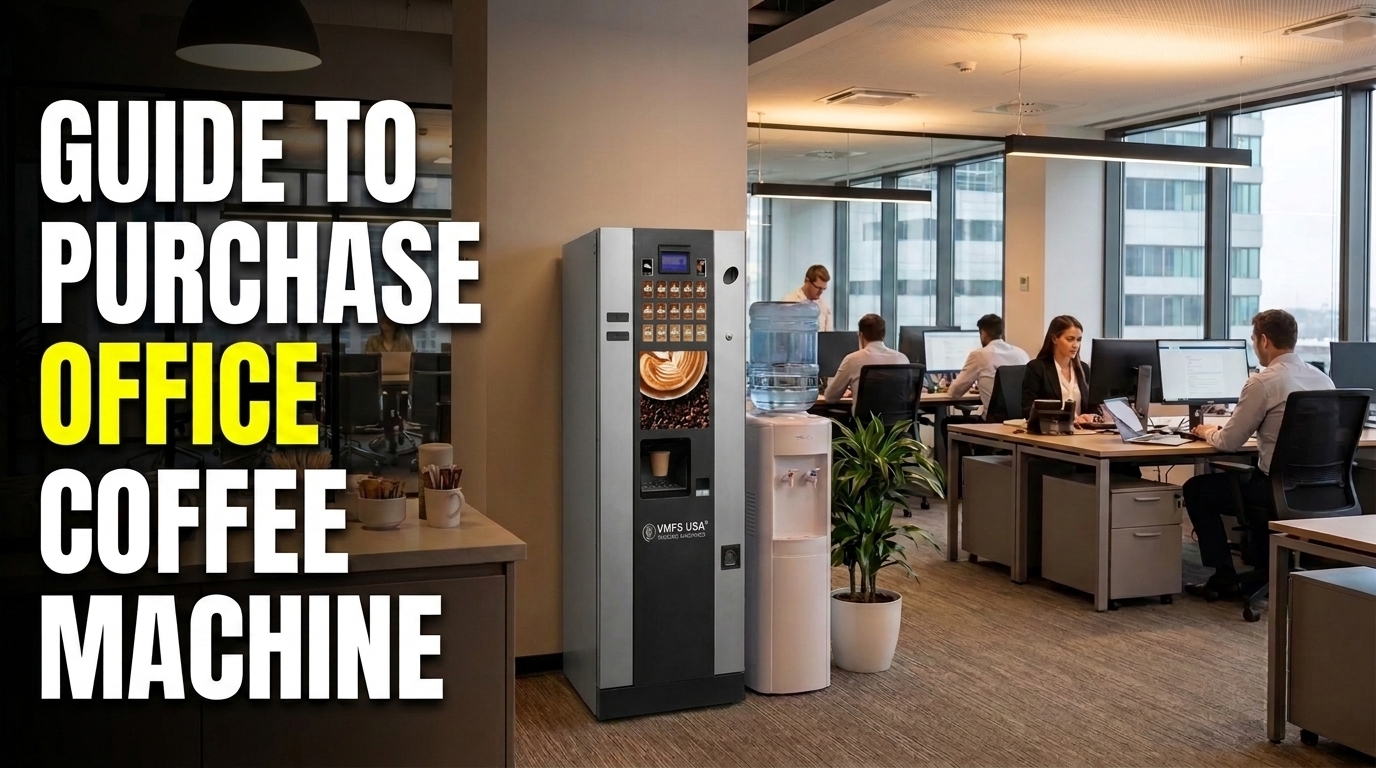
Guide to Purchase Office Coffee Machine: Executive Equipment & Buying Strategy
In Order to Purchase Office Coffee Machine it requires balancing daily cup volume, machine throughput, utility infrastructure, and long-term total cost of ownership. Selecting the right commercial coffee equipment directly impacts employee satisfaction, breakroom productivity, and client hospitality while keeping operational overhead under control.
Executive Buying Criteria & Selection Matrix
An office coffee machine is an enterprise asset that must match the daily consumption demands of your organization without creating maintenance bottlenecks. Evaluating equipment based on cup capacity, speed, water source, and interface design ensures maximum breakroom efficiency.
| Machine Category | Daily Capacity | Average Brew Time | Water Supply Type | Key Workplace Benefit | Estimated Price Range |
| Bean-to-Cup Touchscreen | 30 – 150 cups | 30 – 45 seconds | Plumbed or Reservoir | Freshly ground quality, low labor | $1,200 – $4,500 |
| Commercial Espresso Unit | 50 – 300 cups | 25 – 40 seconds | Direct Plumbed Water | Authentic cafe quality beverages | $2,500 – $8,000 |
| High-Volume Vending System | 100 – 500+ cups | 12 – 20 seconds | Direct Plumbed Line | Maximum speed, automated payment options | $3,000 – $9,500 |
| Thermal Drip Brewer | 20 – 80 cups | 4 – 6 minutes (pot) | Plumbed or Manual Fill | Simple operation, low cost per cup | $300 – $1,200 |
Selecting the wrong machinery leads to early mechanical failure, excessive downtime, and inflated maintenance expenditures. Understanding the structural differences across commercial brewing technologies helps facility managers choose the exact configuration for their workplace.

Understanding Office Coffee Machine Categories & Technologies
Commercial coffee machines utilize specialized internal brewing mechanisms designed for specific traffic volumes, beverage varieties, and user interaction styles. Comparing these core equipment categories clarifies which technology best aligns with your facility’s operational workflow.
Bean-to-Cup Machines
Bean-to-cup machines process whole coffee beans through internal conical or flat steel burrs before extracting fresh espresso or coffee under high pressure. These units incorporate integrated milk frothing systems and intuitive touchscreens, allowing employees to prepare specialty drinks like lattes, cappuccinos, and americanos at the touch of a button.
These systems reduce prep time and eliminate coffee waste by grinding exact single-serve portions per order. Businesses seeking to balance barista-level coffee quality with zero manual labor usually prefer bean-to-cup platforms. For an in-depth breakdown of workplace setups, explore the ultimate guide to office coffee machines.
Commercial Espresso Machines
Commercial espresso machines extract coffee using saturated group heads operating at 9 bars of constant pump pressure. Traditional semi-automatic or automatic espresso equipment requires dedicated barista skills for dosing, tamping, and manual milk steaming, making them ideal for client-facing executive suites or catered office environments.
While these systems deliver superior beverage taste, they demand higher maintenance and daily cleaning rigor. Organizations interested in comparing premium options can review current ratings across the best office coffee machines.
Automatic Hot Beverage & Coffee Vending Systems
Automatic coffee vending machines dispense high volumes of hot beverages using instant solubility powders or high-speed bean hoppers. Internal mixing chambers combine water, coffee extracts, powdered milk, and cocoa at high speeds to deliver drinks within 15 seconds.
These automated systems eliminate breakroom queues in high-traffic environments like warehouses, call centers, and large corporate floors. To learn how these systems process drinks internally, read about how coffee vending machines work.
Single-Serve & Drip Brewers
Commercial thermal drip brewers pass heated water through ground coffee beds held inside paper or stainless steel basket filters. These machines brew batch volumes into insulated thermal carafes, keeping coffee warm for hours without degrading flavor through continuous heating plates.
Drip brewers represent the lowest initial capital investment and offer reliable service for small teams. However, they lack specialty drink capabilities and require manual bean grinding and filter disposal.
Sizing and Capacity: Matching Machine Specs to Team Size
Matching a coffee machine’s internal boiler rating, hopper capacity, and duty cycle to team size prevents mechanical strain and excessive refill cycles. Equipment sized correctly maintains optimal operating temperature even during peak morning rush hours.
Small Offices (5 to 25 Employees)
Small offices require compact, quiet, and user-friendly tabletop equipment that fits beneath standard kitchen cabinets without requiring major plumbing modifications. A daily volume of 15 to 40 cups can be handled smoothly by an agile countertop unit with an internal water tank or simple line connection.
The Premium Countertop Touch Screen Coffee Machine serves small teams effectively by combining a sleek, space-saving footprint with intuitive drink customization and easy maintenance.
Medium Offices (25 to 75 Employees)
Medium-sized workplaces need robust mid-range machines equipped with dual boilers, larger bean hoppers (1.5 kg+), and direct water line hookups. Dual boilers allow simultaneous espresso extraction and milk steaming, eliminating delays when multiple employees queue up simultaneously.
The Pro Coffee Vending Machine provides medium offices with rapid dispensing speeds, consistent cup quality, and heavy-duty components built for daily high-volume use.
Enterprise & Large Offices (75+ Employees)
Enterprise environments and multi-floor headquarters require commercial-grade, heavy-duty vending units capable of serving hundreds of cups daily with minimal intervention. These machines feature high-capacity bean hoppers, multiple powder canisters for specialty beverages, and direct waste chute integrations.
The CorePro Coffee Vending Machine stands out as an enterprise powerhouse, handling continuous morning rushes while keeping cost-per-cup low and maintenance simple. Organizations evaluating commercial models across the market can browse the full collection of commercial coffee vending machines.
Total Cost of Ownership (TCO) & Financial ROI Analysis
Calculating the total cost of ownership for an office coffee machine requires analyzing initial hardware costs, consumable supplies, routine servicing, and energy usage. Factoring in these ongoing expenditures reveals the true financial commitment over a 3 to 5-year equipment lifecycle.

Capital Expenditure vs. Leasing Models
Directly purchasing an office coffee machine optimizes long-term asset value and eliminates recurring finance interest charges. Equipment buyers retain full asset ownership and can depreciation write-offs under standard corporate tax codes.
Leasing or renting coffee equipment spreads initial capital expenditure into predictable monthly operational expenses. Leasing agreements frequently bundle routine servicing, water filter changes, and emergency repairs into the monthly contract price, reducing unexpected financial risk.
Consumables and Cost-Per-Cup Economics
Whole coffee beans deliver lower per-cup costs than single-serve pods or pre-packaged capsules. Bulk coffee bean purchases average $0.10 to $0.25 per espresso shot, whereas proprietary pods cost between $0.60 and $1.10 per cup.
| Brew Format | Consumable Cost per Cup | Annual Cost (50 Cups/Day, 250 Days) | Waste Generation Level |
| Whole Bean (Bean-to-Cup) | $0.12 – $0.28 | $1,500 – $3,500 | Compostable organic pucks |
| Single-Serve Pods | $0.65 – $1.15 | $8,125 – $14,375 | High plastic/aluminum waste |
| Soluble Vending Powders | $0.08 – $0.18 | $1,000 – $2,250 | Minimal packaging waste |
| Ground Drip Coffee | $0.09 – $0.20 | $1,125 – $2,500 | Compostable filter & grounds |
Transitioning a 50-person office from single-serve pods to a bean-to-cup commercial machine saves over $5,000 annually in consumable costs alone. To review hardware pricing tiers across commercial categories, consult this comprehensive coffee vending machine price guide.
Essential Features, Water Lines, and Spatial Planning
Proper breakroom planning ensures seamless machine installation, reliable utility connectivity, and convenient access for everyday users. Evaluating water line availability, cabinet clearance, and electrical supply prevents costly post-purchase facility modifications.

Plumbed Water Lines vs. Manual Reservoirs
Direct water line connections feed cold water straight into the machine’s internal boiler, eliminating the need to manually refill water tanks throughout the day. Plumbed installations require an inline water filtration system to catch sediment, eliminate chlorine taste, and prevent scale buildup inside internal heating elements.
Manual water reservoirs work well in satellite offices or flexible break areas lacking nearby plumbing access. However, unplumbed machines require frequent manual refilling, increasing employee maintenance effort during busy work hours.
Spatial Dimensions and Breakroom Layout
Commercial coffee machines require clear counter space, adequate overhead cabinet clearance, and proper ventilation to prevent overheating. Verifying equipment measurements before buying ensures comfortable access to bean hoppers, side doors, and waste bins.
- Height Clearance: Standard upper kitchen cabinets sit 18 inches above countertops. Ensure top-loading bean-to-cup machines have at least 4 to 6 inches of clearance for easy bean loading.
- Width & Depth: Tabletop units typically measure 12 to 20 inches wide and 18 to 22 inches deep. Leave side clearance for ventilation fan airflow.
- Weight Capacity: Commercial units weigh between 40 and 90 lbs. Confirm your countertop structure supports the machine filled with water and beans.
Detailed dimensional guidelines for breakroom planning are available at coffee vending machine dimensions. Choosing the right location is equally crucial; review advice on the best location to place office coffee machine to maximize employee convenience and traffic flow.
Payment Systems & Access Control
Enterprise coffee equipment can integrate modern payment readers, allow employee badge scans, or offer free-dispense modes. Payment hardware lets facilities offset operating costs or manage public visitor access effectively.
Integrating credit card readers, mobile wallets, and RFID badge readers converts standard office coffee equipment into an efficient amenity. Learn more about automated options in this overview of cashless payment systems for coffee vending machines.
Operational Maintenance, Cleaning Protocols & Machine Longevity
Regular cleaning and preventive maintenance protect commercial coffee equipment from hard water scale, milk residue buildup, and mechanical wear. Following structured maintenance schedules extends machine lifespans and guarantees consistent beverage quality.
Daily Sanitation Routines
Daily maintenance takes under 10 minutes and prevents milk bacteria growth and mold buildup in internal chutes.
- Flush Milk Lines: Run an automated hot water or steam rinse cycle through all milk dispensing tubes immediately after daily use.
- Empty Waste Bins: Remove and clean the spent coffee puck container and drip tray to prevent odors and insect attraction.
- Wipe Down Exterior Surfaces: Clean touchscreens, dispensing spouts, and cup stands using food-safe sanitizing cloths.
Step-by-step cleaning procedures are detailed in our complete coffee vending machine cleaning and maintenance guide.
Preventive Monthly Maintenance & Descaling
Hard water minerals form scale inside boilers and solenoid valves, restricting water flow and causing heating element failures. Descaling monthly using commercial citric acid solutions dissolves mineral deposits and keeps brewing pressure consistent.
Replacing inline water filter cartridges every 3 to 6 months removes chlorine, heavy metals, and organic compounds before water enters internal boilers. Proper filtration extends heating element lifespans by up to 300%.
Top Recommended Commercial Office Coffee Machines
Comparing top-performing models side-by-side helps streamline purchasing decisions for any office size.
| Featured Model | Target Office Size | Beverage Selection | Key Technical Attribute | Recommended Choice |
| Premium Countertop Unit | 5 – 25 Employees | Espresso, Americano, Latte, Cappuccino | Compact footprint, intuitive HD touchscreen display | View Product Page |
| Pro Commercial System | 25 – 75 Employees | 12+ Specialty Espresso & Milk Drinks | Dual heating thermoblocks, heavy-duty bean grinder | View Product Page |
| CorePro Enterprise Vending | 75+ Employees | Full Coffee, Tea & Hot Beverage Menu | High-capacity canisters, direct water plumbed line | View Product Page |
Selecting equipment matched to your team’s footprint ensures long-term reliability and high daily beverage quality. For guidance on team operation, consult our instructions on how to use a coffee machine in office.
Frequently Asked Questions
What is the average lifespan of a commercial office coffee machine?
A commercial office coffee machine lasts between 5 and 10 years when maintained with regular descaling and water filtration updates. Machine longevity depends on daily cup volumes, water quality, and adherence to preventive service schedules.
Should we choose a plumbed coffee machine or a water reservoir model?
Plumbed coffee machines connect directly to facility water lines, delivering continuous brewing without manual water refills during busy workdays. Reservoir models suit flexible satellite locations or smaller offices where direct plumbing connections are unavailable.
How often does an office bean-to-cup machine require cleaning?
Bean-to-cup machines require daily automated milk line flushes and drip tray cleanings to prevent bacterial growth and residue buildup. Deep descaling and internal brew group maintenance should be performed monthly depending on local water hardness.
What size coffee machine is needed for an office of 50 people?
An office of 50 people requires a medium-duty commercial machine rated for 50 to 100 cups daily, equipped with a direct water line hookup and dual boilers. The Pro Coffee Vending Machine provides the speed and hopper capacity necessary to handle this volume without constant refills.
How much does it cost to operate a commercial office coffee machine monthly?
Monthly operating costs range from $150 to $500, depending on daily cup consumption, coffee bean selection, milk options, and filter replacements. Using bulk whole-bean coffee significantly lowers per-cup costs compared to proprietary single-serve pod systems.
Can an office coffee machine dispense non-coffee hot beverages?
Yes, multi-canister commercial machines store instant powders to dispense hot chocolate, chai tea lattes, and hot water for tea alongside standard espresso drinks. Specialized systems like the CorePro Coffee Vending Machine accommodate broad hot beverage menus effortlessly.
Why is inline water filtration necessary for commercial coffee equipment?
Inline water filters trap mineral sediment, remove chlorine taste, and prevent calcium scale buildup inside internal boilers and solenoid valves. Proper water filtration protects internal machine components from premature failure and maintains consistent beverage flavor.
Are commercial coffee vending machines profitable for corporate breakrooms?
Commercial coffee vending machines generate positive return on investment by eliminating off-site coffee runs, improving workplace productivity, or collecting nominal per-cup payments through integrated card readers. Review market financial trends in this analysis of whether coffee vending machines are profitable.
What electrical requirements are necessary for commercial coffee machines?
Most countertop office coffee machines operate on standard 120V / 15A electrical circuits. Heavy-duty commercial espresso or enterprise vending machines may require dedicated 220V / 20A power lines to support rapid multi-boiler water heating.
How do cashless payment integrations work on office coffee machines?
Cashless payment systems connect via internal MDB (Multi-Drop Bus) protocols to accept credit cards, mobile wallets, and employee badge scans. Facilities can review implementation options through cashless payment systems for coffee vending machines.