Custom Vending Machine Tax Considerations: What Operators Need to Know
Custom vending machine tax considerations fall into three main categories: sales tax collected on vended goods, income tax tied to your business structure, and equipment depreciation on the machine itself, each governed by different rules that compound as an operation scales across multiple locations. Getting these wrong doesn’t just risk penalties; it distorts the ROI calculation an operator used to justify the equipment purchase in the first place. This guide breaks down each obligation and how they interact for a custom-built vending business specifically.
Not tax or legal advice. Tax treatment varies by state, entity structure, and individual circumstances. This article explains general categories that commonly apply to vending businesses in the United States. Consult a CPA or tax professional before making decisions based on this information.
Key Tax Obligations for Vending Operators
A custom vending machine business owes sales tax on vended goods in most states, income tax based on the chosen business structure, and can typically depreciate the machine itself as a capital asset over its useful life. A detailed breakdown of custom vending machine tax requirements covers registration steps and filing structure in more depth, which this guide builds on with a focus on how these obligations interact for custom equipment specifically.
Sales Tax on Vended Goods
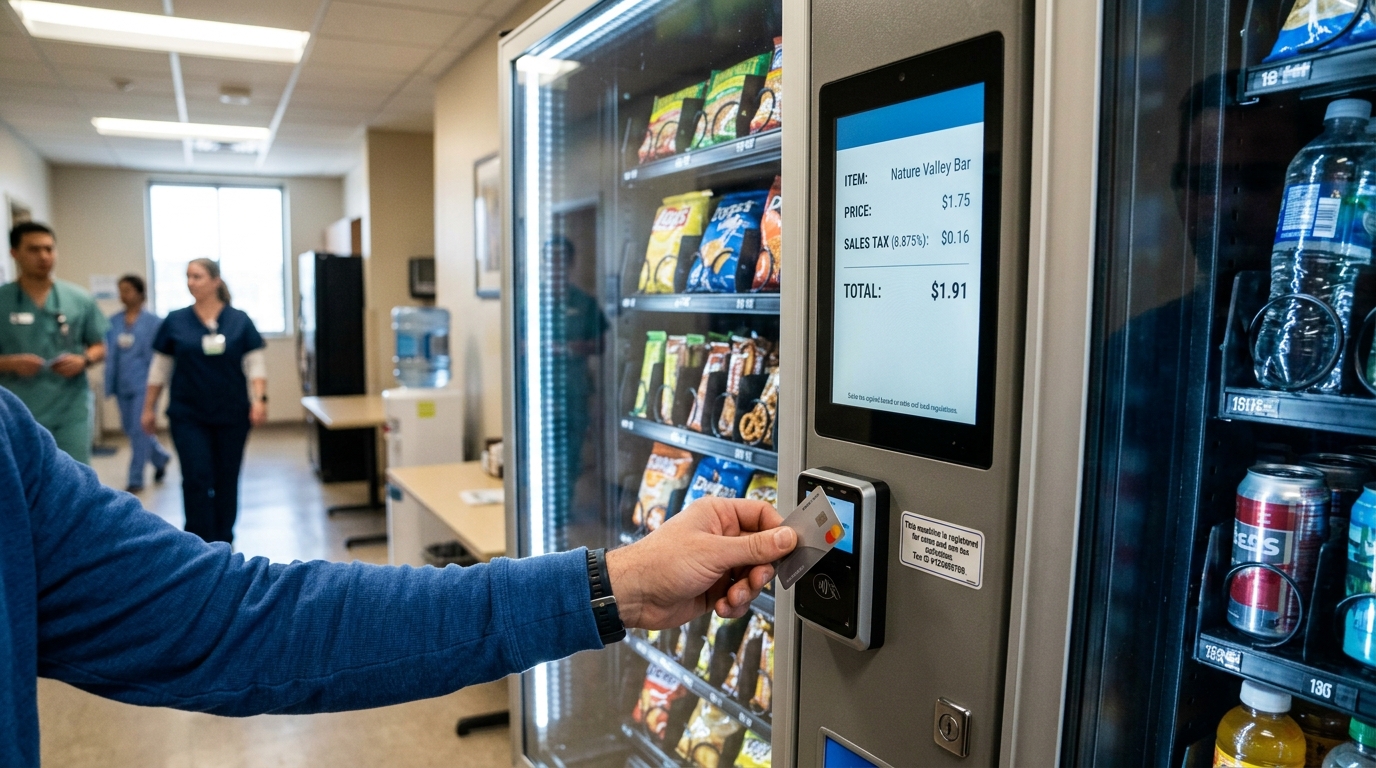
Vended goods are taxable retail sales in the majority of U.S. states, requiring operators to register for a sales tax permit and remit collected tax on a defined filing schedule, typically monthly or quarterly depending on sales volume.
How Vending Sales Tax Differs From Standard Retail
Some states apply a distinct vending-specific tax calculation, treating the vended price as tax-inclusive rather than adding tax at the point of sale the way a cash register typically does. This changes how an operator prices inventory to hit a target margin, since the tax portion is backed out of the sticker price rather than added on top of it.
State-by-State Variation
Sales tax rates, vending-specific rules, and filing frequency all vary by state, which becomes a real operational factor once an operation expands beyond a single jurisdiction. Reviewing the best locations for smart combo vending machines is worth pairing with a tax nexus review when evaluating expansion into a new state, since a new physical location typically triggers new sales tax registration obligations there.
Income Tax and Business Structure
Vending income gets taxed differently depending on the business structure chosen at formation, which is why entity selection has direct tax consequences beyond just liability protection.
Entity Choice Effect on Tax Treatment
A sole proprietorship or single-member LLC passes income directly to the owner’s personal tax return, while an S-corporation election can reduce self-employment tax exposure on a portion of vending profit once income reaches a meaningful level. A C-corporation faces corporate-level tax plus a second layer of tax on distributed profit, which typically only makes sense for operations planning significant outside investment or reinvestment rather than profit distribution.
Equipment Depreciation for Custom Machines
Custom vending machines qualify as depreciable business equipment, meaning their cost can be deducted over a defined useful life rather than expensed entirely in the year of purchase, which spreads the tax benefit across multiple years. The specific depreciation schedule and available accelerated deduction options depend on current tax law and equipment classification, making this an area where custom equipment’s higher upfront cost, covered in detail in the custom vending machine cost and pricing guide, directly affects the size of the available deduction. Operators upgrading existing equipment should also understand how upgrading to a custom vending machine affects depreciation basis, since replacing equipment mid-lifecycle has different tax treatment than a first-time purchase. Configuration choice itself can also affect equipment classification for depreciation purposes; a complete custom vending machines buyer’s guide is worth reviewing alongside a tax professional when finalizing a build, since features like integrated refrigeration or ad displays may be classified differently than the base unit.
Deductible Business Expenses for Vending Operators
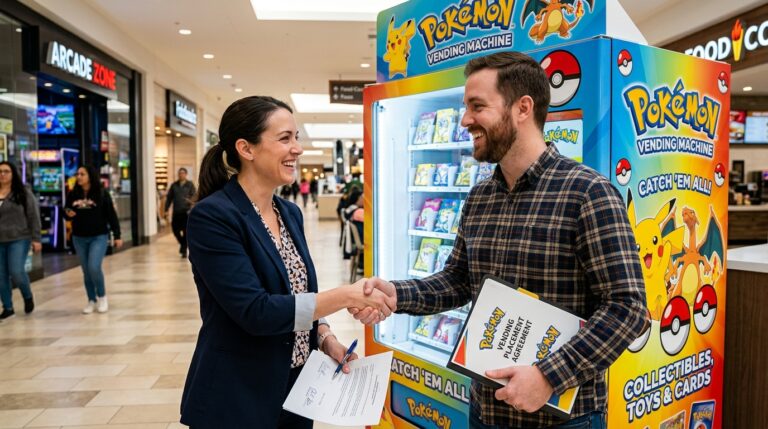
Beyond the machine itself, several recurring costs typically qualify as deductible business expenses, including inventory, placement agreement fees or revenue share paid to venues, and machine branding. A full custom vending machine branding strategy guide covers what branding investment typically involves, while general context on custom wrap and branding on vending machines explains the material costs that factor into this deduction category. Reviewing custom vending machine ROI alongside deductible expense planning helps confirm the after-tax return picture matches the pre-tax projections used to justify the initial investment.
Tax Compliance Foundation: Registration Steps
Building a solid tax compliance foundation starts with an EIN registration for the business entity, followed by state sales tax permit registration in every jurisdiction where a machine physically operates. Confirming proper licensing alongside tax registration matters just as much; a licensing guide for custom vending machines covers the permit side of compliance that runs parallel to, but separate from, tax obligations. Working with a manufacturer that provides clear, itemized invoices also simplifies depreciation record-keeping; understanding how custom vending machine manufacturers structure pricing and documentation helps operators keep accurate records from the point of purchase.
Comparing Tax Treatment by Business Structure
| Entity Type | Income Tax Treatment | Self-Employment Tax Exposure |
|---|---|---|
| Sole Proprietorship | Pass-through to personal return | Full exposure on all profit |
| Partnership | Pass-through to partners | Full exposure on partner share |
| LLC (default) | Pass-through to member(s) | Full exposure unless electing S-corp status |
| S-Corporation | Pass-through, avoids double taxation | Reduced, only on reasonable salary portion |
| C-Corporation | Corporate tax, then tax on distributions | Not applicable in the same way |
Whichever structure is chosen, maintaining a registered agent for a vending machine business in every state of operation ensures tax and compliance correspondence, including notices tied to multi-state sales tax registration, actually reaches the business.
Common Tax Mistakes Vending Operators Make
Failing to register for sales tax in a new state after expanding physical placement is one of the most common errors, since operators often assume their home-state registration covers new locations automatically, which it typically doesn’t. Under-tracking deductible expenses, particularly branding and placement fees, is a second frequent gap that leaves real deductions unclaimed. A third common mistake is treating equipment purchase and depreciation as identical, when in fact depreciation schedules require accurate documentation from the purchase date to claim correctly over time.
Pros and Cons of Proactive Tax Planning
- Register Per State
- Track Every Expense
- Document Depreciation
- Proactive Tax Planning
- Reactive or Delayed Planning
Where to Learn More
Tax planning is one part of a broader launch and compliance picture that also includes licensing, entity formation, and site selection, each covered in more depth in a complete guide to launching a custom vending machine business. Coordinating tax planning with expansion decisions matters especially for operators listing new sites through VPlaced’s location owner matching process, since each new confirmed location typically triggers a fresh round of state-level tax registration.
Build Your Own Custom Vending Machine
Configure product slots, branding, and smart technology with clean, depreciation-ready documentation from day one. Build Your Own Custom Vending Machine
Explore Custom Configurations by Category
Compare options across the product categories covered above.
Custom Combo Vending Machine Custom Coffee Vending Machine Custom Pokémon Vending Machine
Build Your Own Custom Vending Machine
Configure product slots, branding, and smart technology with clean, depreciation-ready documentation from day one.
Build Your Own Custom Vending MachineExplore Custom Configurations by Category
Compare options across the product categories covered above.
FAQ
What taxes does a custom vending machine business need to pay?
A custom vending machine business typically owes sales tax on vended goods, income tax based on the chosen business structure, and can depreciate the machine as a capital asset. This is not tax advice — consult a CPA for your specific situation.
Is sales tax calculated differently for vending machines than regular retail?
In some states, yes. Certain states treat the vended price as tax-inclusive rather than adding tax at checkout, which changes how operators price inventory to hit a target margin.
Do I need to register for sales tax in every state I operate a machine?
Generally yes. A new physical location in a different state typically triggers a new sales tax registration requirement there, separate from your home-state registration.
Can I depreciate a custom vending machine on my taxes?
Yes, custom vending machines typically qualify as depreciable business equipment, allowing the cost to be deducted over a defined useful life rather than expensed entirely in the purchase year.
How does business structure affect vending income tax?
A sole proprietorship or default LLC passes income directly to the owner’s personal return, while an S-corporation election can reduce self-employment tax exposure once profit reaches a meaningful level.
What business expenses can a vending operator deduct?
Common deductible expenses include inventory, placement agreement fees or revenue share paid to venues, and machine branding costs, in addition to the equipment depreciation itself.
Does upgrading equipment affect how I claim depreciation?
Yes, replacing equipment mid-lifecycle has different tax treatment than a first-time purchase, so upgrades should be reviewed against existing depreciation schedules before filing.
Is a C-corporation a good structure for a vending machine business?
It typically only makes sense for operations planning significant outside investment or reinvestment, since C-corp profit faces corporate tax plus a second layer of tax on distributions.
What’s the most common tax mistake vending operators make?
Failing to register for sales tax in a new state after expanding physical placement is the most common error, since operators often assume home-state registration covers new locations automatically.
Should I talk to a CPA before choosing a business structure for tax purposes?
Yes, entity choice has direct tax consequences beyond liability protection, and a CPA can confirm which structure fits your specific income level and growth plans.