Coffee Vending Machine Licensing and Permits Requirements – Regulatory Guide
Securing proper compliance through coffee vending machine licensing and permits requirements ensures continuous automated retail operations without incurring severe local health fines or equipment impoundment. Operating a commercial hot beverage route requires specific business registrations, state seller’s permits, municipal food handler clearances, and equipment compliance standards set by the National Automatic Merchandising Association (NAMA) and FDA Model Food Code.
Regulatory Framework for Automated Coffee Vending
Federal, State, and Local Regulatory Jurisdiction
Coffee vending equipment operates at the intersection of business taxation, public safety, and food service law. State departments of revenue govern sales tax collection, whereas county health departments oversee sanitation, water supply connections, and liquid waste disposal.
Federal bodies like the FDA establish baseline food sanitation standards via the Food Code, while the Americans with Disabilities Act (ADA) regulates machine interface reach heights. Understanding how coffee vending machines work from a mechanical perspective highlights why regulators inspect internal boilers, backflow preventers, and cup dispense mechanisms.
NAMA Construction Standards and Machine Certification
The National Automatic Merchandising Association (NAMA) evaluates vending hardware against public health criteria. Commercial units displaying the NAMA Service Mark certify that internal plumbing, contact surfaces, and heating elements meet FDA Model Food Code standards.
Selecting certified units, such as a CorePro coffee vending machine or a Pro coffee vending machine, accelerates local health department plan reviews because the internal components already pass national safety audits.
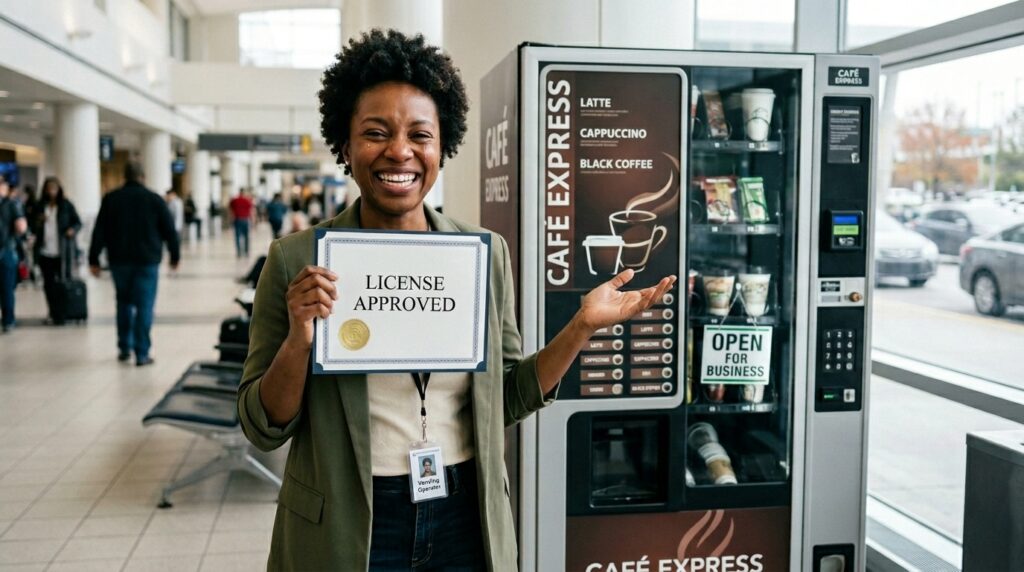
Key Permits and Licenses Required for Operation
Core Business and Tax Registrations
Every route operator must establish a legal business entity before placing hardware on-site.
- General Business License: Issued by the municipal or county clerk to authorize commercial operation within the local jurisdiction.
- State Seller’s Permit / Sales Tax License: Issued by the state department of revenue, allowing the operator to collect and remit sales tax on beverage purchases.
- Employer Identification Number (EIN): Federal tax identifier issued by the IRS for banking, insurance, and payroll structure.
- Per-Machine Vending Decal / License: Specific municipal or state annual tax stickers affixed directly to each machine cabinet.
Food Service and Automated Vending Permits
Because coffee vending involves water mixing, liquid powder dispensation, or fresh dairy milk storage, health departments treat these units as automated food establishments. Installing an iced coffee vending machine or an espresso vending machine requires specialized food handler clearances due to active temperature control requirements.
Health Department Compliance and Sanitation Standards
Water Supply, Plumbing, and Backflow Prevention
Direct-plumbed coffee units require certified backflow prevention devices (such as dual-check valves) to prevent boiler water or carbonated backpressure from entering municipal potable water lines. Municipal plumbing codes require these units to be installed by licensed professionals during a coffee vending machine installation guide protocol.
Temperature Controls for Perishable Ingredients
Vending units dispensing real milk or liquid dairy creams must maintain internal cabinet refrigeration at or below 41°F (5°C). The machine’s Vending Machine Controller (VMC) must feature an automatic health shutoff switch. If internal temperatures rise above 41°F for more than 30 minutes, the software disables dispense cycles automatically.
| Inspection Factor | Compliance Requirement |
| Refrigeration Temperature | Automatic safety lock if temperature exceeds threshold |
| Hot Water Dispense Temp | Sustained heat to prevent bacterial growth in mixing bowls |
| Backflow Prevention | Prevents internal boiler back-siphonage into water mains |
| Contact Surfaces | Corrosion-resistant, non-toxic, and easily cleanable materials |
Maintaining health standards involves executing a strict coffee vending machine cleaning and maintenance guide schedule to clear syrup lines, clean mixing bowls, and sanitize contact surfaces.
Comparative Breakdown: Licensing Requirements by Placement Location
Regulatory Variances Across Operational Environments
| Location Type | Primary Governing Body | Key Permit Needed | Sanitation / Inspection Rigor |
| Private Corporate Office | City / County Clerk | Basic Business License + Tax ID | Low (Private access, minimal public exposure) |
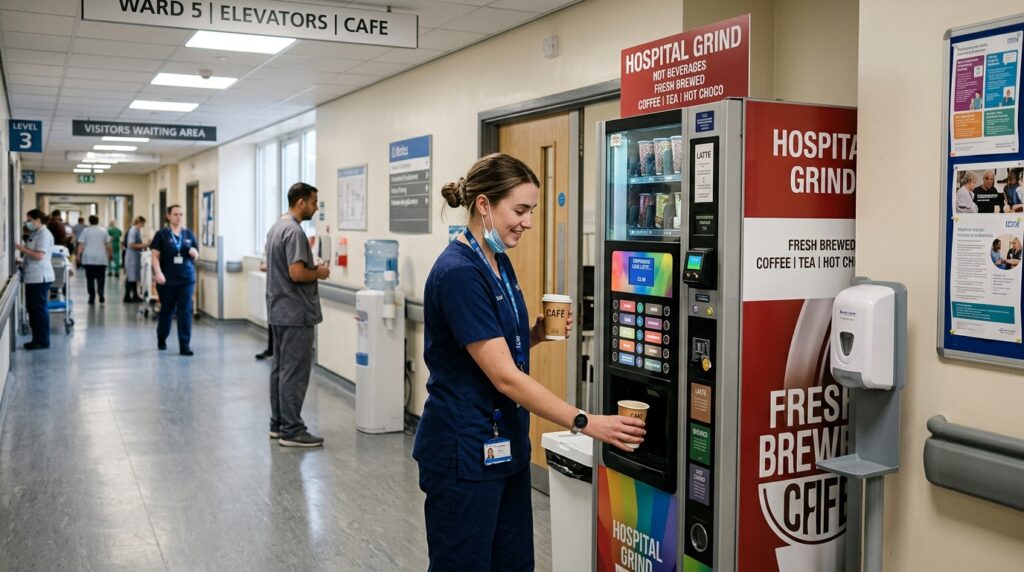
| Hospital / Healthcare | State Health Department | Food Service Establishment Permit | High (Strict bacterial audits & water source clearance) |
| College / University Campus | Municipal Health + Fire Marshal | Automated Retail Permit + Electrical Inspection | Moderate-High (High traffic, emergency egress rules) |
| Industrial / Manufacturing | OSHA + Local Health Dept | Industrial Vending Clearance | Moderate (Focus on physical grounding & safety) |
| Public Transit / Airports | Transportation Authority + Health | Special Concession License + Health Badge | Extremely High (Background checks, strict security) |
Deploying a coffee vending machine for office placements typically involves fewer municipal hurdles than high-traffic public installations. However, deploying industrial coffee vending machines in manufacturing plants requires verifying local occupational safety and environmental health standards.
Federal Accessibility and Labeling Mandates
ADA Reach and Operability Standards
The Americans with Disabilities Act dictates physical interaction parameters for all public automated devices.
- Forward Reach Range: High operable parts must be no higher than 48 inches above the finished floor; low operable parts must be at least 15 inches high.
- One-Hand Operation: Coin slots, bill acceptors, touchscreen selections, and cup drop zones must be operable with one hand without tight grasping, pinching, or twisting of the wrist.
- Operable Force: Controls cannot require more than 5 pounds of force to activate.
Integrating modern cashless payment systems for coffee vending machines simplifies ADA compliance by allowing touch-to-pay functionality placed within standard reach perimeters.
FDA Calorie Labeling Regulations
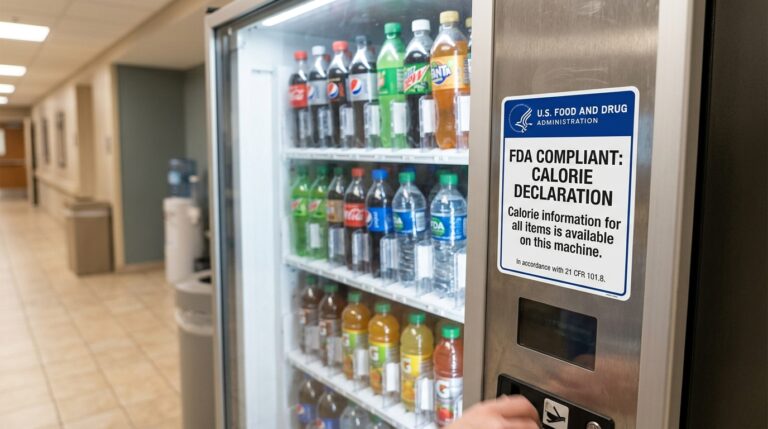
Under Section 4205 of the Patient Protection and Affordable Care Act, vending operators owning or operating 20 or more vending machines must disclose calorie content for all items sold. Calorie declarations must appear on the selection button, adjacent digital screen display, or dynamic touch panel before purchase completion.
Step-by-Step Permit Acquisition Workflow
- Form Legal Entity: Register your LLC or Corporation with the Secretary of State and apply for a federal EIN.
- Apply for Sales Tax Permit: Register with your state’s Department of Revenue to collect retail sales tax on beverage sales.
- Verify Machine Certifications: Ensure your coffee vending machine supplier provides NAMA, NSF, or UL documentation for the specific models deployed.
- Submit Health Application: File an automated food service application with the county health department, including machine spec sheets, water filtration details, and commissary location data.
- Pass On-Site Inspection: Schedule the physical health inspection at the location prior to dispensing beverages to the public.
Operators reviewing how to start coffee vending machine business plans must factor permit review lead times—often 2 to 6 weeks—into their launch timelines.
Build Your Route with Certified Vending Equipment
Launching a compliant beverage route starts with industry-certified equipment. Explore our full catalog of NAMA-compliant, high-volume units built for seamless health department approval and automated operations.
Risks and Legal Liabilities of Non-Compliance
Fines, Equipment Seizure, and Shutdowns
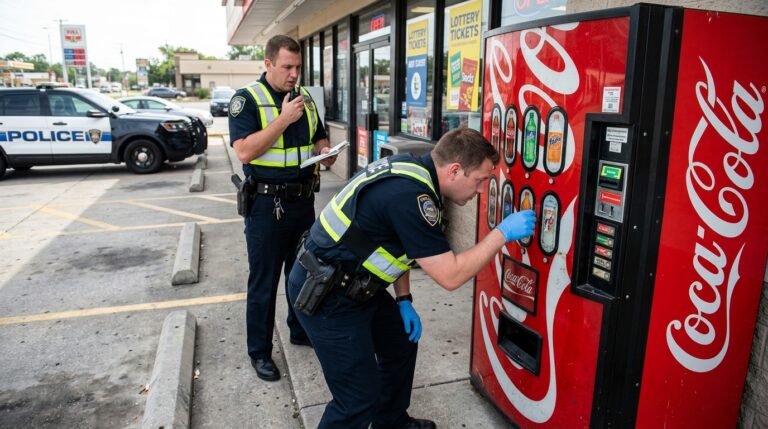
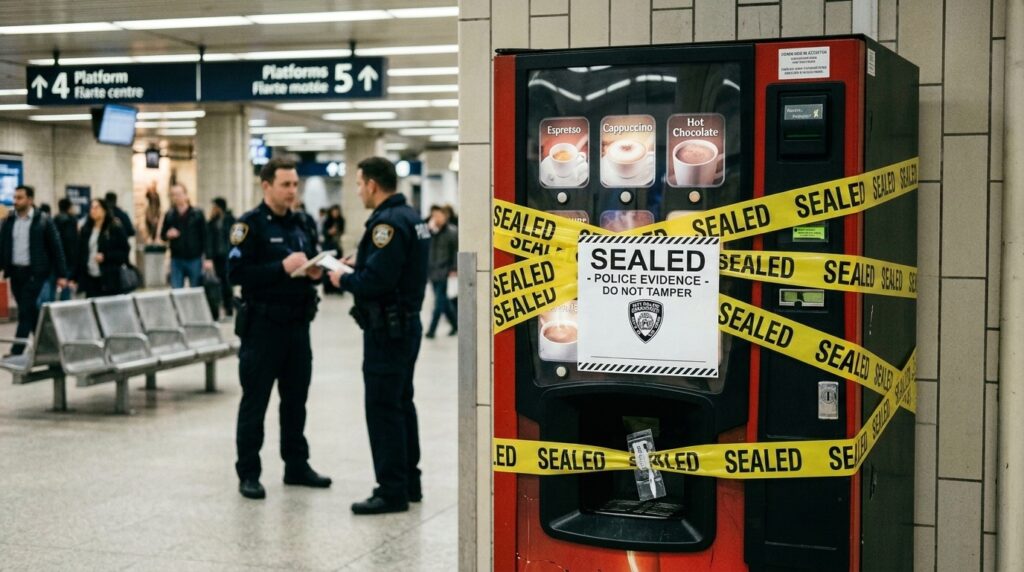
Operating without active permits triggers immediate administrative sanctions. Municipalities levy daily fines ranging from $100 to $1,000 per unlicensed machine, issue cease-and-desist orders, or physically impound equipment until back taxes and penalties are settled.
Liability and Insurance Requirements
Commercial property owners require operators to hold Comprehensive General Liability insurance naming the landlord as an additionally insured party. Operating without valid health department licenses voids most commercial insurance policies in the event of a foodborne illness claim or property damage from a broken water supply line.
Factoring operational insurance and permit overhead into your calculations is essential when determining overall coffee vending machine rental costs and long-term operating margins.
Frequently Asked Questions
Do I need a health permit for a coffee vending machine that only uses powders?
Yes, most local health departments classify hot beverage vending machines as automated food service devices regardless of whether they use liquid milk or soluble powders. Water distribution systems, mixing bowls, and dispense nozzles still require sanitation compliance.
What is the difference between a seller’s permit and a health permit?
A seller’s permit grants authority from the state tax department to collect sales tax on retail transactions. A health permit comes from the local health department and authorizes food and beverage sales following safety inspections.
How much do coffee vending machine permits cost annually?
General business licenses cost between $50 and $300 per year, while individual machine health permits or tax decals range from $15 to $150 per unit annually, depending on the municipality.
What certification tags should I look for when buying a vending machine?
Look for NAMA (National Automatic Merchandising Association), NSF International, or UL (Underwriters Laboratories) mark tags on the manufacturer data plate. These confirm compliance with the FDA Model Food Code and electrical safety standards.
Are office coffee machines subject to the same health permits as public vending machines?
Private office breakroom units serving employees exclusively often qualify for simplified health registrations or exemptions compared to public-facing commercial units. Always verify exemptions with your city or county health authority.
What plumbing codes apply to plumbed-in coffee vending machines?
Direct-water-line coffee machines must comply with local plumbing codes requiring approved backflow preventers (such as ASSE 1022 standards) to safeguard the building’s potable water supply from back-siphonage.
Do I need a permit if I am operating a coffee vending franchise?
Yes, while the franchisor supplies equipment and operational frameworks, the individual franchisee must acquire local business licenses, state tax IDs, and health department permits for their specific operating territories. Review our coffee vending franchise guide for brand-specific compliance guidelines.
What happens during a health department vending machine inspection?
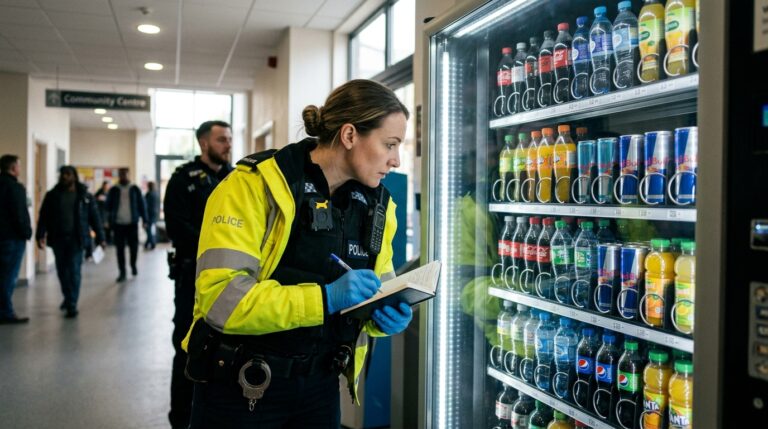
Inspectors verify internal cabinet cleanliness, check water boiler temperatures, inspect backflow valves, confirm valid temperature shutoff locks for dairy, and review posted operator contact details.
Does ADA compliance apply to countertop coffee vending machines?
Yes, if a countertop unit is placed in a public accommodation, it must be mounted on a surface that keeps touchscreens, payment slots, and dispense bays within standard ADA reach ranges.
How often do vending machine licenses need to be renewed?
Most municipal business licenses, state sales tax permits, and county health decals require annual renewal along with associated license fees.