Legal & Setup | Smoothie Vending | By the VAdviced Team | August 2026
Most people who get excited about smoothie vending arrive at the same plan within about a day. Buy frozen fruit in bulk, portion it into cups at home or in a small unit, seal them, load the machine, sell smoothies at four dollars a cup. The maths looks wonderful.
That plan is almost certainly illegal, and it is the single most common way operators walk into this category and straight back out of it.
The reason has nothing to do with the machine. It is a rule that sits underneath all US food regulation and predates vending entirely, and once you understand it, the whole compliance picture for this category falls into place quickly.
General information, not legal advice. Food rules are set at state and local level on top of the federal framework and vary meaningfully between jurisdictions. Use this to understand what to ask about, then confirm the specifics for your own operation.
Where this comes from: setting up vending businesses legally is what we do. Smoothie machines sit at the more regulated end of automated retail, and these are the questions operators bring us most often.
The Approved Source Rule
Underneath every state and county food code in the country sits a principle borrowed from the FDA Food Code: food offered for sale must come from an approved source. Meaning a facility that is licensed, inspected and permitted to produce food for public sale.
Your kitchen is not an approved source. Neither is a garage, a spare room, or a chest freezer in a storage unit. It does not matter how clean any of those are, and it does not matter that the fruit was frozen when you touched it. The moment you open bulk product, portion it, and seal it into a container for public sale, you are performing a food production operation, and that has to happen somewhere licensed to do it.
In practice that leaves you three routes, and choosing between them shapes your entire business:
- Buy pre packed cups from a licensed producer. Simplest by a wide margin. Somebody else holds the food production permit, runs the inspected facility and carries the manufacturing responsibility. You are a retailer, which is a far lighter regulatory position. Worth confirming which cup formats a given build accepts before you commit, across the beverage vending machine range.
- Use a commissary or shared commercial kitchen. You portion and seal the cups yourself, but in a licensed inspected facility rather than at home. This is the classic route for food trucks and small food businesses and it works here too, though it means you now hold food production obligations of your own.
- License your own facility. Only worth it at scale, and it turns you into a food manufacturer with everything that entails, including its own inspections and record keeping regime.
Why this decides your economics, not just your paperwork: operators who plan around portioning cups themselves and then discover the approved source rule usually find their margin assumptions were built on a step they are not permitted to take. Establish this before you buy a machine, not after. It is the single most consequential question in the category.
Your Machine Changes the Food’s Legal Category
This is the part that makes smoothie vending genuinely different from selling bottled drinks, and it is worth thinking through carefully.
A sealed cup of frozen fruit sitting in the freezer is low risk. Frozen food is not in the temperature danger zone, bacteria are not multiplying, and the product is stable and packaged.
Forty seconds later, that same product is a blended, ready to drink beverage, frequently containing dairy or a plant milk, sitting at drinking temperature in an open cup. It is now unambiguously a time and temperature control for safety food, or TCS in the language of the Food Code. Moist, low acid, often protein containing, and ready to consume.
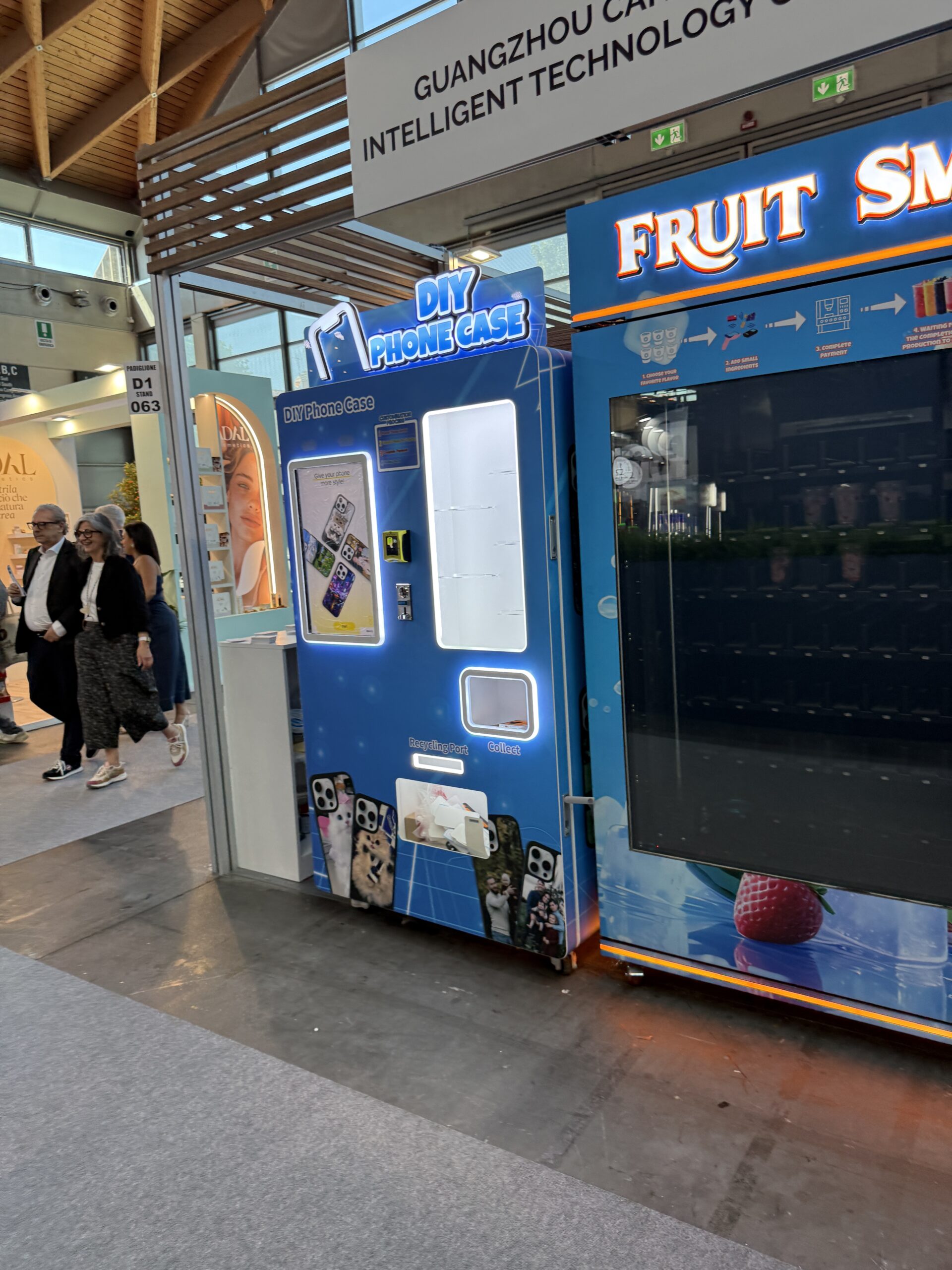
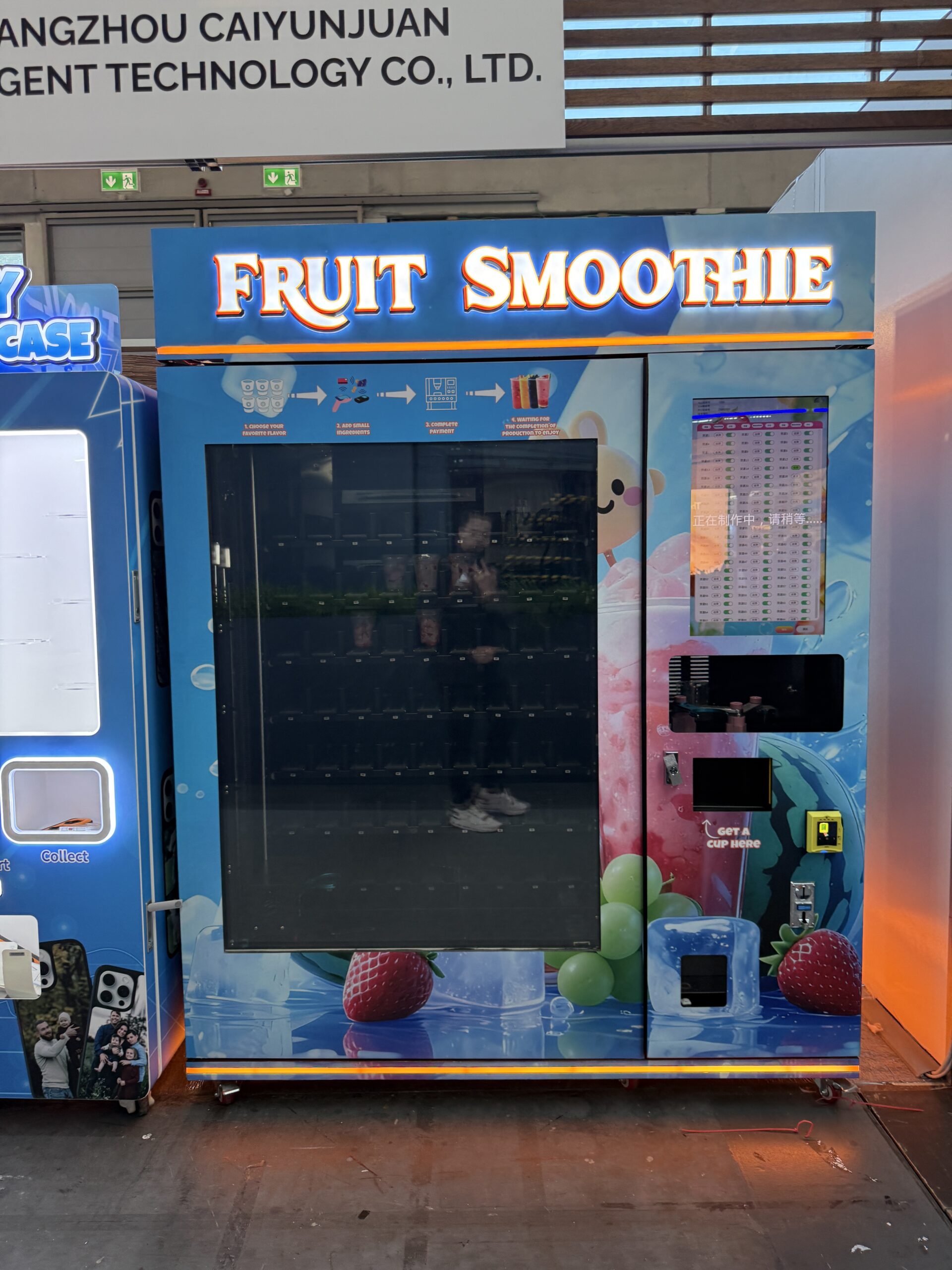
Your machine performed that transformation, unattended, in a gym lobby. Which is why health departments take a closer interest in this equipment than in a machine that hands over a sealed bottle, and why the questions they ask are about process rather than product. It also places these units firmly in the specialty vending category rather than alongside ordinary drinks equipment.
What the Health Department Will Actually Ask
Their questions are practical rather than philosophical, and having answers ready turns a difficult inspection into a short one.
- Where does the product come from? The approved source question, first and always. Have the producer’s licensing documentation to hand rather than promising to find it.
- What temperature does the freezer hold, and can you prove it? Increasingly you are expected to show logs rather than assert a number. Machines with remote temperature monitoring make this straightforward, and it is worth checking that capability when you compare builds across the refrigerated vending range.
- What happens if the freezer fails? Does the machine detect it, does it alert you, and does it stop selling? A unit that keeps vending after a temperature excursion is a serious problem, and inspectors know to ask.
- How is the blending mechanism cleaned, and how often? Automated cycles between orders carry most of it, but you need a documented manual schedule alongside them and a record that it happens.
- What is the water supply? Plumbed or reservoir, whether backflow prevention is fitted, whether there is a filter and who changes it.
- Are food contact surfaces food grade? Any serious machine satisfies this, but confirm it rather than assume it.
The Cup Has No Label on It
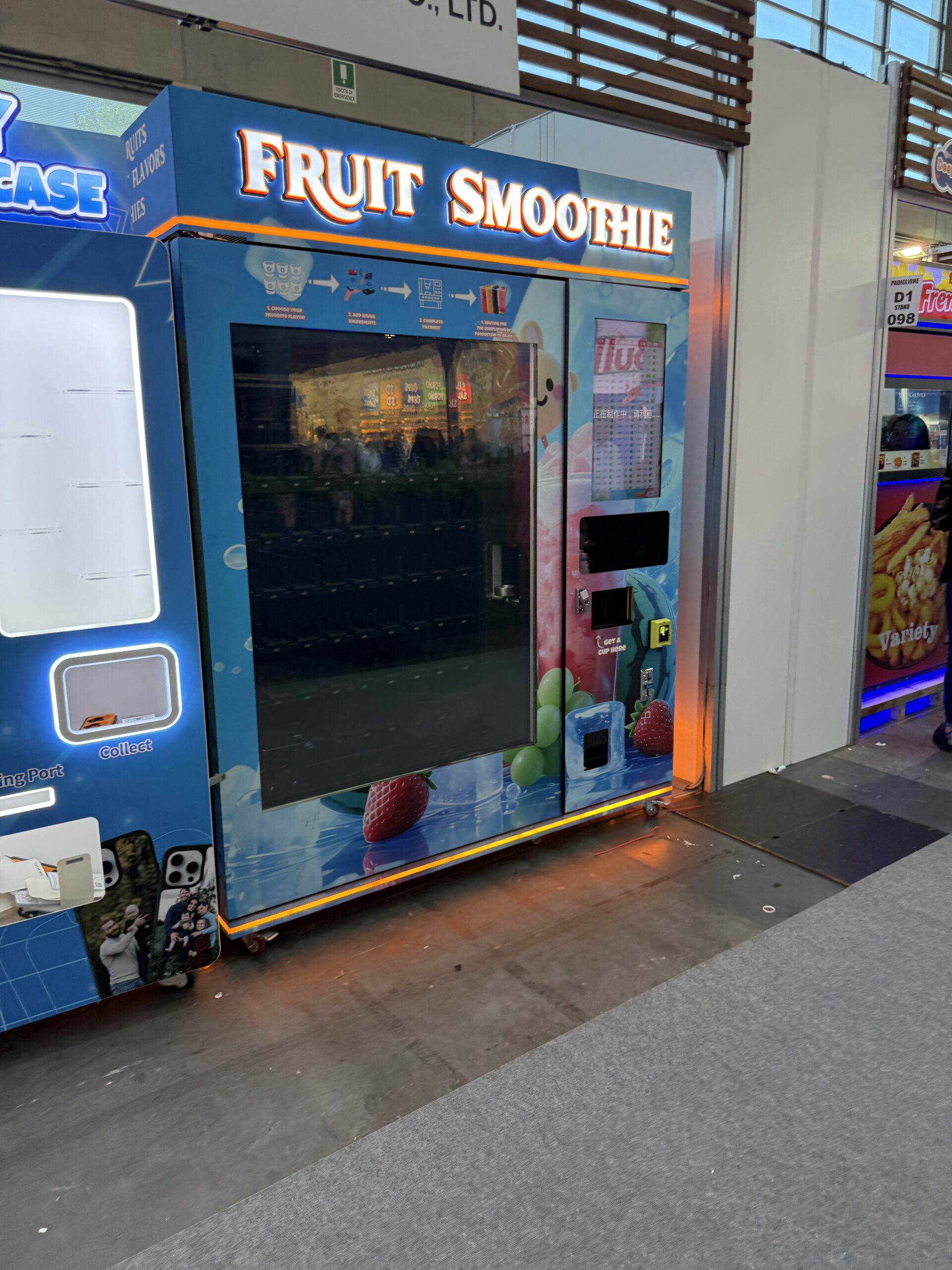
Look at what your customer walks away holding. A cup of blended smoothie with, in most configurations, no ingredient list, no allergen declaration and no nutrition information anywhere on it.
In a snack machine that is fine, because the product arrives in the manufacturer’s sealed packaging with all of that printed on it. Here the packaging has been opened, the contents combined with something else, and the result handed over in a container carrying none of it.
The practical answer is that your screen becomes the label. What we would want visible before the customer commits:
- The full ingredient list for that specific blend, not a marketing description of it
- A clear allergen statement, which matters more here than most operators expect
- Which liquid base is being added, since that is frequently where the allergen actually lives
- Nutrition information where you are required to display it or where you are making any nutritional claim
- Who produced the cup, since the customer is entitled to know and the information exists on the original packaging anyway
That makes screen capability a compliance specification rather than a cosmetic one, worth checking across the touch screen vending machines you are comparing. Keep the producer’s original packaging with lot numbers, and record which lot went into which machine on which date. If there is ever a recall, that record is the difference between pulling one batch from three machines and having no idea what you sold to whom.
Allergens Live in the Liquid
Worth its own section, because the risk in a smoothie machine sits in a place people do not look.
The fruit is usually the safe part. The liquid base is where the problem is. Dairy milk is milk, one of the nine major US allergens. Almond milk is a tree nut. Soy milk is soy. Oat milk carries gluten questions for some customers. Yoghurt bases are dairy. Any protein or supplement addition brings its own list, and whey is dairy again.
Three things worth building in properly:
- Declare the base prominently. Contains milk. Contains almonds. Stated plainly at the point of choosing rather than buried in a submenu somebody has to hunt for.
- Address cross contact honestly. If a dairy base and a nut base share any part of the liquid delivery system, that is worth understanding and disclosing. A customer choosing an alternative milk is frequently choosing it for a medical reason rather than a preference.
- Do not let flavour names do the work. A blend called Tropical Sunrise tells a customer with a nut allergy absolutely nothing. The allergen statement has to be separate from the marketing, which is a design decision worth settling with whoever produces your screen and machine graphics.
Careful What You Call It
Smoothies attract health claims the way few products do, and the language operators reach for instinctively is frequently the language that creates a problem. What appears on your screen and your machine wrap is not marketing in the regulatory sense. It is labeling.
| Generally lower risk | Needs real care |
|---|---|
| Describing what is in it: made with real strawberries | Nutrient content claims: high in, low in, a good source of |
| Factual process statements: blended fresh to order | Vague wellness language: detox, cleanse, boosts immunity |
| Naming the base: made with oat milk | Anything implying treatment or prevention of a condition |
Nutrient content claims like high in vitamin C have defined regulatory meanings and specific thresholds attached. You cannot use them because the drink feels healthy. Vague wellness language is riskier still, and anything suggesting a product treats or prevents a condition moves you into territory where a beverage is arguably being marketed as something it is not permitted to be.
The practical rule is to describe rather than promise. Say what is in the cup and let the customer draw the conclusion. Since this copy is usually written by whoever handles your marketing, it is worth them and us being in the same conversation, which is how we work with VMarketed.
The Cold Chain Is a Compliance Obligation
Operators tend to think of the freezer chain as an operational headache. It is also a regulatory one, and the two overlap almost completely.
- Transport counts. Product has to stay frozen from the producer to your storage to the machine. A warm car boot on a summer restock run is a break in the chain even if nothing visibly thaws.
- Storage counts. Wherever you hold stock between deliveries needs to be appropriate and, in many jurisdictions, part of what gets inspected.
- Records count. Temperature logs at the machine, and increasingly evidence rather than assertion. Automated logging is worth paying for precisely because it produces the evidence without anybody remembering to write anything down.
- Failures need a documented response. What you do when a machine reports a temperature excursion should be written down in advance, including discarding affected stock. Deciding in the moment is how good operators make bad calls, and it is worth agreeing power and outage responsibilities with the venue at the point a site is secured through VPlaced.
The Ordinary Setup, Which Still Applies
- Business entity. Most operators form an LLC to separate personal and business liability, and in a category where you dispense something people drink, that separation earns its keep.
- Food establishment permit. Expect your health department to want one for a machine preparing and dispensing a beverage. This is a different and heavier conversation than a snack machine permit.
- Vending licence and per machine decals. Required in many states and cities, sometimes with a sticker on each individual unit.
- Sales tax registration. Prepared beverages are frequently treated differently from grocery items for tax purposes, and a blended to order smoothie usually counts as prepared. Worth checking rather than assuming.
- Resale certificate. For buying cups and supplies wholesale without paying tax twice.
- Insurance. General liability as standard, plus product liability confirmed specifically, because a food product carries a different exposure from a snack cabinet.
Gyms, campuses and hospitals will generally require proof of insurance before letting a machine through the door, so having it in place makes the placement conversation considerably easier. Our partners at VPlaced handle finding and securing those sites.
Put These in the Placement Agreement
- Who is responsible for cleaning, on what schedule, and who records it
- Water supply arrangements and who pays for any plumbing or filtration work
- What happens during a power outage, since that is a stock loss event rather than an inconvenience
- Which party carries product liability, with confirmation of cover on both sides
- Whether the venue may specify or veto ingredients, since gyms often have supplement partnerships already
- Who handles a customer complaint about the product, and how quickly
How We Help
The difficulty in this category is not that any single requirement is hard. It is that they sit across a federal framework, a state revenue department, a county health office and a city clerk, and none of them will tell you what the others expect.
- Establishing your supply model. Pre packed, commissary or your own facility, and what each means for your permits and your margins. This is the first conversation to have.
- Entity, tax and licensing. Formation, sales tax, resale certificate, food establishment permits, vending licences and decals handled rather than researched.
- Screen and label content. Making sure what the machine displays satisfies what the cup cannot carry.
- Claims review. Checking screen and wrap copy before an inspector or a competitor raises it.
- Temperature and cleaning documentation. The records that turn an inspection into a short conversation.
- Agreements. Placement contracts with the cleaning, water, outage and liability clauses this format actually needs.
You can see the full scope on our services page, see the process on how we work, start through Order Now, or talk to us first if you would rather ask questions before committing. On the hardware side, temperature logging, failure alerts and cleaning systems directly affect your compliance position, so it is worth specifying deliberately across the vending machines available rather than discovering a gap during an inspection.
Before You Switch It On
- Is every cup coming from a licensed, approved source, with documentation you hold?
- If you portion cups yourself, is it happening in a licensed commissary?
- Do you have the food establishment permit for your county?
- Does your state or city require a vending licence or per machine decal?
- Can the machine log temperature, alert on failure and stop selling if needed?
- Is there a written cleaning schedule alongside the automated cycles?
- Does the screen show ingredients and allergens before payment?
- Is the liquid base allergen stated plainly rather than hidden in a flavour name?
- Has your screen and wrap copy been checked for health claims?
- Can you trace which lot ran in which machine on which date?
- Does your insurance genuinely cover product liability on a food item?
Frequently Asked Questions
Can I portion my own smoothie cups at home?
Almost certainly not. Food offered for public sale must come from an approved source, meaning a licensed and inspected facility, and a home kitchen does not qualify regardless of how clean it is. Your realistic options are buying pre packed cups from a licensed producer or portioning them yourself in a commissary or shared commercial kitchen.
Do you need a permit to run a smoothie vending machine?
Generally yes, and usually more than one. Expect a business licence, sales tax registration, a vending licence in many states, and a food establishment permit from your local health authority, because the machine is preparing and dispensing a beverage rather than handing over a sealed product.
Is a blended smoothie a TCS food?
Once blended, yes. It is moist, low acid, frequently contains dairy or a plant milk, and is ready to consume. The interesting part is that the sealed frozen cup beforehand is low risk, so your machine performs the transformation that moves the product into a more regulated category. That is exactly why inspectors focus on process here.
How do you label a smoothie served in a plain cup?
The screen has to do the work the packaging normally would. Display the full ingredient list, a clear allergen statement including the liquid base, and the producer details at the point of selection rather than after payment. Keep the original packaging with lot numbers and record which lot ran in which machine.
Can I advertise the smoothies as healthy?
Be careful. Describing what is in the drink is generally safe. Nutrient content claims such as high in vitamin C have defined regulatory meanings and thresholds, vague wellness language like detox or immunity boosting carries real risk, and anything implying treatment or prevention of a condition is a serious problem. Describe rather than promise.
Setting Up a Smoothie Machine?
We handle entity formation, permits, licensing, supply model, labeling and the food compliance that makes this category different. Get it structured properly before the machine pours its first cup.