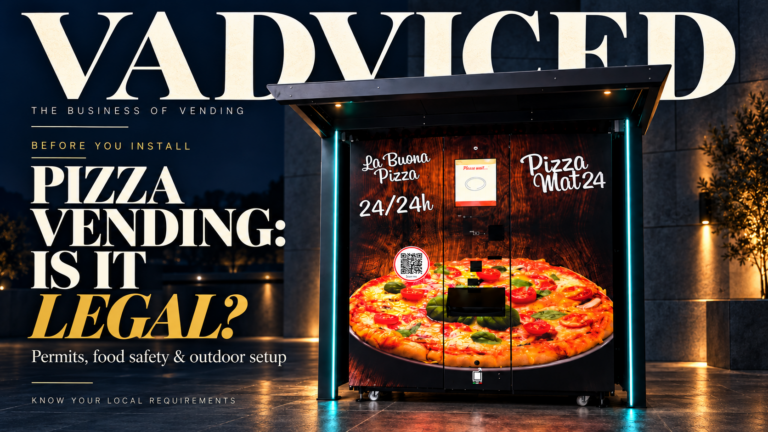
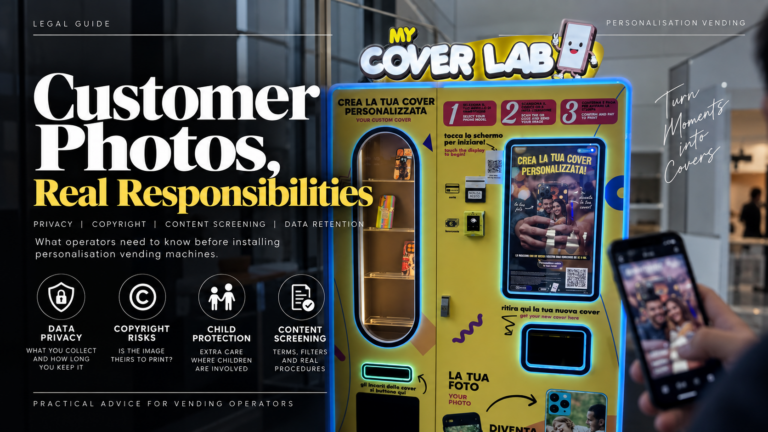
A vending machine operator license is a mandatory municipal or state regulatory authorization that grants a business or individual the legal right to install, stock, and collect revenue from automated retail equipment. Operating without proper licensing exposes owners to severe tax penalties, equipment impoundment, and civil fines. Regulatory requirements vary depending on whether machines store shelf-stable snacks, temperature-controlled perishable food, or age-restricted merchandise.
Automated retail operations require multi-tiered compliance across local, county, and state jurisdictions. Commercial operators sourcing equipment from commercial suppliers like VMFS USA must establish legal compliance before deploying hardware to commercial accounts. Understanding foundational industry terms, such as machine telemetry, location commissions, and operator permits, is critical when reviewing vending machine business terminologies.
Essential Permits and Licenses Required for Operators
Vending operations require multiple legal permits to comply with local trade laws, state revenue codes, and food safety standards. Failing to secure a single required license can halt route operations across an entire municipality.
General Business License
A general business license authorizes an operator to conduct commercial enterprise within a specific city or county. Municipal governments issue these licenses through the city clerk or local department of finance to track local commercial activity. Annual renewal fees typically depend on total route gross revenue or total active machine counts.
State Sales Tax Permit and Seller’s License
A state seller’s permit enables operators to collect state and local sales tax on retail merchandise sold through automated machines. State tax agencies require vending operators to file quarterly or annual sales tax returns, reporting total gross receipts. Certain jurisdictions exempt unsweetened bottled water or basic food items from sales tax, requiring precise point-of-sale inventory tracking.
Health Department Permits for Perishable Inventory
Local health departments require food service operator permits for machines dispensing potentially hazardous foods requiring temperature control. Cold food units maintaining temperatures below 41°F (5°C) undergo physical health inspections to verify automatic shut-off safety locks. Operators stocking fresh sandwiches, dairy, or prepared meals in specialized fridge vending machines must display physical health department inspection decals directly on the cabinet glass.
Specialized Category Licenses
Dispensing age-restricted products requires specialized state and federal retail licenses. Operating regulated hardware, such as alcohol vending machines, requires state liquor control board permits paired with automated ID-verification scanners. Similarly, launching a specialized vape vending machine business mandates state tobacco retailer licensing and compliance with strict age-gating hardware standards.
Legal Entity Structuring and Tax Registrations
Establishing a formal business entity isolates personal assets from commercial liabilities while establishing tax compliance with the IRS and state authorities. Operating as an unregistered individual exposes personal savings to business litigation.
Selecting the Right Corporate Structure
Forming an LLC is the industry standard for route operators because it creates a protective barrier between personal net worth and business obligations. Business owners evaluating entity structures should form an LLC for a vending machine business to gain limited liability while maintaining simple pass-through tax reporting.
Operators starting with single-machine setups occasionally consider operating as a sole proprietorship, though this leaves personal assets exposed to slip-and-fall claims or product liability suits. Growing companies generating substantial net profit often elect S-Corporation tax status to minimize self-employment tax burdens across route operations.
Obtaining an Employer Identification Number and Registered Agent
An Employer Identification Number (EIN) acts as a corporate Social Security Number required to open commercial bank accounts, secure wholesale food vendor pricing, and hire route drivers. State corporate filings also require assigning a official representative to receive legal notices. Operators must retain a compliant registered agent for a vending machine business to handle official state communications and maintain legal standing.
Cost Breakdown of Vending Licensing and Permits
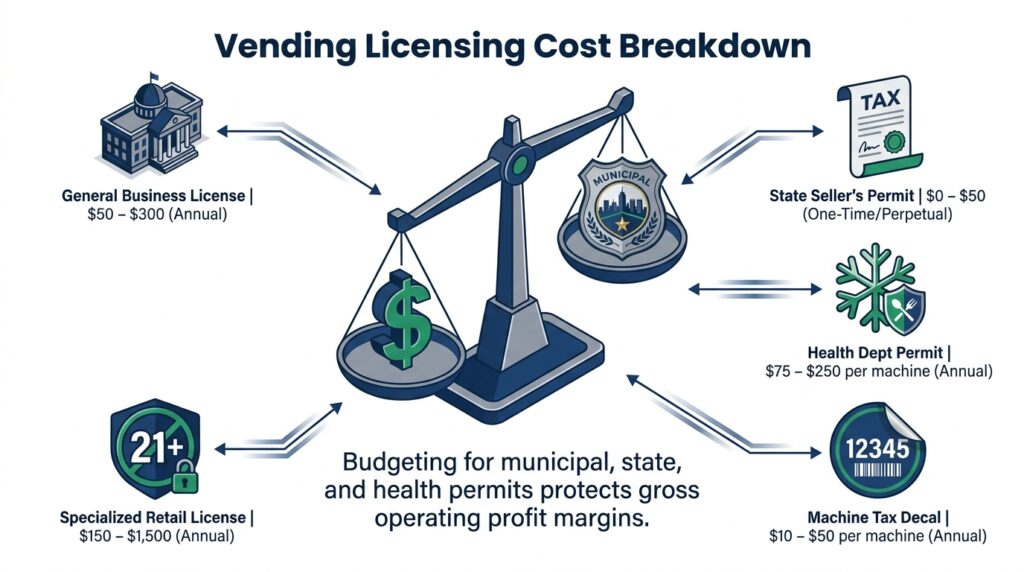
Licensing costs for vending machine operators vary based on route geography, inventory classification, and total machine count. Budgeting for regulatory compliance prevents unexpected startup delays during business formation.
| Permit / License Type | Average Cost Range | Renewal Frequency | Regulatory Authority |
| General Business License | $50 – $300 | Annual | City / County Clerk |
| State Seller’s Permit (Sales Tax) | $0 – $50 (Deposit may apply) | One-time / Perpetual | State Department of Revenue |
| Health Department Permit | $75 – $250 per machine | Annual | County Environmental Health |
| Vending Machine Tax Decal | $10 – $50 per machine | Annual | Municipal Tax Assessor |
| Specialized Retail License (Vape/Tobacco/Alcohol) | $150 – $1,500 | Annual | State Excise / Liquor Control Board |
| LLC Business Formation Fee | $50 – $500 | One-time (Plus state annual report) | Secretary of State |
Understanding initial legal expenses is essential when calculating total startup capital. Prospective business owners should review how to start investing in vending machines to align regulatory permit costs with overall equipment acquisition budgets. Maintaining clear expense boundaries helps operators protect their overall vending machine profit margins.
Step-by-Step Compliance and Licensing Process
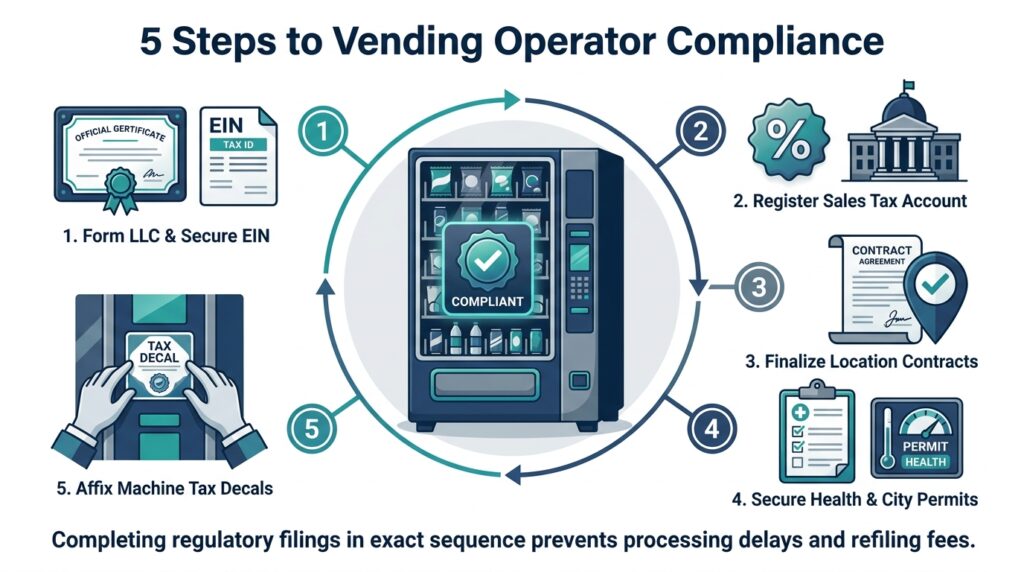
Completing regulatory filings in the correct order prevents processing rejections and eliminates unnecessary application refiling fees.
Step 1: Form Legal Entity and Secure EIN
Register your corporate business structure with your Secretary of State and apply for a federal EIN through the IRS portal. This step must precede applying for local business licenses or purchasing commercial insurance.
Step 2: Register for State and Local Sales Tax Accounts
Apply for your state seller’s permit through your state’s Department of Revenue. Obtain sales tax collection schedules and set up dedicated tax holding accounts to manage collected sales tax payments.
Step 3: Secure Location Placement Contracts
Secure formal written agreements with commercial property owners before applying for machine-specific location permits. Property owners looking for professional refreshment operators can utilize the VPlaced location owner matching network to connect directly with vetted vending businesses. Reviewing a standard vending machine contract template ensures location agreements address permit compliance, electrical utility usage, and liability limits.
Step 4: Apply for Municipal Operator Permits and Health Licenses
Submit your business entity details and physical machine placement addresses to your city clerk and county health department. Schedule required on-site health inspections for machines dispensing perishable food products.
Step 5: Affix Official Tax Decals and License Plates
Affix mandatory state and municipal license decals directly to the front exterior of each deployed machine. Decals must remain clearly visible to code enforcement officers inspecting commercial facilities.
Location Contracts, Zoning Laws, and Revenue Splits
Operating a compliant vending route requires adhering to local land-use zoning codes and structuring legal contracts with commercial property owners.
Navigating Commercial Zoning Restrictions
Municipal zoning ordinances govern where commercial vending equipment can operate. Outdoor vending installations frequently face strict zoning codes regarding public sidewalk clearance, exterior lighting, ADA accessibility pathways, and visual signage restrictions. Indoor placements within private commercial buildings require minimal municipal zoning oversight but must comply with building fire exit codes.
Selecting compliant sites requires evaluating foot traffic density and property access. Operators should study how to choose a profitable vending location to identify commercial spaces that combine strong sales potential with straightforward regulatory approval. Deploying modern combo vending machines allows operators to maximize revenue per square foot under a single location permit.
Structuring Compliant Revenue Sharing Contracts
Location contracts define the financial relationship between the operator and the property owner. Compensation structures typically involve a fixed monthly space rental fee or a percentage-based commission split calculated from net gross sales.
Establishing legal contract terms prevents future commission disputes. Operators should review standard industry norms for vending machine revenue splits to ensure location commissions do not erode route profitability.
Operational Standards: Health Codes, Restocking, and Insurance
Maintaining ongoing licensing compliance requires adhering to daily operational standards regarding sanitation, inventory management, and commercial liability protection.
Health Code Compliance and Inventory Rotation
County health inspectors conduct periodic surprise audits of licensed food vending equipment. Operators stocking cold food must monitor machine internal refrigeration temperatures, ensure automatic shut-off switches function during power outages, and enforce strict expiration date monitoring.
Deploying high-efficiency healthy vending machines requires active inventory tracking to prevent stocking expired organic snacks. Following best practices for vending machine maintenance protects public health and keeps machine sanitation logs audit-ready.
Commercial Liability Insurance Requirements
Commercial property managers require vending operators to carry commercial general liability insurance before placing equipment on their premises. Standard policies mandate $1,000,000 to $2,000,000 in coverage per occurrence to protect against property damage, electrical fires, or product liability claims. Reviewing a dedicated vending machine insurance guide ensures operators select policies that cover both warehouse stock and deployed field equipment.
Route Restocking and Field Operations
Maintaining licensed routes requires disciplined inventory management and cash handling workflows. Operators utilize telemetry software to perform streamlined inventory tracking, reducing transit costs and preventing stockouts.
As route fleets expand, business owners often hire route drivers to handle physical replenishment, token handling, and machine sanitation. Operators looking to expand their delivery staff or individuals seeking field experience can review current market roles for vending machine restock jobs to understand labor expectations and standard pay structures.
Pros and Cons of Licensed Vending Machine Ownership
Operating a fully licensed automated retail business provides significant operational stability, though it carries regulatory overhead and ongoing compliance duties.
Pros
- Legal Operational Protection: Proper licensing prevents property confiscation, city fines, and sudden location eviction.
- Access to Premium Locations: High-traffic corporate offices, hospitals, and airports require fully licensed, insured operators.
- Tax Deductibles and Business Write-Offs: Operating a registered LLC allows owners to deduct vehicle mileage, equipment depreciation, and stock costs.
- Scalable Business Equity: Licensed, contract-backed vending routes can be valued and sold as tangible business assets.
Cons
- Administrative Overhead: Managing state sales tax filings, health permits, and business license renewals requires ongoing time.
- Recurring Regulatory Costs: Annual permit fees, inspection costs, and registered agent fees reduce initial profit margins.
- Geographic Variations: Expanding routes into neighboring municipalities often requires filing new, separate city business licenses.
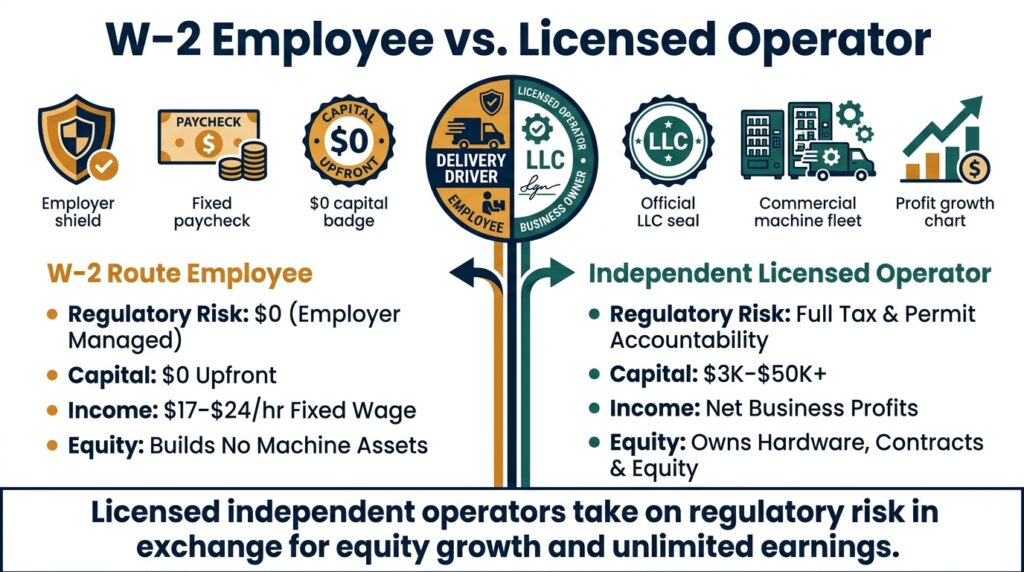
W-2 Route Restocker vs. Independent Licensed Operator
Understanding the differences between working as an employed route restocker and managing an independent licensed vending business helps individuals choose the right entry point into the automated retail industry.
| Operational Criteria | W-2 Route Restock Employee | Independent Licensed Vending Operator |
| Regulatory Responsibility | None; employer manages licenses and permits | Full accountability for legal permits, taxes, and codes |
| Capital Requirement | $0 upfront investment required | $3,000 – $50,000+ for hardware, stock, and permits |
| Income Structure | Fixed hourly wage ($17 – $24/hr) + potential bonuses | Net business profits (Tied to route efficiency) |
| Liability Exposure | Protected under company corporate umbrella | Direct liability for contract breaches or health codes |
| Asset Ownership | Builds no equity in machines or locations | Owns all hardware assets, contracts, and business equity |
| Work Autonomy | Follows assigned corporate route schedule | Directs company scaling, machine selection, and hours |
Independent operators who obtain necessary licenses and master route logistics can scale their operations into profitable commercial enterprises. Reviewing strategic insights on how to build real passive income with vending machines provides a roadmap for leveraging legal business structures into long-term wealth creation.
Frequently Asked Questions
Do I need a specific license to start a vending machine business?
Yes, operators typically require a general business license, a state seller’s sales tax permit, and local machine tax decals. Dispensing perishable food, alcohol, or vape items requires additional specialized health department or state excise permits.
How much does a vending machine operator license cost?
A basic municipal vending operator license ranges from $50 to $300 annually, depending on city fees and fleet size. Additional machine decals cost between $10 and $50 per unit, while perishable health permits cost $75 to $250 per machine.
Can I operate a vending machine without an LLC?
Yes, you can operate as a sole proprietor, but doing so exposes your personal assets to business lawsuits, debt liabilities, and property damage claims. Forming an LLC creates a legal wall protecting personal savings and property.
Do I need a health permit for a soda and snack vending machine?
Pre-packaged, non-perishable snacks and canned sodas generally do not require a health department permit in most jurisdictions. Health permits are mandatory for machines dispensing temperature-controlled perishable items like sandwiches, milk, or fresh salads.
How do I collect and pay sales tax on vending machine sales?
Operators register for a state seller’s permit and file periodic sales tax returns with their state revenue agency. Sales tax is calculated from total gross machine receipts and remitted monthly, quarterly, or annually.
What happens if I place a vending machine without a license?
Unlicensed machines are subject to municipal fines, code enforcement citations, immediate location removal, and potential equipment impoundment by city authorities. State tax agencies may also issue severe penalties for uncollected sales tax.
Do I need a driver’s license to operate a vending route?
Yes, operating a vending route requires a valid state driver’s license with a clean driving record to operate delivery vans or cargo vehicles. Standard route vans under 26,000 lbs GVWR do not require a Commercial Driver’s License (CDL).
How long does it take to get a vending machine operator license?
Securing general business licenses and state seller’s permits takes between 1 and 3 weeks. County health inspections for cold food machines may take 2 to 6 weeks depending on local agency scheduling.
Are vending machine licensing rules the same in every state?
No, licensing rules, tax rates, and health codes vary significantly by state, county, and municipality. Operators must verify local compliance laws with their municipal city clerk and state department of revenue before placing equipment.
Does a property owner need a vending license if an operator manages the machine?
No, the property owner does not need a vending license if an independent, third-party operator owns, stocks, and services the machine. The third-party operator is legally responsible for securing all business licenses, health permits, and sales tax registrations.