Legal & Setup | Protein Shake Vending | By the VAdviced Team | August 2026
A member buys a shake from your machine. Sixty seconds later they are holding a cup. Look at that cup carefully, because there is something missing from it. There is no ingredient list. No allergen statement. No manufacturer name. No serving information. Nothing at all.
In a snack machine that would be fine, because the product arrives in the manufacturer’s own sealed packaging with every one of those things printed on it. A protein shake machine works differently. It buys in bulk and dispenses by the serving, and somewhere in that process the label falls off.
That is the single most overlooked issue in this category, and it starts with a classification most operators do not realise applies to them.
General information, not legal advice. Supplement and food rules vary by state on top of the federal position, and how they apply to a specific setup can be fact dependent. Use this to know what to ask about, then confirm the details for your own operation.
Where this comes from: setting up vending businesses legally is what we do. Protein shake machines raise questions that snack and drink operators have never had to answer, and these are the ones that come up most.
Protein Powder Is Not Food. It Is a Supplement.
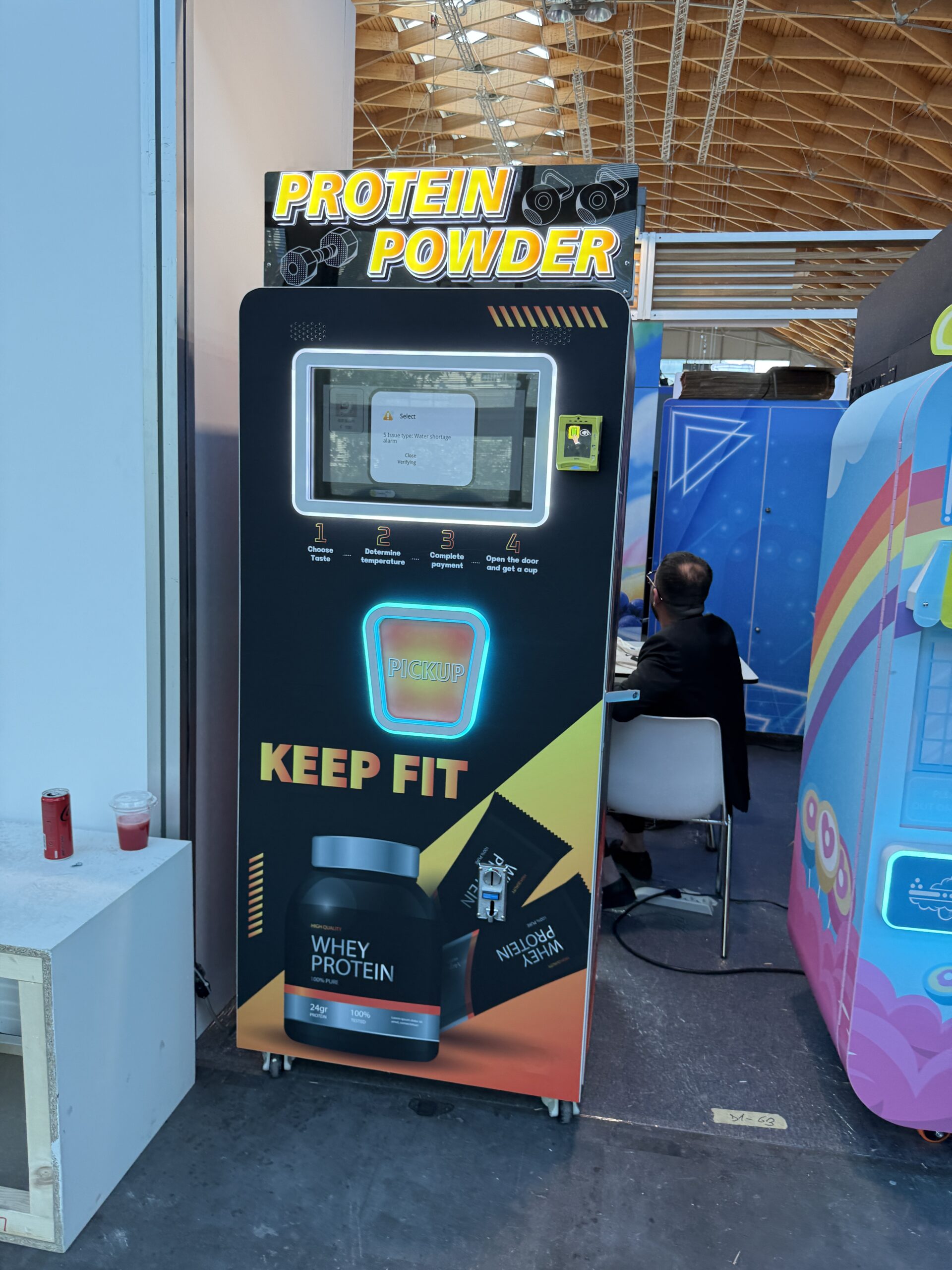
This is the classification that catches people, and everything else follows from it. In the United States, protein powder is generally regulated as a dietary supplement rather than as a conventional food. That comes from the Dietary Supplement Health and Education Act of 1994, usually shortened to DSHEA.
Practically, that means:
- No FDA pre approval. Nobody checks a supplement before it goes to market. Responsibility for safety sits with whoever puts it out.
- Enforcement happens afterwards. The FDA acts post market, through inspections, observations and warning letters, which is a very different posture to a licensing regime.
- A different label entirely. Supplements carry a Supplement Facts panel under 21 CFR 101.36, not the Nutrition Facts panel you see on food.
- Different manufacturing rules. 21 CFR Part 111 sets out current good manufacturing practice specifically for dietary supplements.
So an operator who researched food vending rules and thought they were done has been reading the wrong rulebook. Useful, but incomplete.
The Question Almost Nobody Asks: Are You a Packager?
Here is where it gets genuinely interesting, and where we would encourage every operator in this category to get advice rather than assume.
Part 111 opens by defining who it applies to, and the definition is broader than most people expect. It covers anyone who manufactures, packages, labels or holds dietary supplements. Not just manufacturers. There is a whole subpart devoted to packaging and labeling operations, and a specific section, 111.420, dealing with repackaging and relabeling, which requires quality control approval, batch examination and sign off before anything is released.
Now think about what your machine does. It receives bulk product, holds it in a hopper, portions it into a serving, combines it with water and delivers it in a container to a consumer. A reasonable person could describe several of those steps as packaging.
Why this matters commercially: a retailer selling sealed manufacturer product carries very light obligations. An operation that portions and repackages a supplement is in a different category with real record keeping and quality control expectations attached. Where exactly your setup falls depends on the details, which is precisely why it is worth establishing before you have twenty machines rather than after.
Your Screen Is the Label
Back to that unlabelled cup, because there is a practical answer and it is a good one.
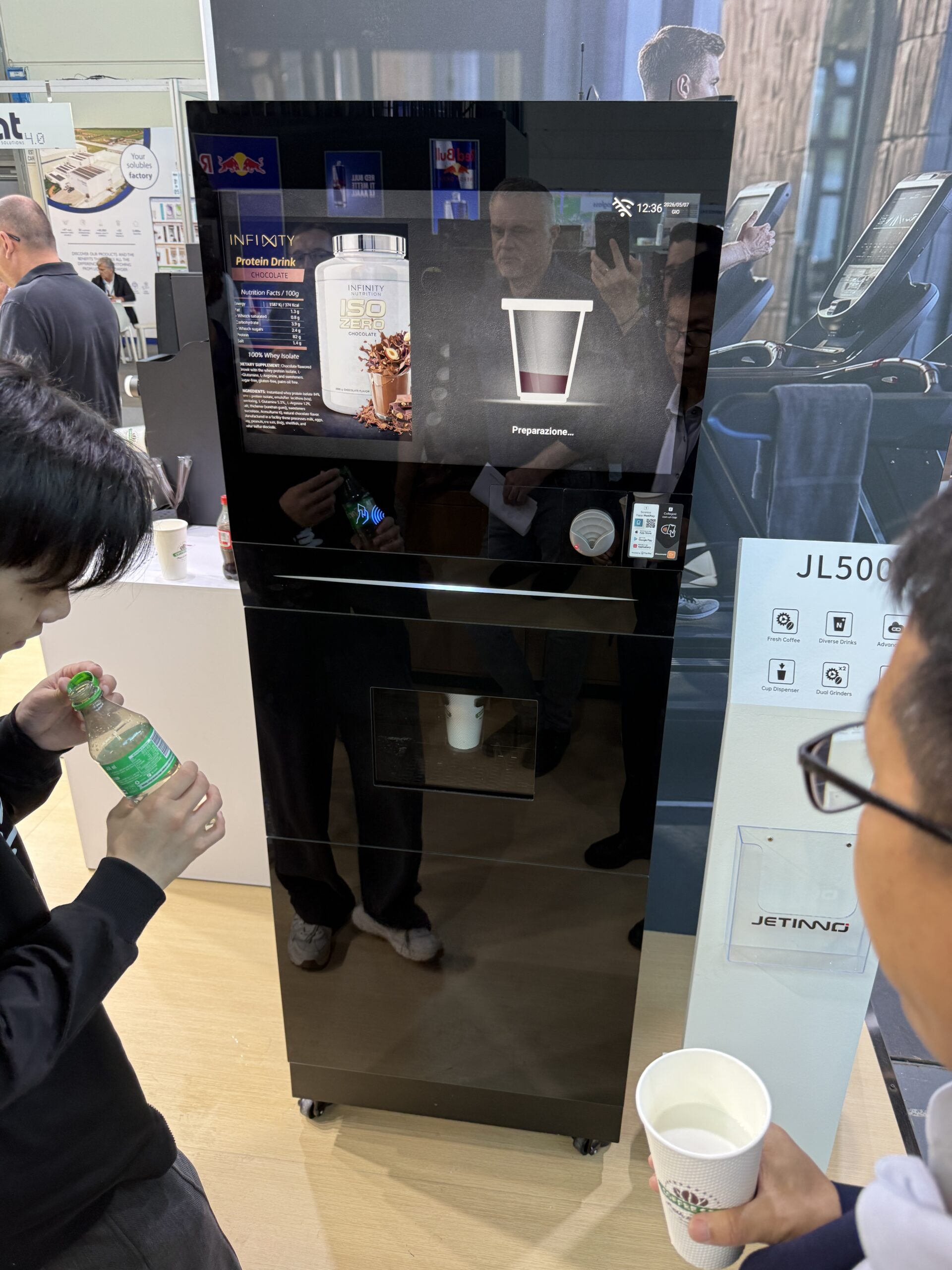
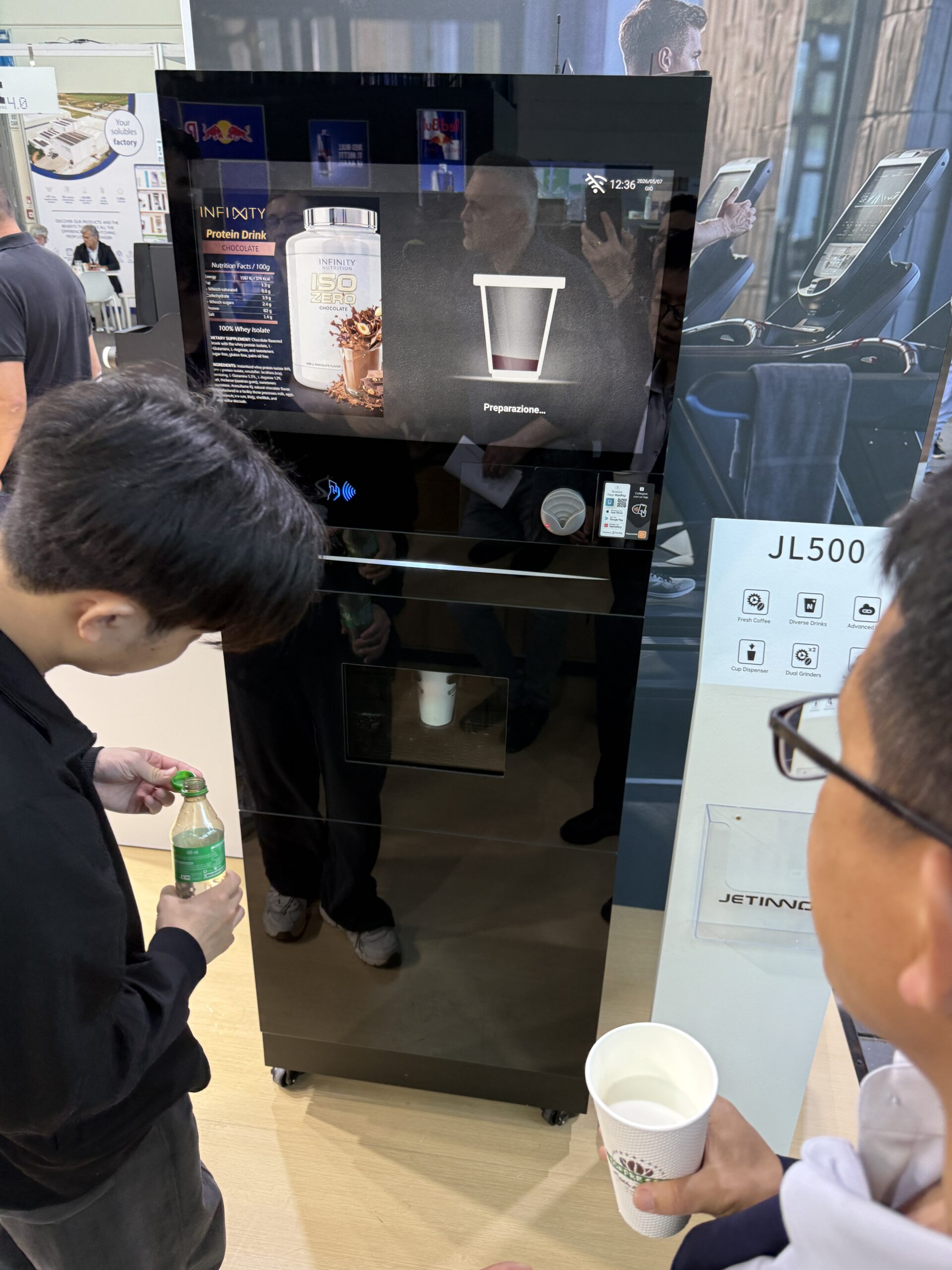
A consumer buying a supplement is entitled to know what is in it before they buy. If the container cannot carry that information, the machine has to. The screen is the only surface in the transaction that can show a Supplement Facts panel, an ingredient list, an allergen statement and the name of whoever made the product, and it can show all of that at the moment of selection rather than after the fact.
What we would want visible before a customer commits:
- The full Supplement Facts information for that product and serving size
- The complete ingredient list, not a summary
- A clear allergen statement, which we will come back to because it matters more than people think
- The brand and manufacturer, since customers in this category genuinely care and the information is required on the original packaging anyway
- Any warnings the manufacturer prints on the tub, which do not stop applying because the powder moved into a hopper
That means screen size and capability are not a cosmetic choice here, and it is worth checking what a given build can actually display across the touch screen vending machines available. Keep the original manufacturer packaging too, with lot numbers, and record which lot went into which machine on which date. If there is ever a recall or a complaint, that record is the difference between a contained problem and an uncontained one.
Whey Is Milk, and Milk Is a Major Allergen
This one deserves its own section because the exposure is real and the fix is cheap.
Whey protein is a dairy product. Milk is one of the nine major allergens requiring declaration in the US, alongside eggs, fish, shellfish, tree nuts, peanuts, wheat, soy and sesame. Casein blends are also dairy. Many mass gainers contain soy. Some flavour systems bring nuts into the picture.
So a machine dispensing whey into an unmarked cup is handing a milk product to somebody with no allergen warning anywhere in the transaction. Most gym members know what whey is. Not all do, and it only takes one who does not.
Two extra points worth building in:
- Cross contact between hoppers. If a vegan option shares any part of the mixing system with a whey line, that is worth understanding and disclosing rather than glossing over. A customer choosing plant protein is often choosing it for a reason.
- Say it plainly on screen. Contains milk. Contains soy. Not buried in a panel someone has to open, but visible at the point of choosing, which is a design decision as much as a legal one and worth building in with whoever produces your screen and machine graphics.
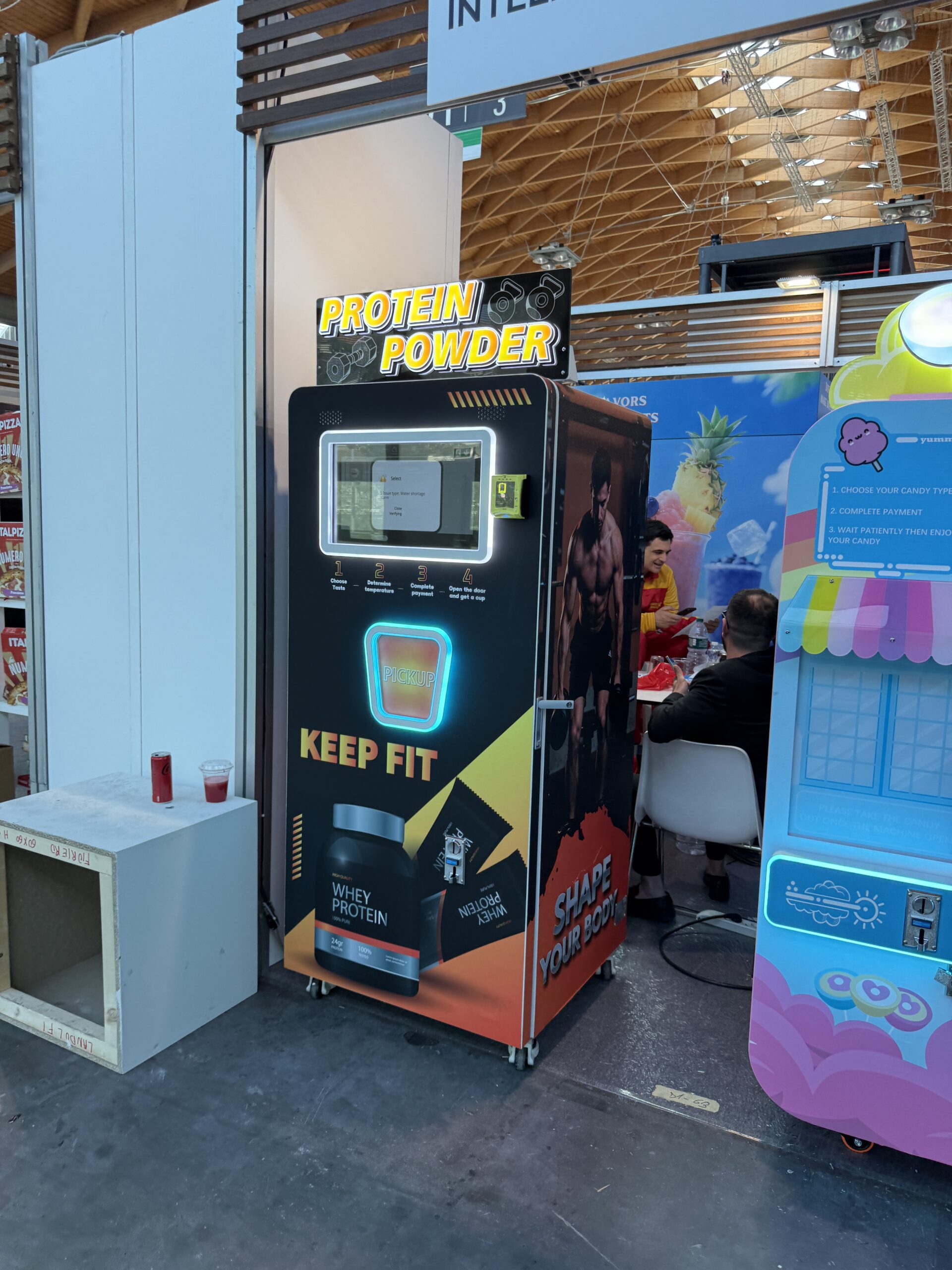
Be Careful What the Machine Claims
Supplement marketing is one of the most heavily policed areas of consumer advertising in the country, and here is the thing operators miss: whatever appears on your screen or your wrap is labeling. It is not separate from the product.
There is a bright line between two kinds of statement:
| Structure or function claim | Disease claim |
|---|---|
| Talks about supporting normal body function | Says or implies it treats or prevents a condition |
| Permitted, with a required disclaimer | Not permitted on a supplement |
| Example: supports muscle recovery | Example: prevents muscle wasting disease |
Structure and function claims carry a mandatory disclaimer noting that the statement has not been evaluated by the FDA and the product is not intended to diagnose, treat, cure or prevent any disease. Cross into disease territory and the product is arguably being marketed as an unapproved drug, which is a very different level of problem.
Practically: keep the manufacturer’s own approved claim language rather than inventing your own, and have any screen copy or wrap text reviewed before it goes live. Since that copy is usually written by whoever handles your marketing, it is worth them and us being in the same conversation, which is how we work with VMarketed, right down to the claim language that ends up in a media kit shown to gym owners.
Sourcing Is a Legal Decision, Not Just a Cost One
Because supplements are not pre approved, the quality of what goes into your hopper is entirely on the supply chain you choose. That makes sourcing a compliance decision dressed up as a purchasing decision.
- Buy from cGMP compliant manufacturers and ask for documentation rather than assurances.
- Ask about third party testing. Independent verification of contents matters in a category with a long history of products not containing what the label says.
- Keep certificates of analysis for the lots you actually run.
- Maintain traceability. Which lot, which machine, which dates. This is the single most useful record you can keep.
- Avoid anything with proprietary blend vagueness or ingredients you cannot explain to a customer who asks.
There is a commercial upside here too. Sourcing well and being able to prove it is exactly what lets you sell a premium product to an audience that reads labels for fun, and premium product needs a machine that presents it properly, which you can compare across the full range here.
Water, Hygiene and Your Health Department
Federal supplement rules are only half of it. The moment your machine mixes a wet product and hands it to somebody, your local health authority has an interest, and their questions are practical rather than philosophical.
- Water source. Plumbed in or bottled reservoir, and whether the connection needs backflow prevention. Plumbing usually brings the building’s own rules into play.
- Filtration and maintenance records. If a filter is fitted, somebody has to change it and be able to show when.
- Cleaning cycles. Automated rinsing on the mixing chamber and lines, plus a documented manual schedule. A wet product system without this develops problems fast.
- Food contact surfaces. Food grade materials throughout, which any serious machine will already satisfy but is worth confirming.
- Permit type. Many jurisdictions will want a food establishment or vending permit for a machine dispensing a prepared drink. Ask early rather than after installation.
This is also where hardware choice becomes a compliance shortcut. A machine with genuine automated cleaning and monitoring makes these conversations straightforward, which is worth weighing when you look at the healthy vending and beverage machine options rather than after you have bought.
The Ordinary Setup, Which Still Applies
- Business entity. Most operators form an LLC to separate personal and business liability, and in a category where you are dispensing something people ingest, that separation earns its keep.
- Sales tax registration. Selling from a machine is a taxable retail sale in most states, and supplements are sometimes treated differently from both food and general merchandise, so check rather than assume.
- Resale certificate. Buying bulk powder wholesale for resale generally needs one, and without it you can end up paying tax twice on the same product.
- Vending licence and decals. Many states and cities require a vending specific licence, some with a sticker on each machine.
- Insurance. General liability as standard, and product liability worth confirming specifically, because supplement claims are their own category of risk.
Gyms will also usually require proof of insurance before letting a machine through the door, so having it in place makes the placement conversation considerably easier. Our partners at VPlaced handle finding and securing sites, and their guide on getting machines into gyms covers what those operators typically ask for.
Put These in the Placement Agreement
A gym agreement for this machine needs clauses a snack agreement does not:
- Who is responsible for cleaning and on what schedule, in writing
- Water supply arrangements and who pays for plumbing or filtration work
- Which party carries product liability, and confirmation of cover on both sides
- Whether the gym may specify or veto brands, since many have supplement partnerships already, a point worth raising early when a site is being negotiated through VPlaced
- What happens to the machine and remaining stock if the agreement ends
How We Help
The difficulty with this category is not that any single requirement is hard. It is that they sit across a federal supplement regime, a state revenue department, a county health office and a city clerk, and none of them will tell you what the others expect.
- Establishing what actually applies to you. Your product, your machine and your states decide the rules, including the packaging question above.
- Entity, tax and licensing. Formation, sales tax, resale certificate, vending licences and decals handled properly.
- Label and screen content. Making sure what the machine displays satisfies what the cup cannot.
- Claims review. Checking screen and wrap copy before it becomes a problem rather than after.
- Agreements. Placement contracts with the cleaning, water and liability clauses this format needs.
You can see the full scope on our services page, see the process on how we work, start through Order Now, or ask us first if you would rather talk it through. On the hardware side, cleaning systems and screen capability genuinely affect your compliance position, so it is worth starting with the right vending machines and specifying deliberately.
Before You Switch It On
- Do you understand whether your operation counts as packaging a supplement?
- Does the screen show Supplement Facts, ingredients and allergens before purchase?
- Is milk declared clearly wherever whey or casein is dispensed?
- Are you buying from cGMP compliant, ideally third party tested suppliers?
- Can you trace which lot went into which machine on which date?
- Has your screen and wrap copy been checked for disease claims?
- Is the water supply arrangement agreed and compliant?
- Do you have the entity, sales tax registration, resale certificate and vending licence?
- Does your insurance genuinely cover product liability on a supplement?
Frequently Asked Questions
Do you need a licence to run a protein shake vending machine?
Generally yes, and often more than one. Expect a business licence, sales tax registration and usually a vending licence, plus a food establishment or equivalent permit from your local health authority because the machine mixes and dispenses a drink. On top of that sit federal dietary supplement rules, which are separate from ordinary food regulation.
Is protein powder regulated as food?
Not usually. Protein powder is generally treated as a dietary supplement under DSHEA, which means no FDA pre approval, post market enforcement, a Supplement Facts panel rather than Nutrition Facts, and good manufacturing practice rules written specifically for supplements.
How do you label a shake dispensed into a plain cup?
The screen has to do the work the packaging normally would. Display the Supplement Facts information, full ingredient list, allergen statement and manufacturer details at the point of selection, keep the original manufacturer packaging with lot numbers, and record which lot ran in which machine and when.
Can the machine say the shake builds muscle?
Statements about supporting normal body function are permitted but carry a mandatory disclaimer that the claim has not been evaluated by the FDA and the product is not intended to diagnose, treat, cure or prevent any disease. Anything implying treatment or prevention of a condition crosses into disease claim territory, which is not permitted on a supplement.
Do you have to declare allergens?
Yes, and this is easy to get wrong here. Whey and casein are dairy, and milk is one of the nine major US allergens. Soy is common in gainer blends and some flavour systems involve nuts. All of that should be stated plainly on screen before purchase, along with any cross contact between hoppers sharing a mixing system.
Setting Up a Protein Shake Machine?
We handle entity formation, licensing, permits, labeling and the supplement side that makes this category different. Get it structured properly before the machine pours its first shake.