Legal & Setup | Water Vending | By the VAdviced Team | September 2026
A water refill machine looks like the simplest thing an operator could possibly run. There is no stock to source, nothing expires, nothing needs refrigerating in the ordinary sense, and the product arrives through a pipe. Compared to hot food or fresh beverage it appears almost trivial.
It is, in regulatory terms, close to the opposite. Water vending is one of the most specifically licensed formats in the entire industry, and in several states it has its own dedicated licence category, its own inspection regime, its own mandatory testing schedule and its own labelling requirements.
Operators arrive expecting to add a water machine to an existing vending licence. That is not how this works, and there is one particular word in your marketing that can quietly create a testing obligation with a hard numeric limit attached.
General information, not legal advice. Water vending rules are set at state level and vary considerably, with California among the most detailed. Use this to understand the shape of the obligations, then confirm what applies where your machines will stand.
Where this comes from: setting up vending businesses legally is what we do. Water refill machines look straightforward and sit on a genuinely detailed regulatory foundation, and these are the questions operators most often have not thought about.
It Has Its Own Licence, Not a Vending Licence
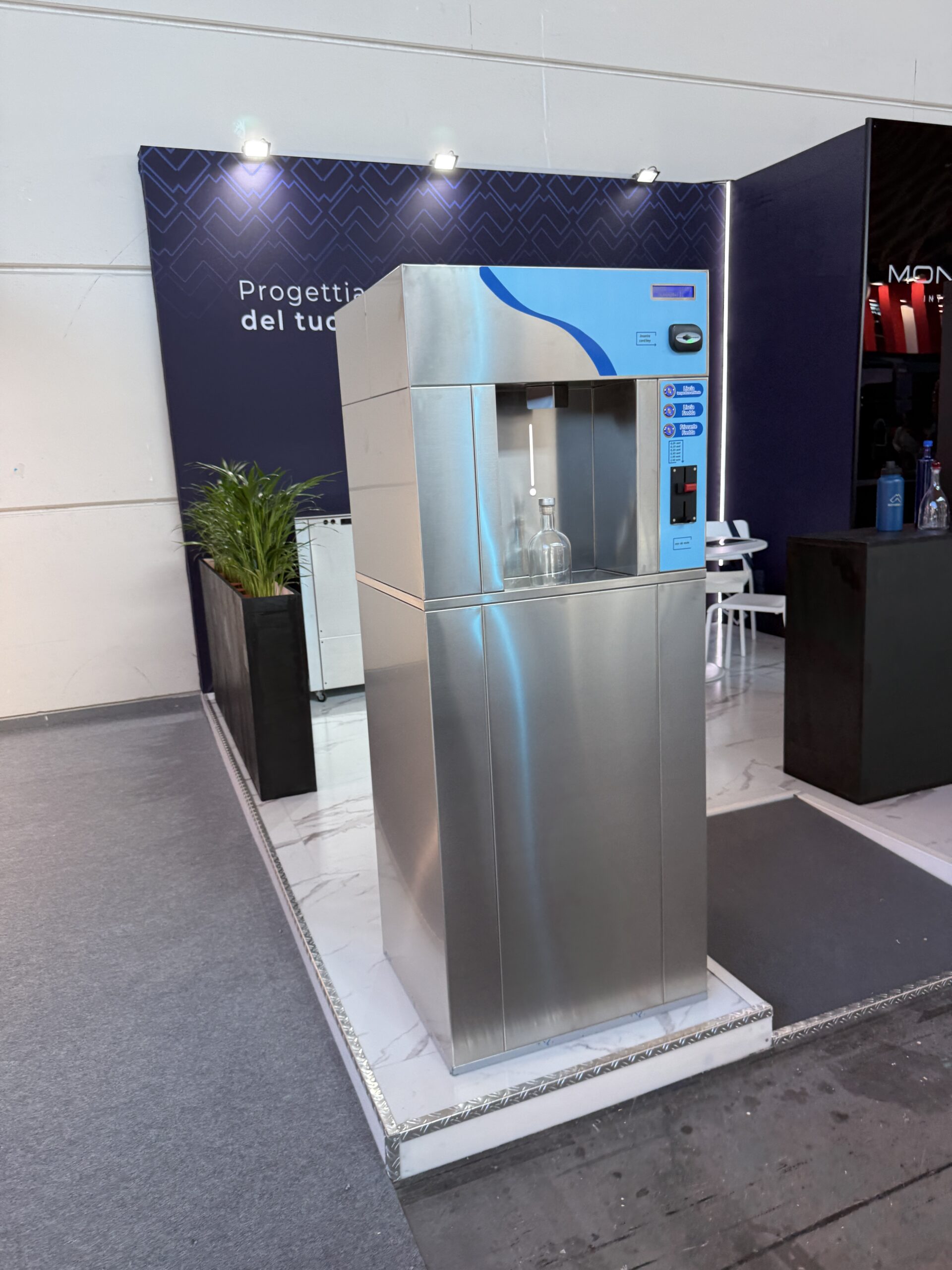
This is the first thing to establish, because it catches almost everybody. In California, which has the most developed framework in the country and which several other states look to, the Health and Safety Code states plainly that no person shall own or operate a water vending machine except under a licence issued by the state Department of Public Health or a permit issued by a local health department.
That is a Water Vending Machine Operator Licence, it is its own category, and it has to be renewed annually. It is not covered by a general vending licence, a business licence or a food establishment permit, and operating without it is one of the most commonly recorded violations in the state’s own reporting.
The application itself tells you a great deal about what the regulator expects, because you have to submit:
- Laboratory test results before you are licensed, from a state certified laboratory, showing bacteriological analysis of the water your machine dispenses.
- Colour photographs of each machine, demonstrating that the required consumer information statements are actually displayed on it.
- A list of the water source used by each machine, which means you need to know and document where every unit draws from.
- Additional TDS testing if you intend to describe the water in a particular way, which is the point we come to next.
There is also a separate category worth knowing about. A retail water facility, meaning a commercial establishment where vended water is sold and placed into customers’ own containers, is licensed in its own right. Depending on how a site is arranged, that classification can be relevant to the venue as well as to you.
The Word That Creates an Obligation
This is the finding we would most want a water vending operator to carry away, because it converts a marketing decision into a legal one and almost nobody sees it coming.
If you label or advertise your vended water as purified, California requires you to perform total dissolved solids testing by conductivity measurement every single time the machine is serviced, and the water must not exceed 10 milligrams per litre of TDS. That is a hard number and it is checked.
And the rule reaches further than the exact word. If your labelling or advertising says pure water, agua pura, or any similar name implying the water is purified, it is treated as purified water and has to meet the same limit and the same monitoring requirement.
Think about what that means practically. Somebody designing a machine wrap chooses the word pure because it sounds better than filtered. Nobody involved realises that single word has just committed the business to conductivity testing at every service visit against a specific numeric standard, for the life of the machine. This is precisely why we ask to review wrap and screen copy before it is printed rather than after.
None of which makes purified a bad claim. If your treatment genuinely achieves it, saying so is a real differentiator against a drinking fountain. It simply has to be a decision you made deliberately, with the testing budgeted, rather than a word somebody liked the sound of. Coordinating that with whoever produces your machine graphics before anything goes to print is the cheapest possible way to avoid it.
The Thirty One Day Rule
Water vending has a servicing requirement written into statute, which is unusual and which operators consistently underestimate when modelling their route.
Machines must be cleaned, serviced and sanitised in accordance with the manufacturer’s specifications, and at minimum once every 31 days. Not when convenient, not when the filter indicator suggests it, but on a schedule the law sets.
Attached to that is a record keeping obligation with real teeth:
- An inspection record for every visit, whether made by you or by maintenance personnel. Every visit, not merely the monthly one.
- Each record must show the date and time, any tests performed, any maintenance performed, and who did it.
- Records kept for a minimum of two years by the machine owner.
- Produced on request. Which means a filing system rather than a notebook in a van.
The commercial consequence matters as much as the legal one. A statutory monthly minimum sets a floor under your route costs that no amount of remote monitoring removes. When operators tell us a water machine is attractive because it needs almost no attention, this is the paragraph we point at.
Testing Is Continuous, Not a One Off
Licensing gets you started. Staying licensed means an ongoing testing programme.
- Coliform bacteria analysis at least every six months, for each product the machine dispenses, submitted to the regulator indicating whether the water is pure and wholesome.
- A state certified laboratory, not any lab. This is specified and it affects cost and turnaround.
- TDS testing at every service where purified claims are made, as above.
- Per product testing. Note the wording. If your machine dispenses still, sparkling and ambient as separate products, do not assume one sample covers all of them.
- Results submitted rather than merely held. Some testing obligations require you to send results in, not simply keep them for inspection.
Budget this properly at the outset. It is a recurring cost per machine rather than per business, which means it scales with your route and materially affects whether marginal sites are worth taking.
The Machine Itself Has to Say Things
Water vending carries display requirements that go beyond ordinary vending, and the licensing process specifically verifies them through photographs.
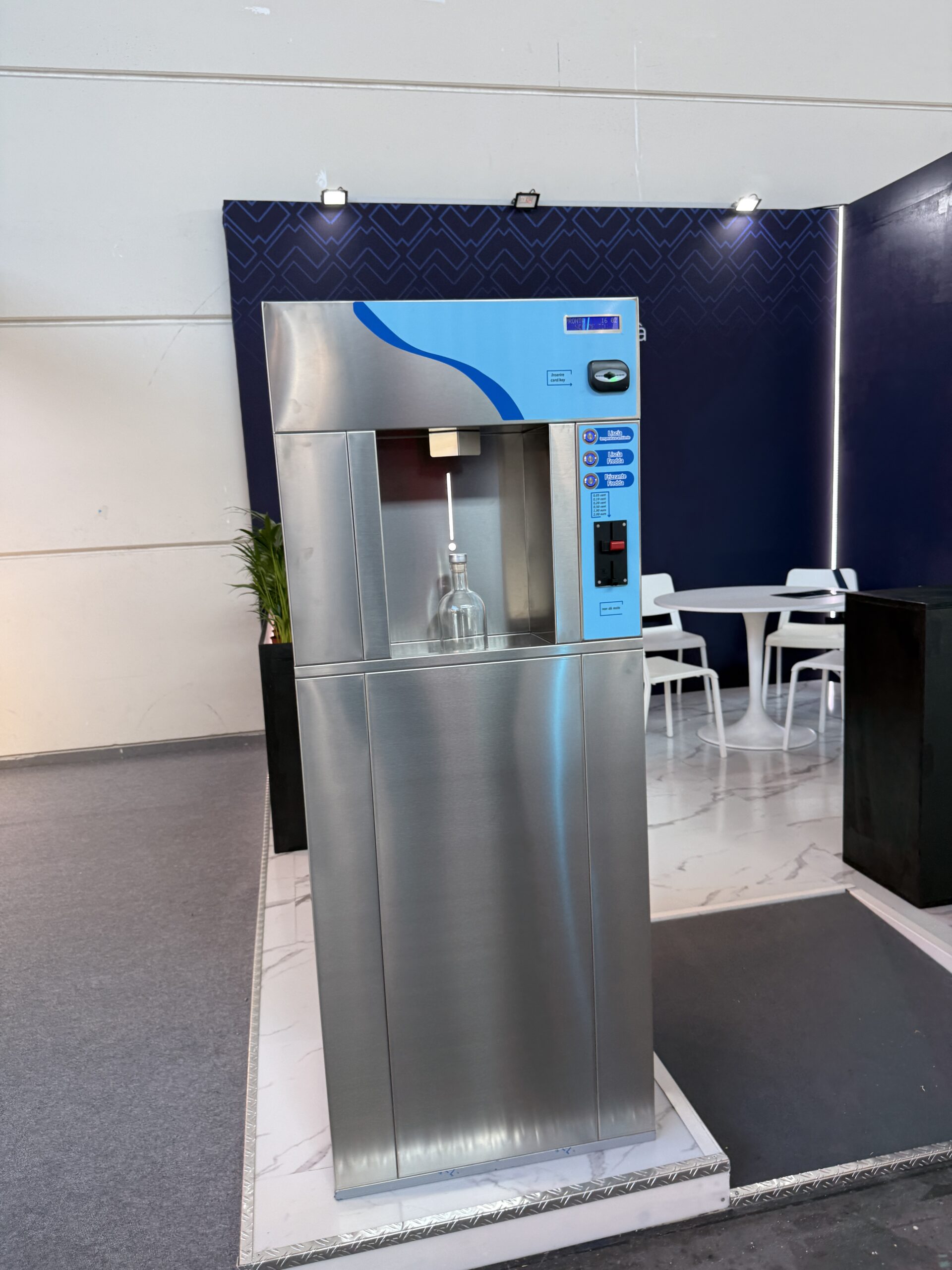
Expect to display consumer information covering the source of the water and how it has been treated. In California those statements are required in both English and Spanish, which is a detail that surprises operators and is straightforward once known.
- Treat the panel as labelling. Everything printed on the machine about the water is regulated content, not marketing.
- Name the treatment honestly. Codes typically list acceptable treatment methods such as filtration, reverse osmosis, ultraviolet, distillation, ion exchange and mineral addition, and expect the stated method to be performed effectively.
- State the source. You have already had to document it for the licence, so it should match.
- Keep it legible and maintained. A faded or damaged statement is a compliance issue as well as an appearance one, which matters more on units in the outdoor range exposed to sunlight.
There Is a Second Authority Nobody Expects
Every other machine we write about answers to a health department, a revenue department and possibly a city clerk. This one adds another, and it is the one operators never anticipate.
You are connecting equipment to the public water supply, which means the water utility and the local plumbing authority have a legitimate interest in your installation. Their concern is not your product, it is protecting the public supply from anything flowing back into it.
- Backflow prevention is generally required on connections of this kind, and the device type and testing regime are usually specified rather than left to you.
- A plumbing permit and inspection for the connection itself, in most jurisdictions, done by a licensed plumber rather than informally.
- Components in contact with drinking water are expected to meet recognised standards for materials, including lead content limits.
- Drainage matters too. The machine needs somewhere for waste water to go, and that connection has its own requirements.
- Ask the venue who owns the work. If you fund a permanent plumbing installation in somebody else’s building, establish in writing what happens to it when the agreement ends.
Practically, this means the plumbing question has to be settled at the placement stage rather than at installation, which is one reason our partners at VPlaced screen for water access and drainage before a site progresses at all.
Be Careful What You Claim the Filter Does
Separate from the purified question, filtration performance claims are their own area and a tempting place for operators to overreach.
There is a meaningful difference between the two kinds of claim you might make:
| Lower risk | Needs real substantiation |
|---|---|
| Describing the process: carbon filtered, chilled | Naming a contaminant removed, such as lead or cysts |
| Aesthetic statements: improves taste and odour | Purified, pure, or any equivalent implying it |
| Stating the source and treatment method | Anything suggesting a health benefit from drinking it |
Health related reduction claims generally require certification of the filtration system against recognised performance standards, and the certification is specific to what is being removed. A filter certified for taste and odour is not evidence for a lead reduction claim, and treating the two as interchangeable is a straightforward way to end up with an unsupportable statement on a machine in a public place.
The Ordinary Setup Still Applies
- Business entity. An LLC or similar separating personal and business liability, which matters when you are supplying something people drink.
- Sales tax registration. Water is treated differently from other beverages in several states for tax purposes, so check rather than assume.
- General vending licence and decals where your state or city requires them, which sit alongside the water licence rather than replacing it.
- Insurance, with product liability confirmed explicitly, since a water quality claim is a different exposure from a snack machine.
- Contact details displayed on the machine, which is frequently required and always sensible when nobody at the site can answer for you.
Put These in the Placement Agreement
- Who pays for the water connection, the drain and any backflow device
- Who owns that plumbing work when the agreement ends
- Who pays for the water itself, which is easy to overlook and awkward to raise later
- Access for monthly servicing, since your obligation is statutory rather than discretionary
- What happens if the building’s own supply has a quality problem
- Responsibility for any damage arising from a leak, which is a real risk with plumbed equipment
The leak clause matters more than it sounds. Water damage in a commercial building is expensive, and it is far easier to allocate that risk before installation than to argue about it afterwards.
How We Help
- Establishing what your state actually requires, since water vending rules vary considerably and California’s framework is not universal even where it is influential.
- Licensing. The water vending operator licence, the pre licensing testing, the documentation and the annual renewal.
- Reviewing what the machine says before it is printed, particularly around purified and filtration claims.
- Setting up the records system the 31 day rule and the two year retention requirement demand.
- Entity, tax and general licensing handled alongside the water specific pieces.
- Placement agreements with the plumbing, water cost and leak liability clauses this format needs.
You can see the full scope on our services page, follow the process on how we work, start through Order Now, or talk to us first. On the equipment side, filtration specification and what the machine can display both affect your compliance position, so it is worth choosing deliberately from the VMFS USA shop or looking directly at the water refill machine they supply. Once a compliant machine is trading, listing it on VendingFinder helps people find somewhere to fill a bottle.
Before You Switch It On
- Does your state have a dedicated water vending machine licence, and do you hold it?
- Have you completed pre licensing testing with a certified laboratory?
- Do you know and can you document the water source for every machine?
- Does anything on the machine say purified, pure or an equivalent, and have you budgeted the testing that triggers?
- Are the required consumer statements displayed, in every language required?
- Is a monthly service schedule in place, with a record system for every visit?
- Can you retain those records for two years and produce them on request?
- Is the coliform testing schedule set up, per product dispensed?
- Is the plumbing permitted, inspected and fitted with backflow prevention?
- Are any filtration performance claims actually substantiated?
- Does the placement agreement cover water cost, plumbing ownership and leak liability?
Frequently Asked Questions
Do you need a special licence for a water vending machine?
In several states yes, and it is its own category rather than part of a general vending licence. California requires a Water Vending Machine Operator Licence renewed annually, obtained from the state or by permit from a local health department, with laboratory testing submitted before licensing. Operating without it is among the most commonly recorded violations.
Can I describe my water as purified?
Only if you can meet the standard and are prepared to test for it. In California, purified water must not exceed 10 milligrams per litre of total dissolved solids, with conductivity testing at every service visit. The rule also captures pure water, agua pura and similar phrasing, so the language on your machine is a compliance decision rather than a marketing one.
How often must the machine be serviced?
At least once every 31 days in California, cleaned, serviced and sanitised in line with the manufacturer’s specifications. Every visit requires an inspection record showing date, time, tests, maintenance and personnel, and those records must be kept for a minimum of two years and produced on request.
What testing is required?
Coliform bacteria analysis at least every six months for each product dispensed, performed by a state certified laboratory and submitted to the regulator. Machines making purified claims additionally require total dissolved solids testing at every service visit against a fixed numeric limit.
Do I need a plumbing permit?
Usually. Connecting equipment to the public water supply brings the water utility and local plumbing authority into the picture alongside the health department, and backflow prevention is generally required to protect the public supply. Settle this at the placement stage rather than on installation day.
Simple Machine, Serious Licensing
We establish what your state requires, handle the water vending licence and testing setup, review what the machine says before it is printed, and build the records system this format demands.