Smart Vending Machine Regulations: 2026 Permit Guide
Smart vending machine regulations come in three layers. There are federal rules, state rules, and local rules. You must register a business first. Then you need a seller’s permit for sales tax. Food and drink machines also need a health permit. Tobacco, vape, and CBD products each need their own license. Most operators spend about $200 to $500 to get fully licensed.
This guide breaks down every requirement in plain terms. It covers permits, federal rules, sales tax, and location contracts. It also shows why a modern machine makes compliance easier. If you would rather skip the paperwork, VAdviced handles permits, licensing, and contracts for operators nationwide.
- Register your business and get an EIN before anything else.
- Apply for a seller’s permit to collect sales tax.
- Food and drink machines need a county health permit.
- Tobacco, vape, alcohol, and CBD each need a separate license.
- Follow federal ADA and FDA rules, and sign a contract for every location.
What Counts as a Smart Vending Machine Regulation?
Regulation works in three layers. Each layer is set by a different authority. Federal rules cover accessibility and labeling. State rules cover business registration and sales tax. Local rules cover health permits, zoning, and product licensing.
The local layer changes from one county to the next. So two machines in the same state can carry different rules. You clear the layers from the top down. That order keeps the process simple.
Step One: Register Your Business
Start by forming a legal business. Most operators choose an LLC for liability protection. File the entity with your state. Then get a federal EIN from the IRS.
You need the EIN for taxes and banking. It also lets you open a business bank account. Keep your vending income separate from personal funds. This makes tax time far easier.
Choosing Your Business Structure
Your entity type affects taxes and liability. Most vending operators pick an LLC. It separates personal and business assets. It also keeps your taxes simple.
A sole proprietorship is easier to start. But it offers no liability protection. If a machine causes harm, your personal assets are exposed. Most operators outgrow it quickly.
Talk to an accountant before you decide. The right structure depends on your goals. It also depends on how many machines you plan to run. Fix this early, since changing later is harder.
Step Two: Get a Seller’s Permit
Every state requires you to collect sales tax. To do that, you register for a seller’s permit. In many states, one permit covers your whole fleet. You do not need a separate permit for each machine.
Apply before any machine makes a sale. Operating without one can trigger penalties. The permit is usually free or low cost. It is the single most common requirement in the industry.
Step Three: Add Local Business Licenses
A state registration is not the end. Your city or county often wants its own license. Many areas have home rule. That lets local governments add their own requirements.
Check the city and the county directly. A quick call usually surfaces everything. Common local needs include:
- A city business license
- A county health permit for food and drink
- Zoning or placement approval for public space
- Fire or electrical sign off for installation
Never assume the state permit covers local rules. The local layer is where most violations happen.
Step Four: Get a Health Permit for Food
Selling food or drinks adds a health permit. Counties issue these, not the state. The environmental health department handles the application. Fees and inspections vary by county.
Inspectors check temperature controls and sanitation. Refrigerated machines face closer review. Apply early, since approval can take time. Plan this step before you install a food machine.
Products That Need Extra Licenses
What you sell decides your paperwork. Plain snacks are the lightest path. Restricted products add licensing and liability. Use this table as a quick reference.
| Product Type | Extra Requirement | Renewal |
|---|---|---|
| Packaged snacks and drinks | Seller’s permit, light local rules | Varies by state |
| Fresh or refrigerated food | County health permit, inspections | Usually annual |
| Tobacco, vape, nicotine | Tobacco retailer license, age 21 checks | Annual |
| CBD or hemp | State specific licensing | Varies |
| Alcohol | State alcohol control license | Annual |
Tobacco and alcohol licenses are often issued per location. They also renew every year. The more regulated the product, the more a built in age check protects you.
Extra Rules for Schools and Public Sites
Some locations carry their own rules. Schools are a common example. Many limit what machines can sell. Nutrition standards often apply during school hours.
Public buildings add another layer. City halls, hospitals, and transit sites may require bids or approvals. Some ask for extra insurance. Others restrict hours or product types.
Always ask the site about its own policy. Do not assume a standard contract will do. Public placements can be lucrative. They just need more paperwork up front.
Federal Rules You Cannot Skip
Two federal rules follow your machines everywhere. They apply in every state. Both are easy to meet once you know them.
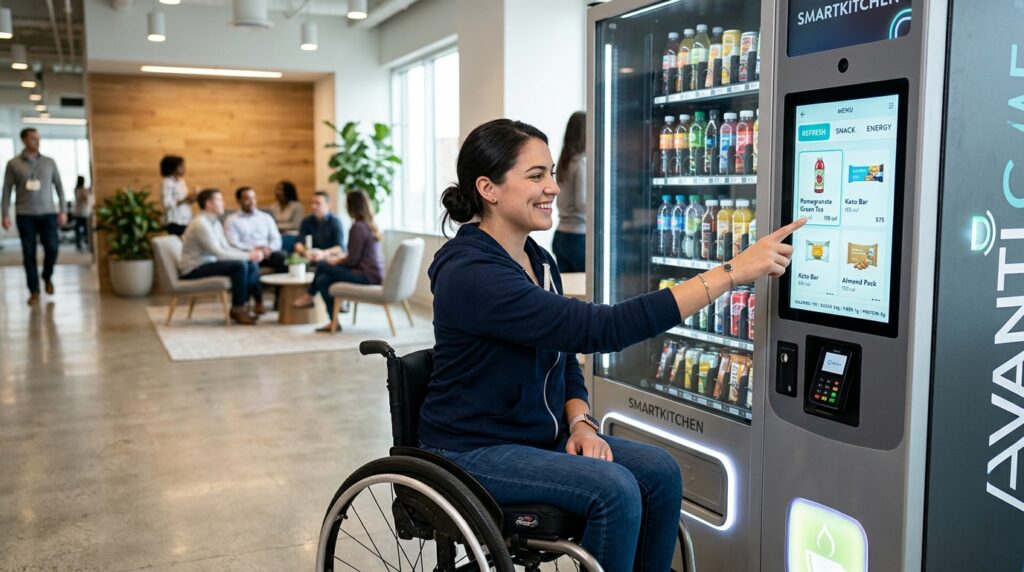
ADA accessibility: Section 4.27 sets reach and operating standards. At least one machine of each type must be wheelchair accessible. Controls must work with limited force. Machines cannot block an accessible route.
FDA calorie labeling: This applies to operators with 20 or more machines. You must show calorie information for the items sold. A touchscreen handles this on screen.
Both rules favor modern machines. A digital display shows labels without printed stickers.
How Sales Tax Works for Vending
Sales tax is the task operators underestimate most. The rules are not uniform. Some states tax vending at the standard rate. Others apply a special vending rate. Several reduce tax on low priced food or candy.
Confirm three things in each state. First, do you need one permit or many? Second, which products are taxable and at what rate? Third, how often must you file returns? A connected machine logs every sale. So you file from records, not guesses.
Location Contracts: What to Put in Writing
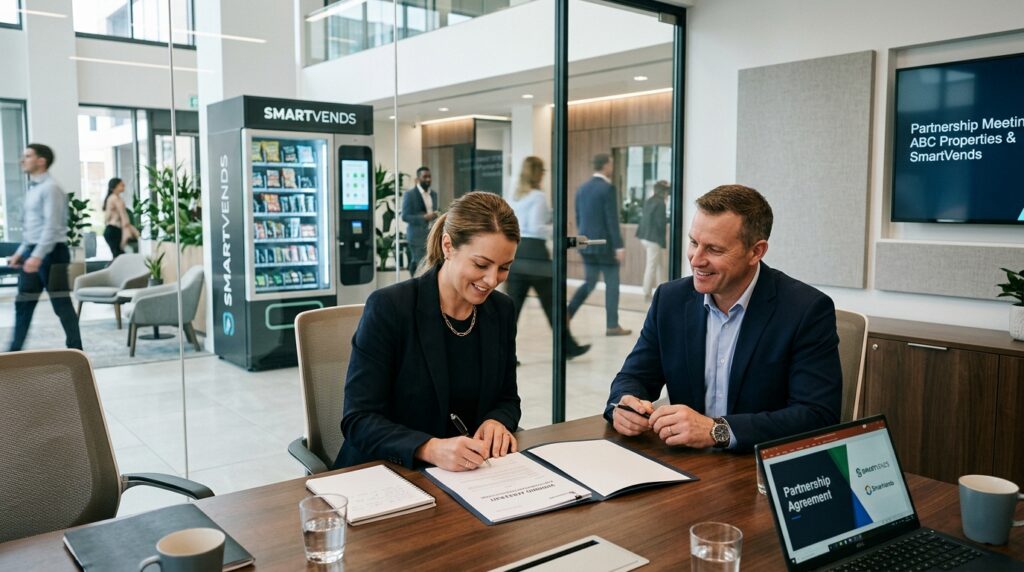
A permit lets you operate. A contract lets you operate there. For private property, you need a signed location agreement. For public space, you may also need a zoning permit.
Put every key term in writing. A clear contract protects both sides. Your agreement should cover:
Term and renewal: How long the deal lasts and how it renews.
Commission or rent: The exact split or amount, and when it is paid.
Utilities: Who pays for the power the machine uses.
Access: When you can restock and service the machine.
Exclusivity: Whether you are the only vending provider on site.
Exit terms: How either side can end the deal, and with how much notice.
Weak terms are the top reason operators lose good spots. A handshake offers no protection at all.
Insurance and Liability
Most hosts want proof of insurance. General liability coverage is standard. It protects you if a machine causes injury or damage. Many location agreements require it in writing.
Liability rises with restricted products. An underage tobacco sale is a serious risk. The operator is usually liable, not the host. Good insurance and age checks reduce that exposure.
Keep Up With Renewals
Compliance is not a one time task. Permits and licenses expire on a schedule. Tobacco licenses often renew every year. Health permits and business licenses renew too.
A single missed renewal can shut a location down. Track every expiry date in one place. Set reminders well before each deadline. This small habit prevents big problems.
What Happens If You Skip Compliance
Skipping permits is a costly gamble. The penalties add up fast. Common consequences include:
- Fines from state or local agencies
- Forced removal of the machine
- Back taxes and interest
- Loss of the location and the host’s trust
The cost of staying compliant is small. The cost of enforcement is not. Compliance is cheaper than the penalty every time.
Why a Smart Machine Makes Compliance Easier
Compliance is mostly about proof. A connected machine creates that proof for you. It documents itself in the background. Here is how it helps.
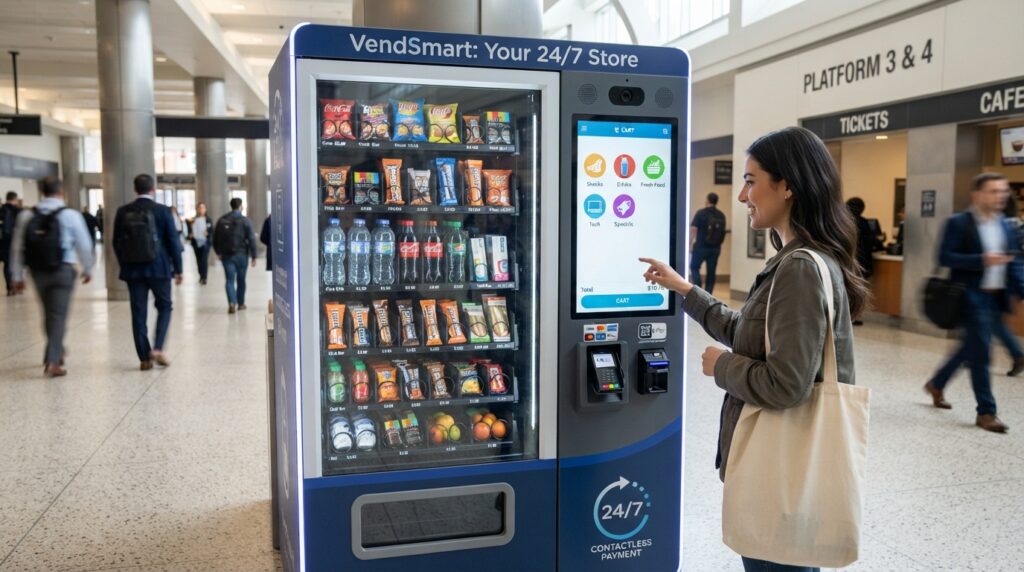
Clean tax records: A smart vending machine logs every sale by item and price. Tax filing stops being guesswork.
Built in age checks: Smart ai vending machines can scan ID and block underage sales. This is the biggest liability in tobacco and CBD vending.
Digital labeling: Calorie and product details show on screen. This meets FDA rules without printed tags.
Remote records: VMFS Cloud keeps a sales and service history. If a regulator asks, you have the records.
You can spec the exact setup you need. Try the AI machine customizer or the touch screen vending machine system builder.
How VAdviced Handles It For You
Permits are necessary. They are not how you want to spend your week. VAdviced handles the full compliance side for you. We cover registration, permits, and product licensing. We also draft and review your location contracts.
Tell us the product and the location. We map the exact requirements. We file the paperwork. We keep your renewals on schedule. That frees you to focus on growth. It also saves you from costly mistakes.
Getting Compliant Before Your First Sale
Compliance is simpler in the right order. Follow this sequence step by step.
- Register your business and get an EIN.
- Apply for a seller’s permit for sales tax.
- Add the city business license and county rules.
- Get a health permit if you sell food or drinks.
- Add product licenses for tobacco, vape, alcohol, or CBD.
- Sign the location agreement before you install.
- Confirm ADA placement and accessible reach.
Work through it top to bottom. You will be legal from the first sale.
Frequently Asked Questions
What permits does a smart vending machine need?
A smart vending machine needs a business license and a seller’s permit. Food machines also need a county health permit. Tobacco, vape, alcohol, and CBD need separate product licenses. Those are often issued per location.
How much does it cost to license a vending business?
Most new operators spend about $200 to $500 to start. After that, expect roughly $10 to $100 per machine each year. Product licenses like tobacco add their own renewal fees.
Do I need a separate permit for each machine?
Usually not for the seller’s permit. One permit often covers your whole fleet. Location permits and product licenses are different. Those are frequently required per machine or per location.
Are vending machine sales taxable?
Usually yes, though the rate varies by state. Some states use the standard rate. Others apply a special vending rate. A few reduce tax on low priced food or candy.
Are smart vending machines subject to ADA rules?
Yes. Federal ADA Section 4.27 applies nationwide. At least one machine of each type must be reachable. No machine can block an accessible route.
Who handles vending machine permits and contracts?
You can file everything yourself. You can also use a compliance service. VAdviced handles registration, permits, licensing, and location contracts. Renewals are tracked so nothing lapses.
Do I need insurance for a vending machine?
Most hosts require general liability insurance. It protects you if a machine causes injury or damage. Many location agreements ask for proof in writing. It is a standard cost of doing business.
Can one license cover machines in multiple states?
No. Each state has its own rules. You register and collect tax in every state you operate in. Local permits also apply per city or county.
The Bottom Line
Smart vending machine regulations look heavy at first. The order makes them manageable. Register the business. Collect the right permits. Follow the federal rules. Sign a solid contract for every spot.
A connected machine then carries most of the load. It logs sales, checks age, and keeps records. Get the foundation right, and compliance becomes routine.
Once the legal side is set, focus on the rest. For high traffic placement, see VPlaced. For growing the business, see VMarketed. To browse compliant, connected machines, visit VMFS USA.