Illinois Vape Vending Machine Laws and Compliance Guide
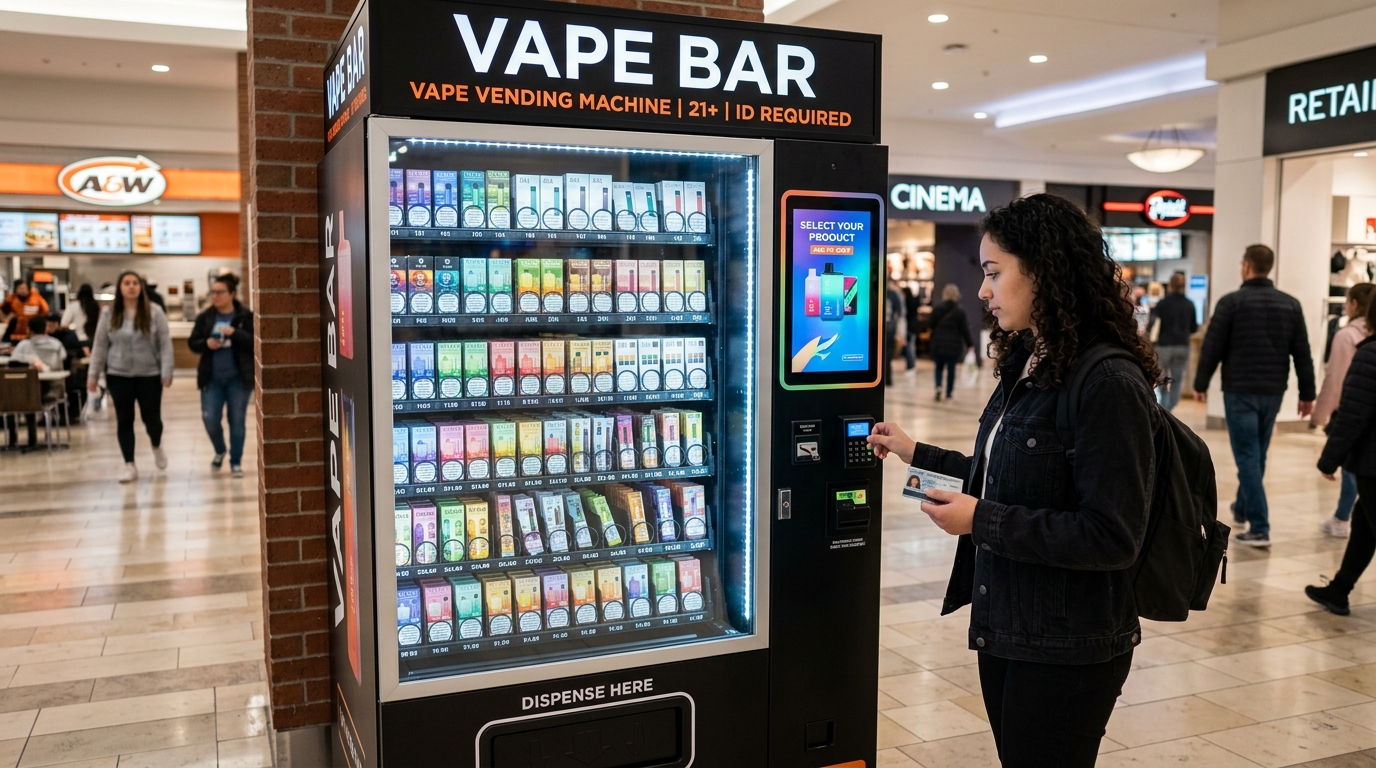
Vape vending machines are legal in Illinois, but only under strict conditions that include age verification controls, proper licensing, and placement in locations where minors are prohibited from access. Operators must comply with state tobacco and electronic cigarette laws, obtain the appropriate retail licenses, and ensure machines meet age verification standards before placement. Failure to meet these requirements exposes operators to significant fines and license revocation.
This article is for informational purposes only and does not constitute legal advice. Laws and regulations change frequently. Readers should verify all current requirements directly with official Illinois government sources before operating a vape vending machine in Illinois.
Placement Restrictions
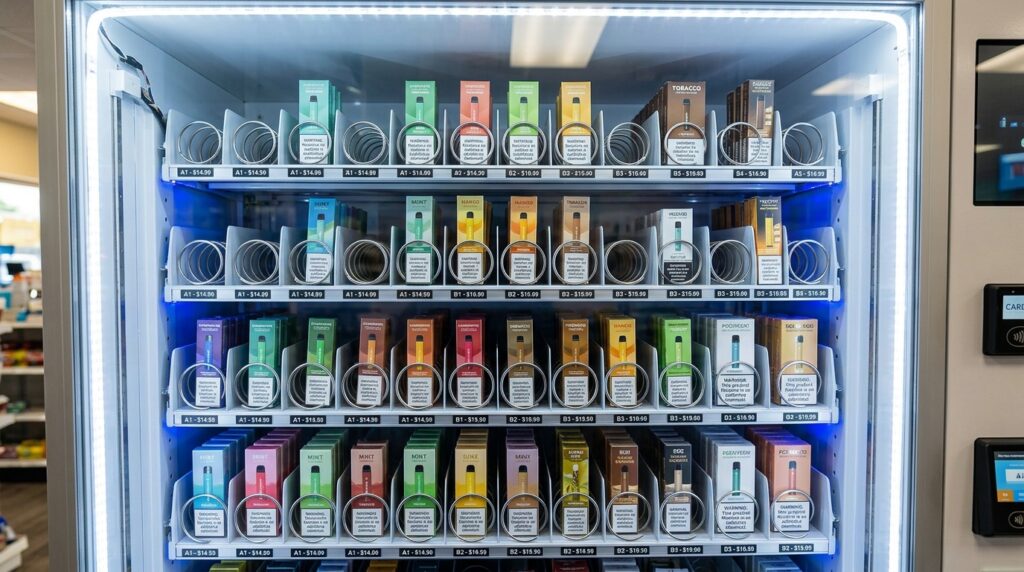
Illinois law tightly controls where vending machines selling tobacco and electronic cigarettes can be placed. The core restriction is that these machines cannot be accessible to minors under any circumstance.
The Illinois Youth Smoking Prevention Act, codified at 720 ILCS 675, governs the sale of tobacco products and electronic cigarettes to persons under 21. Under this statute, vending machines selling tobacco or nicotine products are only permitted in locations where the proprietor ensures that no person under the age of 21 is present or permitted to enter at any time.

“It is unlawful for any person to sell, offer for sale, or give away any tobacco, tobacco products, electronic cigarettes, or liquid nicotine to any person under 21 years of age.” (720 ILCS 675/1)
- Vape vending machines may not be placed in locations accessible to anyone under 21.
- Permitted placement locations include adults-only establishments such as licensed bars, tobacco specialty retailers, and age-restricted clubs.
- Placement in convenience stores, grocery stores, or any location where minors may enter is prohibited unless machine-level age verification is implemented and minors are otherwise excluded.
- Operators researching host locations should consult placement strategy resources to identify compliant venue types before signing any host agreements.
Licensing and Permitting Requirements
Illinois requires retailers selling electronic cigarettes and nicotine products to hold specific licenses. Vending machine operators are treated as retailers under state law and must obtain the appropriate authorization before selling any product.
Retailer License for Electronic Cigarettes
The Illinois Tobacco Products Tax Act of 1995 and the Prevent All Cigarette Trafficking Act require that anyone selling tobacco or electronic cigarette products at retail obtain a license from the Illinois Department of Revenue (IDOR). (Source: 35 ILCS 143, Illinois Tobacco Products Tax Act of 1995)
- Licensing authority: Illinois Department of Revenue.
- Application is submitted through the IDOR online portal.
- A separate license may be required for each location or business entity depending on business structure.
- Annual renewal is required.
- Fees are established by IDOR and operators should confirm current fee schedules directly with the agency.
Local Business Licenses
In addition to state licensing, most Illinois municipalities require a local business license or retail tobacco permit. Chicago, for example, enforces its own tobacco dealer license requirements under the Chicago Municipal Code. Operators must contact the city or county clerk in each jurisdiction where a machine is placed to confirm local requirements.
- Local permits vary by municipality and are required in addition to state licenses.
- Chicago operators should review requirements under the Chicago Department of Business Affairs and Consumer Protection.
- Licensing is generally per location.
Operators who need help navigating state and local licensing requirements can find compliance support through vending compliance advisory services.
Age Verification Requirements
Illinois sets the minimum legal purchase age for electronic cigarettes and nicotine products at 21 years old. (Source: 720 ILCS 675/1, Illinois Youth Smoking Prevention Act)
Vending machines must not allow a purchase to be completed by anyone under 21. Illinois law does not currently mandate a specific technology standard for machine-level age verification, but operators are expected to implement controls that make underage access impossible in practice.
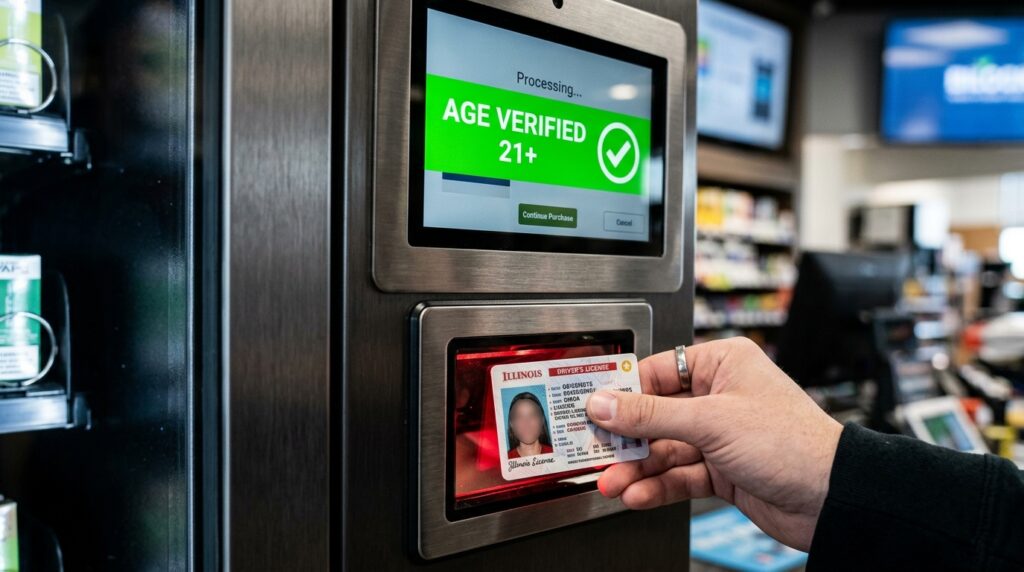
“No person shall sell any tobacco product through a vending machine unless the vending machine is located in a place that is not accessible to persons under 21 years of age.” (720 ILCS 675/4.1, paraphrased from statutory intent)
- Minimum purchase age: 21.
- Machines placed in mixed-age locations must incorporate electronic age verification or remote activation systems.
- ID scanning technology or remote attendant activation is the most defensible compliance method.
- Operators sourcing compliant machines should review age verification technology options designed for vending machine environments.
- Documentation of each transaction or verification event is advisable to demonstrate compliance during inspections.
Product Restrictions
Not all vape or nicotine products may be sold through vending machines in Illinois. Product eligibility is governed by both state law and federal regulation.
Under the Illinois Tobacco Products Tax Act of 1995 (35 ILCS 143), electronic cigarettes and liquid nicotine products are classified as taxable tobacco products. Only products that are properly stamped, taxed, and compliant with applicable federal requirements may be sold at retail in Illinois.
The FDA’s deeming regulations under the Family Smoking Prevention and Tobacco Control Act require that all electronic nicotine delivery systems sold in the United States have received either Premarket Tobacco Product Authorization (PMTA) or be covered under a marketing order. Products not authorized by the FDA may not legally be sold in any retail channel, including vending machines.
- Only FDA-authorized electronic cigarette and vape products may be sold.
- Products must carry valid Illinois tax stamps where required.
- Cannabis vaping products are subject to entirely separate regulation under the Illinois Cannabis Regulation and Tax Act (410 ILCS 705) and are not addressed here.
- Flavored tobacco product rules are subject to ongoing legislative activity. Operators should confirm current status with IDOR before stocking flavored products.
Operators sourcing compliant machines built for regulated product categories can review vape vending machine models designed for adult retail environments.
Taxes, Revenue Stamps, and Fees
Illinois imposes a tax on electronic cigarettes and liquid nicotine products sold at retail. These obligations fall on both distributors and retailers depending on the supply chain structure.
Under the Illinois Tobacco Products Tax Act of 1995 (35 ILCS 143/10-10), a tax is imposed on the wholesale price of tobacco products including electronic cigarettes. The tax rate applicable to electronic cigarettes is set by statute and subject to legislative revision. Operators should confirm the current applicable rate directly with the Illinois Department of Revenue.
Illinois also requires that cigarettes and certain tobacco products sold at retail bear an Illinois revenue stamp as proof that applicable taxes have been paid. (Source: 35 ILCS 130, Illinois Cigarette Tax Act) Stamps are affixed by licensed distributors and must be visible on the product before sale.
- Tax on electronic cigarettes is assessed under 35 ILCS 143.
- Revenue stamps for cigarettes are required under 35 ILCS 130 and are obtained through licensed distributors.
- Retailers must purchase stamped products from licensed Illinois distributors.
- Annual tax registration and filing obligations apply to licensed retailers.
- Contact IDOR directly to confirm current tax rates, stamp requirements, and any excise obligations specific to liquid nicotine products.
Penalties and Compliance Risks
Illinois imposes meaningful penalties on operators who violate tobacco and electronic cigarette retail laws. Penalties escalate with repeat violations.
Under 720 ILCS 675/4, violations of the Youth Smoking Prevention Act can result in civil fines. First violations carry a fine of up to $1,000, and subsequent violations can result in fines up to $5,000 per violation.
“A retailer who violates this Act is guilty of a petty offense for the first offense with a fine of not less than $200 nor more than $1,000, and for a second or subsequent offense, with a fine of not less than $500 nor more than $5,000.” (720 ILCS 675/4)
- First offense fines: $200 to $1,000.
- Repeat offense fines: $500 to $5,000 per violation.
- Retail licenses can be suspended or revoked for repeated violations.
- Sale to a minor is a criminal offense under Illinois law regardless of whether the sale occurred through a vending machine or a human cashier.
- Local municipalities may impose additional penalties on top of state fines.
Operational Best Practices
Meeting minimum legal requirements is the starting point, not the finish line. The following practices help operators build defensible compliance programs.
- Obtain all required state and local licenses before placing any machine.
- Purchase products only from licensed Illinois distributors who supply properly stamped, FDA-authorized inventory.
- Install machines only in verified age-restricted locations where minors are prohibited from entering.
- Use ID scanning or remote attendant verification technology to enforce the 21-plus purchase age at the machine level.
- Maintain transaction logs and verification records in case of regulatory inspection.
- Register with IDOR and comply with annual tax filing deadlines.
- Review local municipal codes in each placement city before signing a host location agreement.
- Monitor for legislative changes to flavored product rules and product-specific tax rates.
- Work with a compliance advisor when entering a new jurisdiction or expanding machine count significantly.
Official Resources
- 720 ILCS 675, Illinois Youth Smoking Prevention Act (ILGA)
- 35 ILCS 143, Illinois Tobacco Products Tax Act of 1995 (ILGA)
- 35 ILCS 130, Illinois Cigarette Tax Act (ILGA)
- Illinois Department of Revenue, Cigarettes and Tobacco Licensing
- Chicago Department of Business Affairs and Consumer Protection
- FDA Tobacco Retailer Requirements
- Vape Vending Compliance Advisory Services
Frequently Asked Questions
Where can a vape vending machine legally be placed in Illinois? ▼
What is the current state excise tax rate on e-cigarettes in Illinois? ▼
Can I sell non-vape items in the same vending machine? ▼
Are there specific packaging requirements for vapes sold in IL machines? ▼
Do I need a separate license for Chicago vending deployments? ▼
What are the exact fine structures for an underage sale violation? ▼
- First Offense: A minimum fine of $200 up to $1,000.
- Second & Subsequent Offenses: A minimum fine of $500 up to $5,000 per occurring violation.