Idaho Vape Vending Machine Laws and Compliance Guide
Vape vending machines are legal to operate in Idaho, but only under specific conditions tied to placement, licensing, age verification, and tax compliance. Operators must hold a valid tobacco retail license, restrict machine placement to adult-only environments, and comply with Idaho’s tobacco tax and age verification laws. Failing to meet these requirements exposes operators to fines, license revocation, and potential criminal liability.
This article is for informational purposes only and does not constitute legal advice. Laws and regulations change frequently. Always verify current requirements directly with official Idaho government sources before operating a vape vending machine in Idaho.

Placement Restrictions
Idaho law restricts where tobacco and vapor product vending machines may be located. Under Idaho Code Section 39-5702, the sale of tobacco products to minors is prohibited, and this prohibition directly informs where vending machines dispensing these products may legally operate.
Idaho Code Section 39-5705 addresses vending machine placement by limiting sales of tobacco products through vending machines to locations that are not accessible to minors. The statute language states:
“No person shall sell tobacco products through a vending machine except in a location where the owner or operator can ensure that minors do not have access to such machines.”
In plain terms, this means:
- Vape vending machines must be placed in adult-only venues where minors are legally excluded, such as bars or licensed adult establishments.
- Placement in locations open to the general public, including convenience stores, malls, or anywhere minors can freely enter, is not permitted unless strict access controls are in place.
- The owner or operator of the host location bears responsibility for ensuring minors cannot access the machine.
If you are evaluating host locations or developing a placement strategy, resources like vplaced.com can help identify compliant venues that meet Idaho’s adult-only placement requirements.

Licensing and Permitting Requirements
Idaho requires retailers selling tobacco and vapor products, including through vending machines, to hold a valid license issued by the Idaho State Tax Commission. This requirement applies under Idaho Code Section 63-2528, which governs tobacco products tax and licensing.
Tobacco Retail License
The Idaho State Tax Commission issues tobacco dealer licenses to businesses selling tobacco or vapor products at retail. The license is required for each location where products are sold, including locations housing vending machines.
- Issuing agency: Idaho State Tax Commission
- Application: Submitted through the Tax Commission’s online portal or by paper form
- Cost: Idaho charges a tobacco dealer license fee; confirm the current fee directly with the Tax Commission as amounts are subject to change
- Renewal: Annual renewal is required
- Scope: Required per retail location, not per individual machine
(Source: Idaho Code Section 63-2528)
If you need help navigating the licensing process or ensuring your setup is fully compliant before launch, professional vape vending machine compliance services can guide you through each requirement.

Age Verification Requirements
The minimum legal age for purchasing tobacco and vapor products in Idaho is 21, aligned with the federal Tobacco 21 law enacted under the Further Consolidated Appropriations Act of 2020. Idaho law mirrors this at the state level under Idaho Code Section 39-5702, which prohibits selling tobacco products to individuals under the legal age.
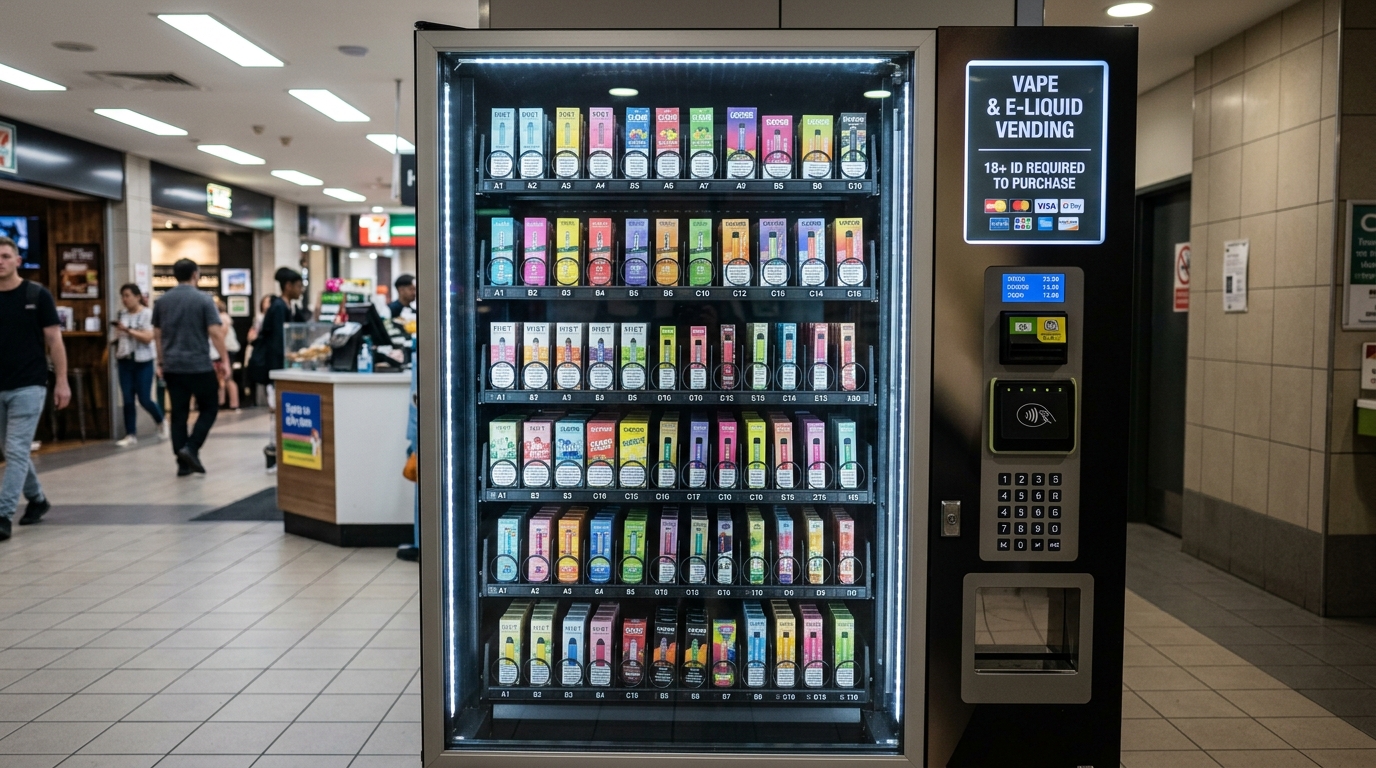
Vending machines must incorporate age verification mechanisms to prevent minor access. Idaho’s placement restrictions effectively require machines to be located where access is inherently restricted. However, operators in any compliant setting should still integrate electronic age verification or remote activation systems as a best practice and increasingly as a practical necessity.

- Minimum purchase age: 21 years
- ID scanning or remote attendant activation is strongly recommended and may be required depending on venue type
- Machines must not be accessible to anyone under 21
For machines equipped with built-in ID scanning and age verification technology, compliance with Idaho’s access restrictions becomes significantly more manageable and defensible in the event of an audit or complaint.
Product Restrictions
Idaho’s tobacco tax code governs what qualifies as a regulated tobacco or vapor product. Under Idaho Code Section 63-2502, vapor products are defined and subject to the same general retail requirements as tobacco products.
Only products that are lawfully permitted for retail sale under federal and state law may be sold through vending machines. This includes:
- Vapor products and e-cigarettes that comply with FDA regulations
- Nicotine-containing products that are not subject to federal marketing denial orders
- Products for which the operator holds all required licenses
Products that are not legally authorized for sale under FDA oversight, including those subject to a marketing denial order, cannot lawfully be sold through any retail channel in Idaho, including vending machines.
(Source: Idaho Code Section 63-2502; FDA Deeming Rule, 21 CFR Part 1100)

Taxes, Revenue Stamps, and Fees
Idaho imposes a tax on tobacco products and vapor products sold within the state. Under Idaho Code Section 63-2520, a tax is levied on vapor products at the rate established by the legislature. Operators must ensure all products sold through vending machines have applicable taxes paid and any required documentation is in order.
“Every distributor shall pay a tax on all tobacco products, other than cigarettes, sold or distributed in this state.”
Key obligations for vaping machine operators include:
- Tax on vapor products applies to distributors; if you are sourcing and distributing product yourself, you may be classified as a distributor and required to remit tax directly
- Products purchased from a licensed Idaho distributor should already have applicable taxes included
- Retain all purchase invoices and tax documentation on-site or accessible for inspection
- Annual renewal of the tobacco dealer license and associated fees applies
(Source: Idaho Code Sections 63-2520, 63-2528)
Contact the Idaho State Tax Commission directly to confirm current tax rates, filing schedules, and any stamp or documentation requirements for vapor products.
Penalties and Compliance Risks
Non-compliance with Idaho’s tobacco and vapor product laws carries meaningful consequences. Under Idaho Code Section 39-5707, violations involving the sale of tobacco products to minors can result in civil penalties and suspension or revocation of the tobacco retail license.
- Civil fines may be assessed for each violation of the minimum age sale prohibition
- Repeated violations can result in license suspension or permanent revocation
- Operating without a required tobacco dealer license may result in criminal misdemeanor charges under Idaho Code Section 63-2528
- Federal penalties under the Tobacco 21 law may also apply alongside state consequences
(Source: Idaho Code Sections 39-5707, 63-2528)
Given the layered risk, operators should treat compliance as ongoing rather than a one-time setup task.
Operational Best Practices
Based on Idaho’s current legal framework, here is a practical compliance checklist for vape vending machine operators:
- Obtain a tobacco dealer license from the Idaho State Tax Commission before placing any machine
- Place machines only in adult-only venues where minors are legally prohibited from entering
- Install machines with built-in age verification or ID scanning technology as a safeguard
- Source products only from licensed Idaho distributors who have already remitted applicable vapor product taxes
- Retain all purchase invoices and licensing documentation accessible for state inspections
- Renew your tobacco dealer license annually and monitor any fee or rate changes from the Tax Commission
- Train host venue staff on their responsibility to prevent minor access to the machine
- Select compliant vape vending machine models that support access controls and audit-ready transaction records
- Work with a qualified compliance advisor if you are expanding to multiple locations or are uncertain about your classification as a retailer versus distributor
Official Resources
Use the following official sources to verify current rules and complete required applications:
- Idaho State Tax Commission – Tobacco dealer licensing, vapor product tax information, and filing requirements
- Idaho Code Title 63, Chapter 25 – Tobacco products tax statutes
- Idaho Code Title 39, Chapter 57 – Tobacco use by minors and placement restrictions
- FDA Center for Tobacco Products – Federal product authorization and marketing rules for vapor products
- Vape Vending Compliance Services – Professional support for licensing, setup, and regulatory compliance
Frequently Asked Questions
Yes, vape vending machines are legal in Idaho, but they are subject to strict placement controls. Under Idaho Code Section 39-5705, machines may only be placed in adult-only venues (such as bars or licensed adult lounges) where minors are legally prohibited from entering. They are entirely illegal in public venues like convenience stores or malls.
Operators must obtain a Tobacco Retail License from the Idaho State Tax Commission under Idaho Code Section 63-2528. This license is required per retail location (not per individual machine) and must be renewed annually through the Tax Commission’s online registry.
In alignment with federal Tobacco 21 parameters, the minimum legal purchase age in Idaho is 21 years old. Operators are highly encouraged to implement digital electronic ID scanners or remote clerk activation switches on their units to protect against minor access sales liability.
Under Idaho Code Section 63-2520, vapor items are subject to tobacco excise tax. If you buy your product inventory from a licensed wholesaler in Idaho, those taxes are wrapped into your invoice. You must preserve all wholesale invoices on-site or digitally accessible for official state audit checks.
Violations of Idaho code 39-5707 carry severe civil penalties, starting with escalating cash fines and culminating in total retail license revocation. Furthermore, operating machines without an active retail license constitutes a criminal misdemeanor under state revenue safety laws.