Legal & Setup | Smart Fridge Vending | By the VAdviced Team | August 2026
In 2021 a vending operator agreed to pay 6.8 million dollars to settle a class action covering roughly 69,000 people. The machines were ordinary break room units in Illinois. The product was food and drink. Nobody was hurt, nobody got sick, and no money went missing. The claim was that the machines scanned fingerprints to identify customers without the written consent Illinois law requires.
Keep that in mind while you look at a grab and go cabinet, because the entire premise of this format is a machine that identifies you before it opens and then watches what you take. Most of the legal thinking about these machines goes into what is on the shelves. In our experience the bigger exposure is in the sensors.
General information, not legal advice. Privacy and beverage rules vary by state and are moving quickly right now. Use this to know what to ask about, then confirm the specifics for your own setup.
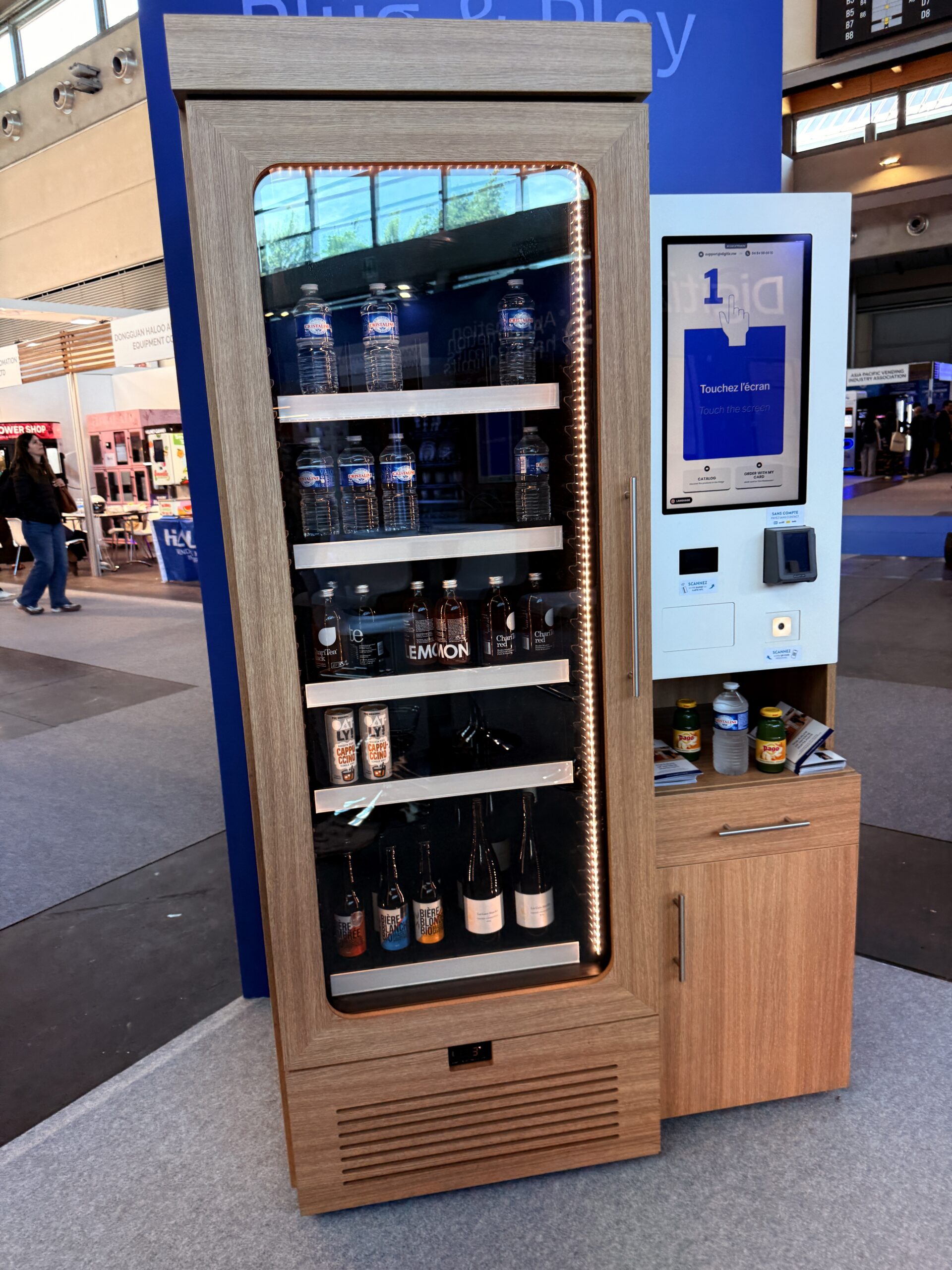
Where this comes from: setting up vending businesses legally is what we do, and this format raises questions we did not have to ask five years ago. We examined the cabinet in these photographs on the Venditalia show floor.
The Sensors Are the Story
A traditional vending machine is legally simple because it is stupid. It takes money, it drops a product, and it has no idea who you are. A grab and go cabinet is the opposite. It has to know who you are to open, and it has to work out what you removed to charge you. Depending on how the manufacturer solved that second problem, you may have just become a business that processes personal data.
This is not hypothetical. In 2024 a smart vending machine on a university campus threw an error message that revealed a facial recognition process running quietly in the background. Students found the machines had been analysing demographic data, age and gender estimates, with nobody told and nobody asked. It became a national story, the machines came out, and it put every operator running camera equipped units on notice.
Since then, class actions have been filed alleging that vending equipment captures facial geometry data. Illinois alone saw well over a hundred new biometric privacy class actions filed in 2025.
Three States, and One That Should Worry You
There is no federal biometric privacy law. Only three states have a dedicated statute, and roughly twenty more treat biometric data as sensitive under a broader consumer privacy law. The three that matter most:
| State | Requires | Who can sue | Exposure |
|---|---|---|---|
| Illinois (BIPA) | Written consent, public retention policy | Any individual | $1,000 to $5,000 per violation |
| Texas (CUBI) | Notice and consent, destroy within a year | Attorney General only | Up to $25,000 per violation |
| Washington | Notice, consent or opt out | Attorney General | Consumer protection penalties |
Illinois is the one that generates headlines, and the reason is structural rather than moral. BIPA is the only biometric statute in the country with a private right of action, meaning individuals can sue you directly rather than waiting for a regulator to take an interest. Attach statutory damages to that and you have a machine for producing class actions, which is exactly what happened to those break room vending units.
Do not read Texas as the soft option, though. It is AG enforced rather than privately enforced, which sounds gentler until you notice the Texas Attorney General used CUBI to reach settlements above a billion dollars with two of the largest technology companies in the world. Different risk shape, not a smaller one.
Your Sensing Technology Is a Legal Decision
This is the part we most want operators to take away, because it is the point where a purchasing choice quietly becomes a compliance position, and almost nobody frames it that way at the point of sale.
There are three common ways a grab and go cabinet works out what you took, and they carry different exposure:
- Weight sensing. Each shelf is a scale. The cabinet measures what left by mass and never observes the person at all. From a biometric standpoint this is the cleanest option available, because there is simply nothing to collect.
- RFID. Every item carries a tag and the cabinet does an inventory check on close. Also collects nothing about the customer, though it adds real labour to every restock.
- Camera and vision recognition. Here it depends entirely on what the cameras actually process. A system trained to identify products should not be capturing biometric identifiers. A system that also detects faces, estimates age or profiles demographics is a different proposition, and that is precisely what caught the campus machines.
Ask the supplier this, and get the answer in writing: does the machine perform any facial detection, facial geometry mapping, age estimation or demographic analysis, and is any of that processed or retained anywhere? A manufacturer who cannot answer that clearly is handing you their compliance problem along with the cabinet.
If your placement plan involves Illinois, that single question may be the most valuable one you ask all year. It is also worth deciding early, since it shapes which builds you should even be looking at across the refrigerated vending and smart fridge range.
If You Do Run Cameras
Vision systems have genuine advantages and plenty of operators will choose them anyway. If that is you, build the compliance in from day one rather than retrofitting it after a letter arrives:
- Notice at the machine. Visible, plain language, before the customer interacts. Not buried in an app.
- Written consent where required. Illinois wants a written release before collection, not a sign someone walked past.
- A published retention policy. BIPA requires a publicly available written policy setting out how long you keep biometric data and how you destroy it.
- Actual deletion. Texas expects destruction within a reasonable period and no later than a year after the purpose ends. A policy nobody follows is worse than none.
- Never sell or share it. These statutes specifically prohibit profiting from biometric data, and that is where penalties escalate.
Worth noting too that the venue may have its own obligations, particularly an employer hosting a machine its staff use daily. That is a conversation to have before installation, not after.
Now the Shelves: Age Restricted Beverages
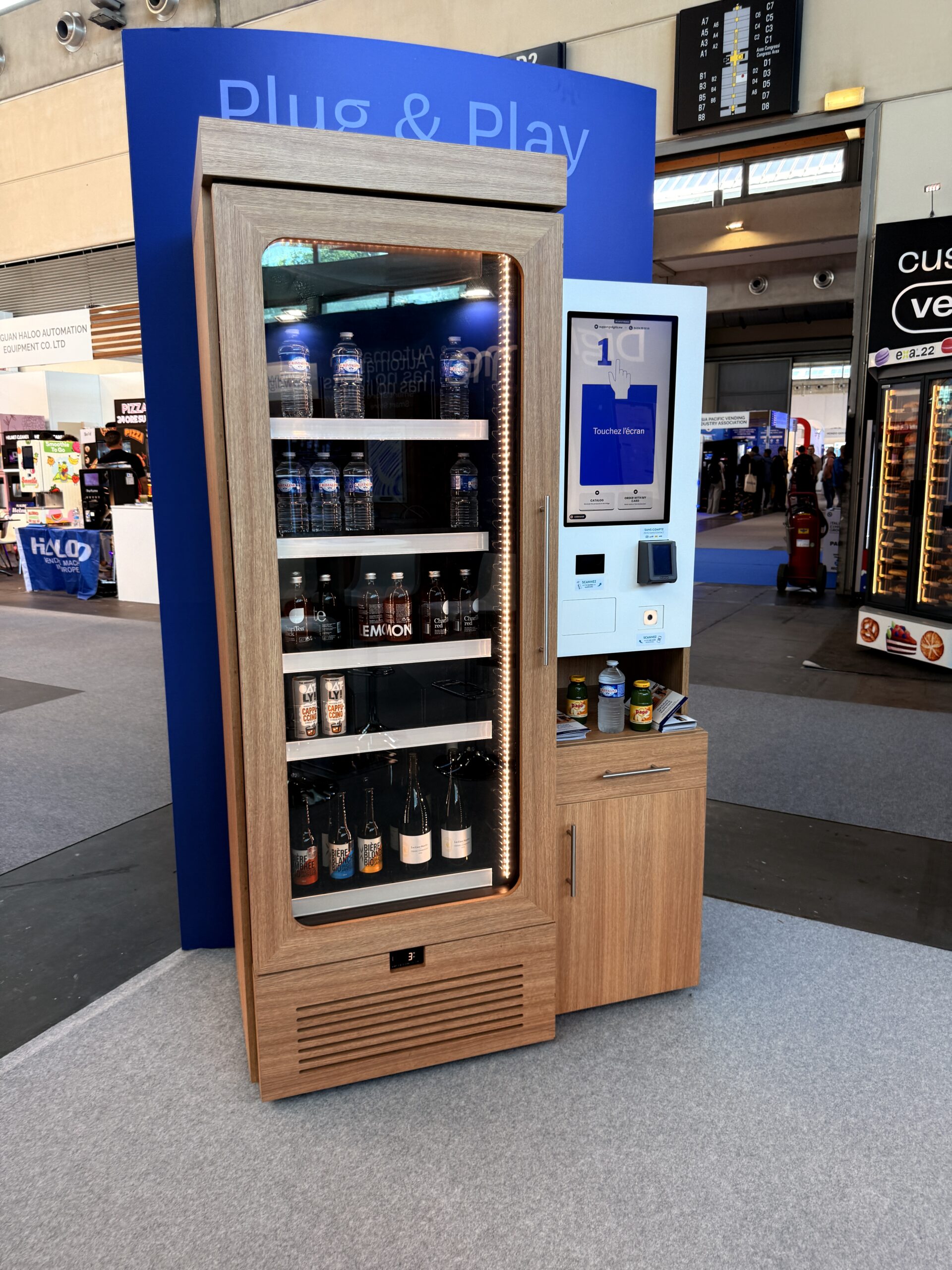
The cabinet we photographed held water, iced tea, oat milk cappuccino, craft beer and wine. The first three are ordinary retail. The last two change the conversation entirely.
Selling beer or wine from an unattended cabinet in the US is possible in some circumstances and flatly prohibited in others, and the answer is set at state level by your alcoholic beverage control authority rather than nationally. What you need to establish before ordering anything:
- Whether your state permits it at all. Several prohibit alcohol sales through vending outright. That is the first question, not the last.
- Who holds the licence. Often the answer is the venue rather than you, which reshapes the whole commercial arrangement.
- How age is verified. Tapping a payment card is not age verification. Expect ID scanning or a controlled membership environment, and note that if verification runs through a connected service there may be a subscription behind it.
- Where it is allowed to stand. Licensed premises rules often restrict placement to particular areas, sometimes with supervision requirements.
- Your liability if it goes wrong. Serving a minor is not a paperwork error. Dram shop exposure varies by state and is worth understanding before you switch on.
None of this makes it undoable. Plenty of operators run beverage cabinets legally in controlled venues. It does mean the licensing question should be settled before the machine arrives, and that where you place it directly affects what you are permitted to stock, which is why we and our partners at VPlaced would rather have that conversation early.
The Ordinary Setup, Which Still Applies
- Business entity. Most operators form an LLC to separate personal and business liability, and that matters more when you are holding both inventory and customer data.
- Sales tax registration. Selling physical product from a machine is a taxable retail sale in most states, and beverages are sometimes treated differently from other goods.
- Vending licence and decals. Many states and cities require a vending specific licence, and some want a sticker on each individual machine.
- Food safety, at a lower level. Sealed bottled and canned drinks are light on requirements. Add anything chilled and perishable and your health department gets involved.
- Insurance. General liability as standard, and worth confirming whether your policy contemplates data or privacy claims as well as product ones.
Put It in the Placement Agreement
This format needs a few clauses an ordinary vending agreement will not have. Worth drafting deliberately:
- Who is responsible for privacy notices, particularly where the venue issues the badges that open the machine
- Whether the venue receives any customer data, and what they may do with it
- Who carries liability for shrink, since the door genuinely opens
- If badge integration is used, what happens to that data when the agreement ends
- Who holds any beverage licence and who bears the risk if it is breached
How We Help
The awkward thing about this format is that the questions sit across completely different disciplines. Privacy law, beverage licensing, ordinary business registration and food rules, none of which talk to each other, and no single agency will tell you what the others need.
- Working out what actually applies. Your states, your sensing technology and your product list decide the rules. We tell you which ones bite.
- Entity, registration and licensing. Formation, tax registration, vending licences and per machine decals handled rather than researched.
- Privacy documentation. Notices, consent language and a retention policy that matches what your machine genuinely does.
- Beverage licensing. Establishing whether your state permits it, who should hold the licence and what verification is required.
- Agreements. Placement contracts with the data and liability clauses this format needs.
You can see the full scope on our services page, see the process on how we work, begin through Order Now, or just ask us first. The machine itself sits with the range of vending machines at VMFS USA, property owners can list space through VPlaced, and how the machine is presented and what you claim on it is handled by VMarketed. Separate services, connected, so nothing falls between them.
Before You Switch It On
- Do you know exactly what the machine’s sensors capture, in writing from the supplier?
- Are you placing in Illinois, Texas or Washington, and does that change your setup?
- If cameras are involved, is there notice, consent and a published retention policy?
- Is the entity formed and are you registered for sales tax?
- Does your state or city require a vending licence or a per machine decal?
- If beer or wine is going in, is the licence in place and whose name is on it?
- Is age verification real verification rather than a card tap?
- Does the placement agreement cover data, shrink and licence liability?
Frequently Asked Questions
Do smart vending machines have to comply with biometric privacy laws?
It depends on what the machine actually captures. A cabinet using weight sensing or RFID collects nothing about the person and sits outside these statutes. Camera systems that identify products should also be fine, but anything performing facial detection, facial geometry mapping or demographic estimation can fall squarely within Illinois, Texas and Washington biometric law.
Why is Illinois treated as the risky state?
Because BIPA is the only biometric statute with a private right of action, so individuals can sue directly rather than waiting for a regulator. Combined with statutory damages per violation, that has made Illinois the centre of biometric class action litigation, including a multi million dollar settlement involving vending equipment.
Can you sell beer or wine from an unattended cabinet?
In some states and settings yes, in others no. It is governed at state level by alcoholic beverage control rules, and the practical questions are whether your state permits it, who holds the licence, how age is genuinely verified, and where the machine may stand. Settle all of that before ordering equipment.
Is card payment enough for age verification?
No. A payment card confirms someone can pay, not how old they are, and regulators treat those as entirely different things. Age restricted product generally requires genuine verification such as ID scanning, or a tightly controlled membership environment where identity is already established.
Setting Up a Smart Fridge?
We handle entity formation, licensing, privacy documentation and the beverage side, so the machine is legal before it earns its first dollar rather than after.