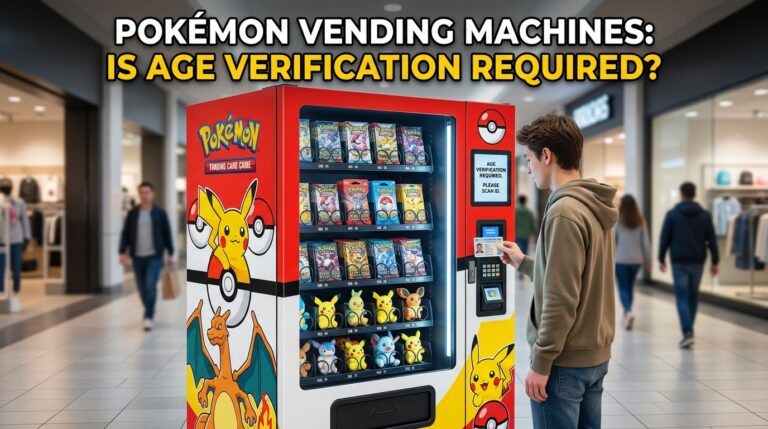
Vape vending machines are legal in North Carolina, but only under specific conditions that include proper licensing, strict age verification controls, and compliance with state tobacco and vapor product regulations. Operators must meet requirements set by multiple state agencies before placing or operating a machine. Failure to comply exposes businesses to significant fines and potential license revocation.
This article is for informational purposes only and does not constitute legal advice. Laws and regulations change frequently. Readers should verify all current requirements directly with official North Carolina government sources before operating a vape vending machine.
Placement Restrictions
North Carolina law imposes strict limits on where vending machines selling tobacco or vapor products may be located. The primary placement restriction comes from the state’s tobacco vending machine statute, which prohibits these machines in locations accessible to minors.
Under N.C. Gen. Stat. Section 14-313, it is unlawful to sell tobacco products, including vapor products, through a vending machine unless the machine is located in a facility where the operator ensures that no person under the legal purchase age can access or operate the machine.
In plain terms, this means a machine placed in a general retail space, hotel lobby, or any location where minors could be present without supervision is presumptively non-compliant.
- Vape vending machines must be placed in adult-only facilities or controlled-access areas where minors are not admitted.
- Locations such as bars, adult tobacco or vape retail stores, and age-restricted establishments are generally permissible.
- Convenience stores, gas stations, and general retail stores open to minors require active access control technology to restrict machine use.
- The machine operator and location owner share responsibility for ensuring minors cannot access the machine.
If you are still identifying where to place your machine, vplaced.com offers placement strategy resources and host location support for vape vending machine operators.
Licensing and Permitting Requirements
Operating a vape vending machine in North Carolina requires obtaining the correct permits before the machine goes live. There are two primary licensing requirements operators must satisfy.
Tobacco Retail Dealer Permit
Any person or business that sells tobacco products, including vapor products and e-cigarettes, at retail in North Carolina must obtain a Tobacco Retail Dealer Permit issued by the North Carolina Department of Revenue (NCDOR).
Under N.C. Gen. Stat. Section 105-113.4A, a retail dealer in tobacco products must obtain a permit from the Department of Revenue for each location at which the retail dealer sells tobacco products.
- Issued by: North Carolina Department of Revenue.
- Required per location where the machine is placed.
- Annual renewal is required.
- Applications are filed directly through NCDOR. The permit fee is established by statute and operators should confirm the current fee with NCDOR directly.
- Vapor products are classified as tobacco products under North Carolina tax law, making this permit mandatory for vape vending machine operators.
Business Registration and Local Permits
Operators must also register their business with the North Carolina Secretary of State and comply with any applicable county or municipal business license requirements in the jurisdiction where the machine is placed. Local requirements vary significantly, so operators must check with the relevant city or county government.
- State business registration is handled through the NC Secretary of State.
- Local business licenses or privilege licenses may be required depending on the municipality.
- No single statewide vending machine operator license exists separate from the tobacco retail dealer permit.
For detailed guidance on structuring your compliance setup, the team at VADviced provides operational and regulatory support specifically for vape vending machine businesses.
Age Verification Requirements
Federal law raised the minimum legal age to purchase tobacco and vapor products to 21 nationwide under the Tobacco 21 law, effective December 2019. North Carolina enforces this minimum age as well under N.C. Gen. Stat. Section 14-313.
Section 14-313 makes it unlawful to sell tobacco products, including vapor products, to any person under 21 years of age, and requires that vending machines be inaccessible to minors unless appropriate access control measures are in place.
- Minimum legal purchase age: 21 years old.
- Vape vending machines must incorporate active age verification controls that prevent minors from completing a purchase.
- Remote activation systems or electronic ID verification technology are the most common compliant methods used on unattended machines.
- Passive signage alone is not sufficient to satisfy the access control requirement.
Purpose-built age verification and remote activation hardware is available through VMFS USA’s age verification collection, which includes ID scanner and remote unlock systems designed for vending machine compliance.
Product Restrictions
Not all vape or nicotine products are automatically eligible for sale through a vending machine in North Carolina. Operators must pay close attention to federal product authorization requirements as well as state-level definitions.
Under North Carolina law, vapor products are defined and regulated as tobacco products. N.C. Gen. Stat. Section 105-113.4 defines vapor products as any noncombustible product that produces vapor or aerosol for inhalation from the application of a heating element to a liquid or other substance.
- Only FDA-authorized vapor products with a valid Premarket Tobacco Product Application (PMTA) approval are legally marketable in the United States. Selling unauthorized products creates both federal and state exposure.
- Flavored vapor products remain subject to ongoing FDA enforcement action at the federal level. Operators should confirm the authorization status of every product SKU before stocking a machine.
- Mixing nicotine products with non-tobacco items in a single vending machine does not automatically create additional state permit requirements, but each product category must independently comply with applicable law.
- Cannabis, hemp-derived delta-8 THC, and similar products have separate and distinct legal requirements in North Carolina and should not be assumed to be covered under a tobacco retail dealer permit.
Taxes, Revenue Stamps, and Fees
North Carolina imposes an excise tax on vapor products sold at retail. This obligation applies to vape vending machine operators as tobacco retail dealers.
Under N.C. Gen. Stat. Section 105-113.35, a tax is imposed on vapor products at the rate set by the General Assembly. As of the most recent legislative session, the tax rate is five cents per fluid milliliter of consumable product.
- The vapor products excise tax is imposed at the distributor level, meaning the tax is typically included in the wholesale price paid by retailers and operators.
- Retail dealers must verify that products purchased for vending machines were acquired from a licensed North Carolina tobacco products distributor who has already remitted the applicable tax.
- Revenue stamps for traditional cigarettes are handled separately under N.C. Gen. Stat. Section 105-113.5, but vapor products do not use a physical revenue stamp system in the same manner.
- All tax-related filings and payments are administered through the North Carolina Department of Revenue.
- Operators should obtain and retain invoices from licensed distributors as documentation that tax obligations were satisfied upstream.
Penalties and Compliance Risks
Non-compliance with North Carolina vape vending machine laws carries serious consequences for operators and location owners alike.
Under N.C. Gen. Stat. Section 14-313, selling tobacco or vapor products to a person under 21 is a Class 2 misdemeanor for a first offense, escalating to a Class 1 misdemeanor for subsequent violations.
- Civil penalties may also be imposed for violations of the tobacco retail dealer permit requirements under NCDOR authority.
- Permit revocation is a possible consequence of repeated or serious violations.
- The FDA’s Center for Tobacco Products conducts inspections at the retail level and can issue warning letters, civil money penalties, and no-tobacco-sale orders for federal violations including underage sales and selling unauthorized products.
- Location owners who permit non-compliant machines on their premises share exposure for violations that occur at their facility.
- Machines found to be accessible to minors without appropriate controls can be subject to immediate removal orders and fines.
Operational Best Practices
The following checklist helps vape vending machine operators in North Carolina stay compliant from day one.
- Obtain a Tobacco Retail Dealer Permit from NCDOR before the machine begins operation at each location.
- Register your business entity with the NC Secretary of State and confirm local municipal permit requirements.
- Install active age verification technology such as ID scanning or remote activation on every machine. Explore compliant hardware options at VMFS USA.
- Place machines only in adult-only facilities or controlled-access locations where minors cannot independently operate the machine.
- Purchase inventory only from licensed North Carolina tobacco distributors and retain all invoices as proof of tax compliance.
- Verify that every product SKU stocked in the machine has received FDA authorization before sale.
- Conduct periodic compliance audits of each machine location, including signage, access controls, and product inventory.
- Train any location staff who may interact with or oversee the machine on the minimum purchase age and reporting obligations.
- Renew your Tobacco Retail Dealer Permit annually and update records whenever you add new machine locations.
- Review professional compliance services if you are scaling across multiple locations or navigating regulatory uncertainty.
- Source compliant, purpose-built equipment from a reputable supplier. Browse vape vending machines designed with regulatory compliance features built in.
Official Resources
- North Carolina Department of Revenue – Tobacco retail dealer permits, vapor product tax information, and distributor licensing.
- N.C. Gen. Stat. Chapter 14, Article 37 – Criminal statutes governing tobacco and vapor product sales to minors.
- N.C. Gen. Stat. Chapter 105, Article 2A – Tobacco products tax law including vapor product definitions and tax rates.
- North Carolina Secretary of State – Business entity registration and filings.
- FDA Tobacco 21 Information – Federal minimum age requirements for tobacco and vapor product sales.
- FDA Premarket Tobacco Product Applications – Verify product authorization status before stocking machines.
Frequently Asked Questions
Where can a vape vending machine legally operate in North Carolina? ▼
- An establishment that is open only to persons 21 years of age and older (e.g., age-gated bars, lounges, or adult retail venues).
- Any facility where the vending hardware is under the continuous control, line-of-sight, and supervision of the licensee or an employee, requiring active interaction (like a lockout mechanism or remote release) before a customer can buy.
What is the North Carolina Vapor Certification Directory restriction? ▼
What is the exact text required for signage on North Carolina machines? ▼
“N.C. LAW STRICTLY PROHIBITS THE PURCHASE OF TOBACCO PRODUCTS, TOBACCO-DERIVED PRODUCTS, VAPOR PRODUCTS, AND CIGARETTE WRAPPING PAPERS BY PERSONS UNDER THE AGE OF 21. PROOF OF AGE REQUIRED.”