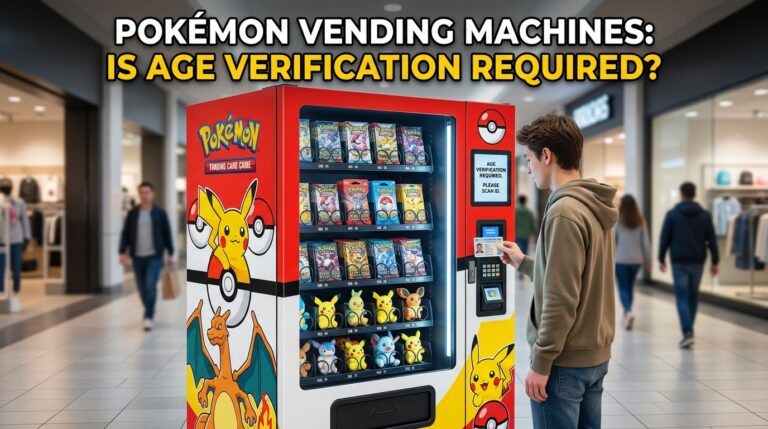
Vape vending machines are legal in New Hampshire, but only under specific conditions tied to location, licensing, age verification, and product compliance. Operators must hold the appropriate tobacco and vapor product licenses, restrict machine placement to adult-only venues, and ensure robust age verification is in place before any sale occurs. Running a compliant operation requires understanding several overlapping state statutes and regulatory requirements.
This article is for informational purposes only and does not constitute legal advice. Laws and regulations change frequently. Readers should verify all current requirements directly with official New Hampshire government sources before operating a vape vending machine.
Placement Restrictions
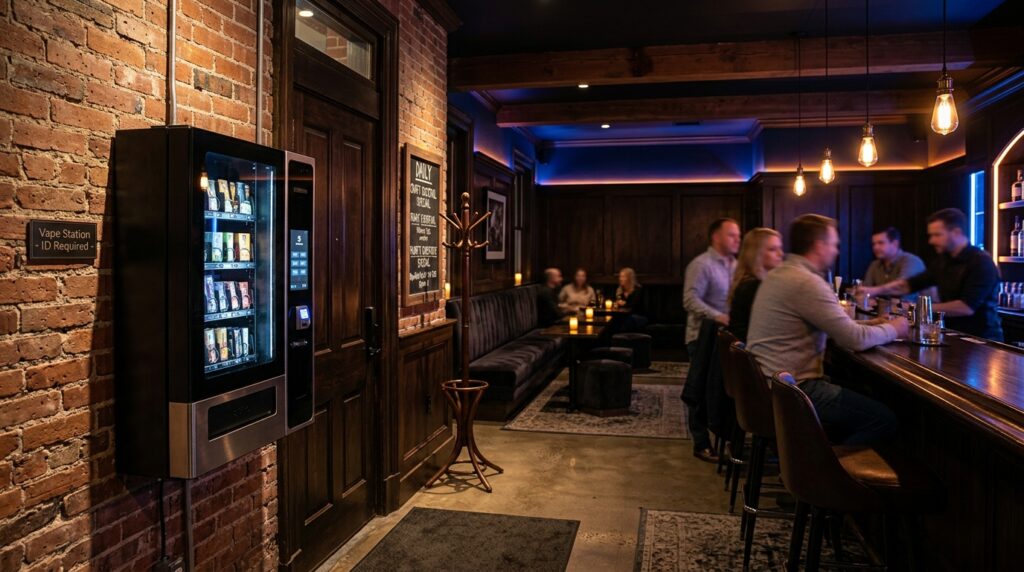
New Hampshire law restricts where tobacco and vapor product vending machines may be placed. Under RSA 178:28, vending machines that dispense tobacco or tobacco-related products, which includes vapor products under New Hampshire’s expanded definitions, must be located in establishments that are not accessible to minors.
“No person shall place or maintain any tobacco product vending machine in any location that is accessible to persons under the age of 18.”
- Machines must be placed only in venues where entry is restricted to adults aged 18 or older.
- Bars, adult clubs, and other age-restricted establishments are generally acceptable host locations.
- Grocery stores, convenience stores open to minors, shopping malls, and any publicly accessible retail space are prohibited placement sites.
- Placement in any location where minors are present or could reasonably access the machine is a violation.
If you are researching host venues or need help identifying compliant placement locations for your machines, vPlaced offers tools and support specifically designed for vending machine placement strategy.
Licensing and Permitting Requirements
New Hampshire requires operators of vapor product vending machines to obtain state-level licenses before selling any products. The primary licensing authority is the New Hampshire Liquor Commission (NHLC), which oversees tobacco and vapor product retail licensing under RSA 178.
Tobacco and Vapor Products Retailer License
Any person or business selling tobacco or vapor products at retail, including through a vending machine, must hold a Tobacco Retailer License issued by the NHLC. This applies per location where a machine is installed. (Source: RSA 178:19)
- Issued by the New Hampshire Liquor Commission.
- Required per location, not per machine.
- Annual renewal is required.
- Application is submitted through the NHLC licensing portal.
- Operators should confirm current fee schedules directly with the NHLC, as fees are subject to change.
For help navigating the licensing process or ensuring your setup is compliant from the start, the team at vAdviced provides compliance consulting specifically for vape vending operators.
Age Verification Requirements
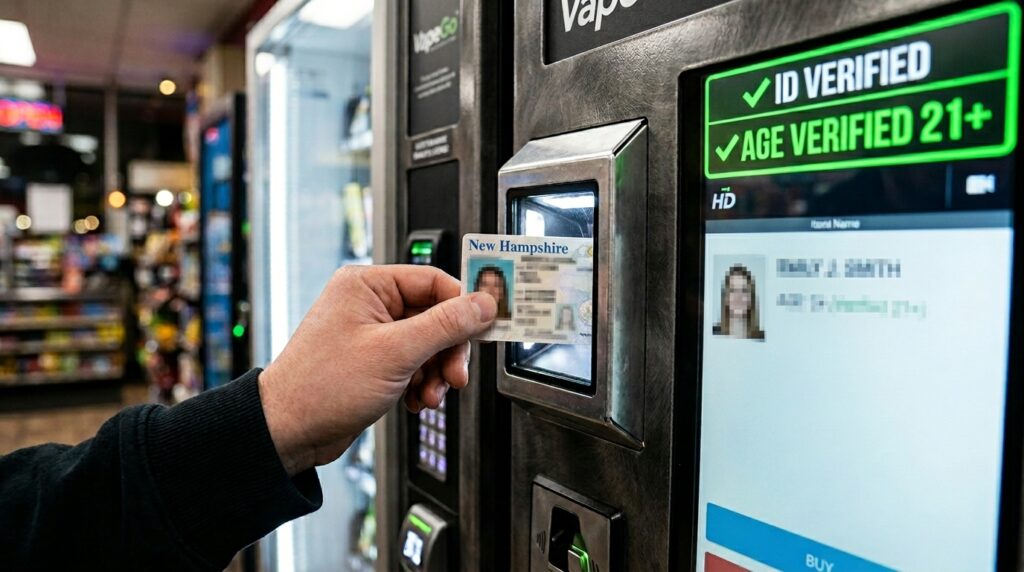
New Hampshire law prohibits the sale of tobacco and vapor products to anyone under the age of 21, consistent with federal Tobacco 21 law. Vending machines must be configured so that no sale can be completed without verified proof of age. (Source: RSA 126-K:6)
The state requires that vending machines in permitted adult-only locations incorporate effective access controls. Remote attendant activation or electronic age verification technology are the standard methods used to meet this requirement in practice.
“No person shall sell or give any tobacco product…to a person under 21 years of age.” (Source: RSA 126-K:6)
- Minimum purchase age is 21 years old.
- Machines must not allow uncontrolled access to products without age verification.
- ID scanning systems or remote attendant controls are strongly recommended to demonstrate compliance.
- Operators should document their age verification method as part of their compliance records.
If you are evaluating ID scanning technology or remote age verification systems for your machines, you can explore compliant age verification hardware and solutions designed for vape vending applications.
Product Restrictions
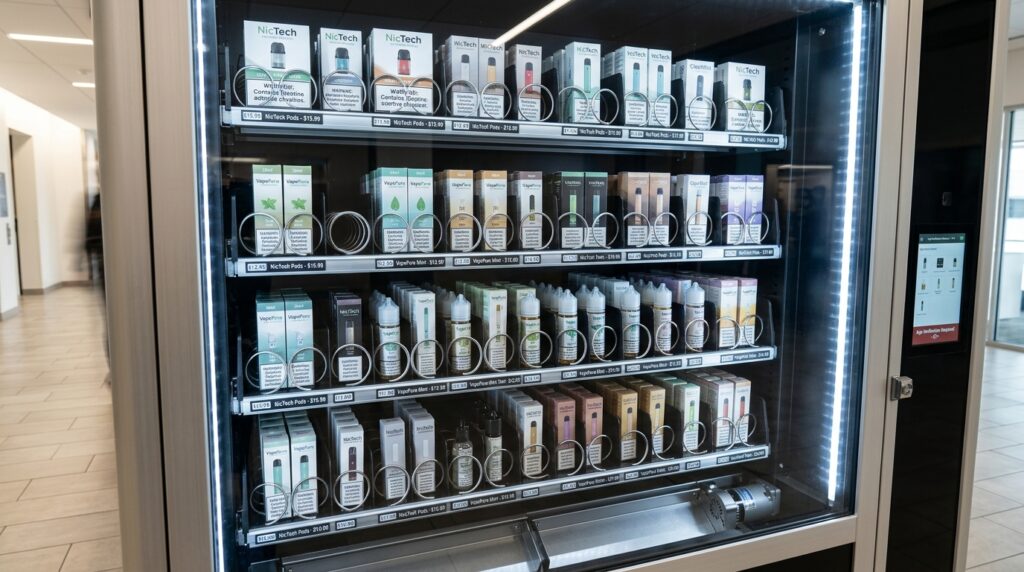
New Hampshire law defines vapor products broadly to include electronic cigarettes, e-liquid, and any product that delivers nicotine through vapor. These products fall under the same retail regulatory framework as traditional tobacco products for licensing and placement purposes. (Source: RSA 126-K:1)
At the federal level, all vaping products sold commercially must comply with FDA regulations under the Family Smoking Prevention and Tobacco Control Act. Products without FDA marketing authorization, including many flavored e-liquids that have not received Premarket Tobacco Application (PMTA) approval, carry significant federal compliance risk.
- Vapor products, including e-cigarettes and e-liquids, are regulated as tobacco products under New Hampshire law.
- Only products compliant with FDA authorization requirements should be stocked in machines.
- Operators should verify the regulatory status of every product SKU they intend to sell.
- Selling unauthorized or misbranded products exposes operators to both state and federal enforcement.
When selecting machines to stock and operate, choosing equipment from a reputable supplier matters. You can browse compliant vape vending machines built with regulatory compliance features in mind.
Taxes, Revenue Stamps, and Fees
New Hampshire imposes a tax on tobacco products, and vapor products sold at retail are subject to state tax obligations. The New Hampshire Department of Revenue Administration (NHDRA) administers tobacco and vapor product tax collection.
Under RSA 78:4, tobacco products are subject to a state excise tax. Vapor products were brought into a tax framework through subsequent legislative action. Operators should consult the NHDRA directly for the current applicable tax rate on vapor products, as these figures are subject to legislative update.
- Tobacco and vapor products are subject to state excise tax administered by the NHDRA. (Source: RSA 78:4)
- Tax stamps or equivalent compliance documentation may be required depending on product category.
- Operators purchasing products from licensed wholesalers or distributors should confirm that all applicable taxes have been paid at the distributor level.
- Retailers should maintain purchase invoices and tax compliance records for audit purposes.
- Contact the NHDRA directly to confirm current vapor product tax rates and stamp requirements.
Penalties and Compliance Risks
Non-compliance with New Hampshire tobacco and vapor product laws carries meaningful consequences. The NHLC has authority to suspend or revoke retail tobacco licenses for violations of RSA 178. (Source: RSA 178:28-a)
Violations related to underage sales under RSA 126-K can result in civil penalties, license suspension, and escalating fines for repeat offenses.
- First-time violations related to underage sales may result in fines and mandatory corrective action.
- Repeat violations can lead to license suspension or permanent revocation.
- Placement violations, including machines accessible to minors, are independently enforceable.
- Federal FDA enforcement for unauthorized product sales can run parallel to state penalties.
- Operators with revoked licenses may face waiting periods before reapplication is permitted.
Operational Best Practices
- Obtain your NHLC Tobacco Retailer License before placing any machine and renew it annually without lapse.
- Place machines exclusively in venues with enforced adult-only entry policies and physical access controls.
- Install ID scanning or remote attendant age verification technology on every machine to document compliance.
- Verify that every product stocked in your machine has current FDA marketing authorization.
- Maintain purchase records and tax documentation for all inventory sourced through licensed distributors.
- Train any staff involved in machine restocking or oversight on applicable state age verification laws.
- Conduct periodic self-audits of machine placement, product inventory, and license status.
- Consult compliance professionals when entering new host locations or adding new product categories.
Official Resources
- New Hampshire Liquor Commission – Licensing Portal
- RSA 178 – Tobacco and Vapor Product Retail Regulations
- RSA 126-K – Tobacco 21 and Youth Access Prevention
- New Hampshire Department of Revenue Administration – Tobacco Tax
- RSA 78 – Tobacco Tax
- FDA – Vending Machine Regulations for Tobacco Products