Kansas offers a compelling opportunity for vending entrepreneurs. The state’s blend of urban centers, agricultural hub infrastructure, and diverse population creates steady demand for convenience vending. Wichita, Kansas City, Topeka, and Overland Park each present distinct location types: office parks, manufacturing facilities, and transportation hubs. Kansas is home to major aerospace and aviation manufacturers like Spirit AeroSystems and Textron, plus significant military installations at Fort Riley and McConnell Air Force Base, all of which support high-density workplace populations. The climate means year-round operation is viable, though summer heat drives cold beverage demand and winter weather can affect outdoor placements.
Kansas has streamlined its LLC filing process, with formation fees that rank among the lowest in the nation. The state’s Department of Revenue and Department of Agriculture coordinate food safety oversight, and local sales tax varies by municipality. Kansas also phased out state sales tax on groceries starting in 2025, which affects how you price certain items.
Whether you plan to stock packaged snacks at office buildings, operate cold beverage machines at manufacturing facilities, or manage specialty vending at airports and rest stops, you must understand Kansas’s specific regulatory landscape. This guide walks you through business registration, product licensing, location compliance, and ongoing compliance requirements so you can launch confidently.
Step by Step Business Registration for Your Kansas Vending Operation
Choose Your Business Entity
Kansas allows you to operate as a sole proprietor, LLC, S-corporation, or C-corporation. For most vending operators, an LLC offers the best balance. You get liability protection (shielding personal assets if someone is injured or a product liability claim arises), pass-through taxation (profits flow to your personal tax return), and minimal ongoing compliance burden.
A sole proprietorship requires no filing and no LLC formation fee, but offers zero liability protection. Any lawsuit or injury claim targets your personal bank account and home. An S-corp can reduce self-employment taxes if your vending business generates substantial profit, but requires federal tax elections and more bookkeeping. A C-corp suits only larger multi-location operations and invites corporate-level taxation, which creates “double taxation” (the corporation pays income tax, then you pay tax again on dividends).
Most new vending operators in Kansas choose an LLC. Forming one in Kansas costs $85 online (or $90 by mail) for the Articles of Organization (as of 2026). That fee includes a $75 base filing fee plus a $10 processing fee. Some operators use registered agent services for an additional fee; this is optional but recommended if you do not want your home address on public filings. Processing typically takes 1 to 3 business days online, and expedited service is available through the Kansas Secretary of State.
For an in-depth look at LLC taxation and structure, visit the Vadviced.com guide to forming an LLC for vending or explore incorporating a vending business if you prefer corporate structure.
Reserve and Register Your Business Name in Kansas
You can conduct business under your own legal name without reservation. If you use a name that does not match your LLC name or sole proprietor legal name, you must file a Fictitious Name (DBA) registration with the Kansas Secretary of State. The name reservation fee is typically under $25. A DBA is valid for five years and must be renewed.
Search for existing Kansas business names and LLCs on the Kansas Secretary of State business search portal. If you find no conflicts, you can reserve the name or simply file it when you register your LLC. Avoid names that suggest you are a bank, insurance company, or government agency unless you hold proper licenses.
File Formation Documents with the Kansas Secretary of State
If you are forming an LLC, file Articles of Organization with the Kansas Secretary of State. Download the form or file online at sos.ks.gov. The form requires your LLC name, the name and address of your registered agent (can be yourself), the principal business address, and the manager or member structure. If you are incorporating, file Articles of Incorporation instead, specifying the number of authorized shares and director information.
Kansas processes online filings in 1 to 3 business days. Paper filings take longer. After filing, you receive a certificate of formation or incorporation via email (for online filers). Keep this document safe; you will need it to open bank accounts and obtain your EIN.
Obtain an EIN from the IRS
An Employer Identification Number (EIN) is a federal tax ID issued by the IRS. You need an EIN if you form an LLC taxed as a corporation, hire employees, or operate a partnership. Many sole proprietors use their Social Security number for business taxes, but an EIN adds a layer of privacy and is required if you have a separate business bank account.
Apply free online at IRS.gov. You receive your EIN immediately upon approval. The process takes about 15 minutes and requires your business name, address, and legal structure. No fee is charged.
Open a Business Bank Account
Open a dedicated business checking account at a Kansas bank or credit union. Bring your certificate of formation (or incorporation), EIN letter, and a photo ID. A business account keeps vending revenue separate from personal expenses, which simplifies tax filing and demonstrates that your LLC is a legitimate business entity. Commingling personal and business funds can allow creditors or plaintiffs to “pierce the corporate veil” and sue you personally.
Many Kansas banks offer no-fee or low-fee business checking. Compare options from local banks and national chains. Some offer discounted merchant processing rates for high-volume vending operators.
Register for a Kansas Sales Tax Permit
All vending sales are subject to Kansas sales tax unless the item is explicitly exempt. As of 2026, Kansas eliminated the state portion of sales tax on food and food ingredients, but local taxes still apply. Vending machine sales of beverages and prepared food are taxable at the local rate plus applicable state taxes on non-food items.
Register for a Kansas Sales Tax Permit through the Kansas Department of Revenue. You can apply online, by mail, or in person. There is no fee to obtain the permit, but you must file sales tax returns quarterly or monthly depending on your sales volume. Kansas’s statewide sales tax rate is 6.5% (as of 2026), applied to most goods. However, in Wichita (Sedgwick County), the combined rate is typically 7.5% (6.5% state plus 1% local). Check your specific city for local additions.
Since food (non-prepared) now has 0% state tax as of 2026, items like packaged snacks sold from vending may incur only the local portion. Prepared foods, hot drinks, and beverages remain fully taxable. Document your sales carefully and separate taxable from non-taxable items on your sales tax returns.
Register for Kansas Employer Accounts (If Hiring)
If you hire employees, you must register with the Kansas Department of Labor for unemployment insurance. You also need to register with Kansas for income tax withholding. The Department of Labor issues an unemployment insurance account number, and you begin paying quarterly premiums based on your payroll and industry classification.
If you operate as a sole proprietor or single-member LLC with no employees, you do not need an employer account. However, you must pay self-employment tax (Social Security and Medicare) on your vending profits via quarterly estimated tax payments to the IRS.
Product Type Requirements: How Licensing Changes for Different Vending Items
Choosing the right machine for each product category matters as much as the licensing track. You can browse vending machine inventory from VMFS USA to compare snack machines, beverage coolers, hot food units, coffee and espresso equipment, ice cream freezers, healthy vending platforms, and bulk vending machines. Matching the machine to the product category from day one prevents costly equipment swaps later, especially for refrigerated, frozen, and hot food categories that have temperature compliance built into the hardware.
Packaged Snacks
Packaged snacks (chips, crackers, cookies, granola bars) are the least regulated vending category in Kansas. Since packaged items are shelf-stable and require no temperature control, they do not trigger food handler licensing or special permits. You do need a sales tax permit and must comply with labeling rules (ingredient lists, allergen warnings). No special facility license is needed to stock or service these machines.
Cold Beverages
Cold beverages (canned soda, bottled water, juice, iced tea) are also exempt from food handler licensing if they remain in sealed, original packaging. Like snacks, they require only a sales tax permit. Vending machines dispensing these items do not require a separate food establishment license. However, if you add ice or dilute beverages on-site, you cross into prepared food territory and trigger licensing.
Hot Food and Prepared Meals
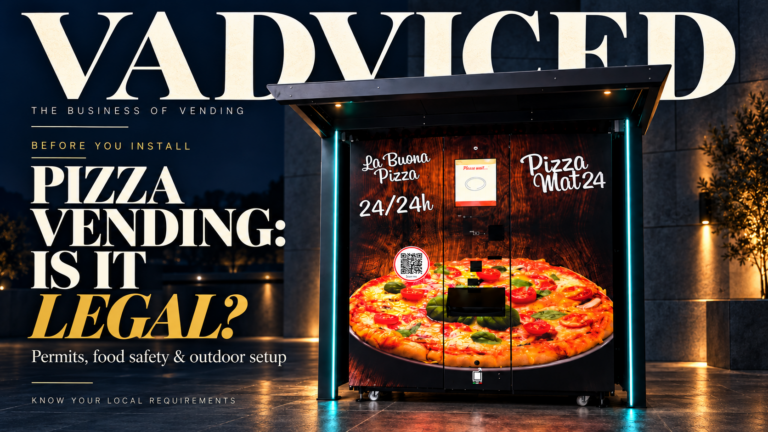
Hot food vending (pizza, hot sandwiches, prepared entrees) requires a Food Establishment License from the Kansas Department of Agriculture, Food Safety and Lodging Program. You must have a licensed commissary or shared commercial kitchen where you prepare the food. Vending machines that heat, cook, or combine ingredients on-site require a separate license for the machine location itself. Operators must complete food handler training and maintain temperature logs. Visit Vadviced.com’s guide to hot food vending permits for detailed steps.
Fresh, Refrigerated, and Dairy Items
Fresh sandwiches, salads, yogurt, and milk products require Food Establishment Licensing and must be stored and restocked using time/temperature monitoring. Kansas follows FDA guidelines: foods held above 41 degrees Fahrenheit for more than four hours must be discarded. You need a commissary license and must train staff on proper cold chain handling. These items demand more frequent restocking than shelf-stable goods.
Coffee, Espresso, and Hot Drink Machines
Automated coffee and espresso machines that dispense hot water and pre-packaged pods or instant coffee do not trigger food licensing if the machine mixes water with pre-packaged dry ingredients and the operator does not add milk, syrups, or other unprepared items on-site. However, machines that allow addition of fresh milk, cream, or syrups require licensing. A hot beverage vending setup with refrigerated creamer or fresh milk requires a Food Establishment License. Hot water alone is generally not considered a food product unless mixed with unlicensed ingredients.
Ice Cream and Frozen Items
Vending machines that dispense ice cream, frozen treats, or frozen meals must be licensed food establishments. Temperature maintenance is critical; machines must keep products at 0 degrees Fahrenheit or below. Kansas requires regular inspections and operator training. These machines often require more robust electricity and maintenance than other types.
Healthy, Organic, or Specialty Diet Items
Organic snacks, gluten-free products, keto bars, and other specialty items follow the same rules as their conventional counterparts. If they are shelf-stable and pre-packaged, no food license is needed. If they require temperature control or are prepared on-site, licensing applies. Marketing claims (organic, non-GMO, natural) do not change regulatory status; packaging and storage do.
Age-Restricted or Specialty Items
Tobacco products and tobacco vending machines in Kansas require a separate Tobacco Vending Machine Permit, issued by the Kansas Department of Revenue. The permit costs $25 per machine and must be renewed every two years. Additionally, you must obtain a Cigarette Vending Machine Operator’s Master License (no additional fee). These licenses restrict who can service the machines and require age verification. CBD and cannabis products are not legal to vend in Kansas; alcohol vending is also prohibited in most jurisdictions.
Bulk Vending
Bulk vending machines (gumballs, capsule toys, nuts dispensed by weight) require only a sales tax permit if the machine is mechanical and requires coins. No food license is needed for non-food items like toys. However, if your bulk machine dispenses food (nuts, dried fruit), the item’s shelf stability determines licensing needs. Shelf-stable bulk foods are exempt; items requiring temperature control are not.
Location Type Requirements: How Rules Change by Where You Place Machines
Securing high-traffic locations is the hardest part of running a profitable vending route, and cold-calling property managers rarely scales. VPlaced location sourcing for vending operators connects Kansas vending operators with property owners actively looking for vending services across offices, gyms, hospitals, schools, apartment complexes, and retail centers. Combining a structured location pipeline with the placement rules below speeds up route growth and protects you from spending weeks chasing locations that are already locked into long-term contracts with another operator.
Private Commercial Property
Vending on private commercial property (office buildings, retail stores, gyms) requires the property owner’s written permission but no government license from the location itself. You do need your sales tax permit and any food licenses for your products. Some property owners require liability insurance ($1 million is common). Negotiate commission splits or flat fees in a written agreement with the property owner to avoid disputes.
Public Schools and Universities
Kansas public schools and universities are subject to Smart Snacks in Schools rules under the federal USDA. Vending items offered to students during the school day must contain less than 35% sugar by weight, less than 10% saturated fat, and less than 480 milligrams of sodium per serving. High school students can access less-restricted vending before and after school. Contract with the school’s food service director or administration; they set all vending terms. Many schools require competitive bidding. Universities often have fewer restrictions if vending occurs in adult-only areas.
Hospitals and Medical Facilities
Hospitals and medical centers may impose their own nutrition standards, often stricter than state rules. Coordinate with the facility’s dietary or procurement department. Many hospitals require vendors to source through approved distributors. Your products must comply with food licensing rules, and you may need additional liability coverage (medical malpractice insurance riders) depending on the facility’s risk management policies.
Government Buildings
Vending in state and local government buildings (Department of Revenue offices, courthouses, DMV) typically requires approval from the building manager or facility director. Some buildings bid competitively; others have exclusive vending contracts. Federal placements (military bases, federal courthouses) require GSA Schedule certification if using that route, or direct negotiation with the facility. Kansas state buildings may require certification or background checks for contractors.
Office Buildings and Coworking Spaces
Office parks and coworking spaces are the largest vending market in Kansas. Most property managers welcome vending if you carry liability insurance. Negotiate a revenue-share agreement (typically 15% to 25% of sales) or a flat monthly fee. Provide the location with a signed agreement and proof of insurance before deploying machines.
Malls and Retail Centers
Shopping malls and retail centers often have exclusive vending contracts with large national operators, but smaller regional centers may be open. Contact the property manager or leasing office. Shopping centers may require higher insurance limits and strict appearance standards for machines. Foot traffic volumes are high, but so is competition.
Gas Stations and Convenience Locations
Gas stations and convenience stores may allow vending if it does not compete with their core business. Convenience store owners sometimes view vending as a threat and prohibit it. Get permission in writing before placing a machine. These locations have heavy traffic but may demand higher commission percentages (25% to 35% or more).
Rest Areas and Transportation Hubs
Kansas rest areas on Interstate highways are managed by the Kansas Department of Transportation (KDOT). KDOT typically contracts vending through a formal procurement process and may award exclusive or non-exclusive placement agreements. Contact KDOT’s Transportation and Logistics Division to request a vending agreement. Rest area placements are stable but competitive and subject to KDOT’s maintenance and appearance standards.
Airports
Wichita Dwight D. Eisenhower National Airport is Kansas’s largest airport. Airport vending requires a vendor badge, background check, and concession agreement with the airport’s food and beverage or retail director. Airports impose higher commissioning rates (30% to 50%) and may require exclusive product categories. International terminals have additional security and customs considerations.
Apartment Complexes and Residential Common Areas
Apartment communities may allow vending in common areas (lobbies, fitness centers) with the property manager’s approval. Residential placements typically draw lighter traffic than commercial locations. Negotiate terms directly with the property owner or management company. Some communities restrict operating hours or machine appearance.
Public Sidewalks and Street-Level Placements
Vending on public sidewalks or street-level locations requires a city permit from your local municipality. Kansas cities regulate sidewalk vending through health permits, food licenses, and location-specific permits. Contact your city’s Health Department or Zoning/Licensing office. Downtown areas in Wichita, Topeka, and Kansas City may have restrictions on machine size, appearance, or operating hours. Permits typically cost between $25 and $150 per year.
Kansas Agencies, Roles, and Fees
| Agency | Role in Vending | Current Fee or Requirement (as of 2026) |
|---|---|---|
| Kansas Secretary of State | LLC and corporation registration, DBA filing | $85 online (Articles of Organization); $25 DBA reservation |
| Kansas Department of Revenue | Sales tax permit, income tax withholding, cigarette vending licenses | No permit fee; sales tax return filing required monthly or quarterly; $25 per cigarette machine |
| Kansas Department of Agriculture, Food Safety and Lodging | Food establishment licenses, hot food vending oversight | License fee varies by food category; typically $100 to $500 annually |
| Kansas Department of Agriculture, Weights and Measures | Vending machine registration and inspection (scales, price displays) | Registration fee $25 to $50 per machine; biennial inspection |
| Kansas Department of Labor | Unemployment insurance, income tax withholding, workers compensation | Unemployment tax based on payroll; no fee to register account |
| Local City or County Health Department | Sidewalk vending permits, local food compliance | Permit fee $25 to $150 per location per year |
| Kansas Department of Transportation (KDOT) | Rest area and highway vending placements, inspection | Commission-based or flat fee; negotiated per placement agreement |
| Kansas Secretary of State, Business Filings | Annual Information Report (biennial filing) | $53 online or $55 by mail, due every two years |
Sales Tax, Income Tax, and Ongoing Compliance in Kansas
Sales Tax on Vending Sales. Kansas’s statewide sales tax rate is 6.5% (as of 2026), but food and food ingredients now have a 0% state rate as of January 2025. However, local taxes typically range from 1% to 3%, so the total tax on groceries and food items varies by location. Non-food vending items (gumball toys, magazines) remain subject to the full 6.5% state rate plus local taxes. Beverages and prepared foods are fully taxable. You must register for a sales tax permit with the Kansas Department of Revenue and file returns monthly, quarterly, or annually depending on your sales volume. Many vending operators file quarterly. You collect tax at the point of sale and remit it to the state; you do not pay tax on your wholesale purchases if you provide a resale certificate to your suppliers.
Income Tax and Business Deductions. Kansas has a graduated state income tax with rates of 5.2% on income up to $23,000 (single) or $46,000 (married filing jointly), and 5.58% on income above those thresholds (as of 2026). Your vending business profit is reported on your personal tax return (Schedule C for sole proprietors, or K-1 for LLC members). Deductible expenses include machine lease or purchase, fuel and vehicle mileage to service machines, product cost, insurance, sales tax paid on inventory, licensing fees, and depreciation. Do not deduct personal expenses. Track mileage and receipts meticulously. If your LLC is taxed as an S-corp or C-corp, different rules apply; consult a tax professional.
Annual Compliance and Reporting. If you formed an LLC, you must file an Annual Information Report (also called a biennial report) with the Kansas Secretary of State. The fee is $53 online or $55 by mail, due every two years. LLCs formed in odd years file in odd years; LLCs formed in even years file in even years. Deadlines are typically April 15. If you use a DBA, renew it every five years. If you hired employees, file quarterly payroll tax returns with the Kansas Department of Labor and the IRS. If you have a sales tax permit, file sales tax returns on the schedule assigned (monthly, quarterly, or annually). Failure to file can result in penalties, interest, and loss of business licenses.
Weights and Measures Registration in Kansas
Kansas requires registration and inspection of vending machines through the Kansas Department of Agriculture, Weights and Measures Program. The purpose is to ensure accurate pricing, weight, and volume measurements to protect consumers. Registration fees are typically $25 to $50 per machine, depending on the machine type and county. Many vending operators bundle this fee into their annual compliance costs.
Machines must display prices clearly and accurately, and any scales (for bulk items) must be certified and sealed by a Weights and Measures Inspector. Inspections generally occur biennially (every two years), though some counties may inspect more or less frequently. If a machine fails inspection, you must correct the issue (repair the scale, fix the price display) within a specified timeframe or the machine cannot operate. Penalties for non-compliance include fines and license suspension.
Common Legal Pitfalls in Kansas Vending
- Operating without a sales tax permit. Many new operators assume they do not need a permit if their sales are low. Kansas requires all vending sales to be reported and taxed, regardless of volume. Operating without a permit subjects you to back-tax liability, penalties, and potential criminal charges. Register with the Kansas Department of Revenue before your first sale.
- Placing machines on someone else’s property without a written agreement. Verbal handshakes lead to disputes and eviction. Always get written permission from the property owner, specify commission or fee terms, service hours, and how either party can terminate the agreement. Without a written contract, the owner can remove your machine without notice and without compensation.
- Failing to obtain a food license for hot or refrigerated items. Vending hot sandwiches, fresh salads, or dairy products without a Food Establishment License violates Kansas Department of Agriculture rules and carries fines of $100 to $500 per violation. Health inspectors will test products and shut down non-compliant operations. Budget for licensing and commissary fees if you plan to offer these items.
- Mingling personal and business funds. Using your personal bank account for vending receipts and expenses makes it impossible to track profit and loss accurately. It also allows creditors to sue you personally if your business is sued. Open a separate business bank account from day one and maintain clear records.
- Ignoring machine registration and weights-and-measures compliance. Vending machines must be registered and inspected. If your machine has an inaccurate scale or unclear pricing, you face fines and the machine may be impounded. Service your machines regularly and maintain inspection certificates.
- Stocking non-compliant items in school vending machines. Smart Snacks rules limit sugar, fat, and sodium in school vending. If you place high-sugar snacks in a Kansas school machine, the school can terminate your contract and demand repayment of commission. Review product specifications carefully before schools contracts.
- Allowing vending machines to fall into disrepair. A broken, dirty, or outdated machine damages your reputation and violates property owner expectations. Property owners reserve the right to terminate placement agreements if machines are not serviced regularly. Budget for weekly or bi-weekly restocking and machine maintenance.
- Neglecting to renew business licenses and permits. Kansas annual information reports must be filed every two years; DBA registrations must be renewed every five years; food licenses and tobacco permits have their own renewal cycles. Missing a deadline results in penalties and potentially the loss of the right to operate. Create a calendar reminder for all renewal dates.
- Underestimating local taxes and fees. Wichita, Topeka, Kansas City, and other cities impose local sales taxes, permit fees, and licensing requirements that layer on top of state fees. A machine at a Wichita location incurs 7.5% combined sales tax, not just 6.5%. Research your specific city’s rates and regulations before deploying machines.
- Failing to carry adequate liability insurance. If a customer is injured by a product or machine, you may be sued for damages. Many property owners require $1 million in general liability insurance as a condition of placement. Vending-specific insurance is inexpensive (often under $500 per year) and protects you from catastrophic personal liability.
- Not understanding the difference between sales tax and income tax. New operators sometimes confuse these. Sales tax is a pass-through tax you collect from customers and remit to the state. Income tax is a direct tax on your business profit. Both apply to vending; ignoring either will invite IRS or Department of Revenue scrutiny.
When to Bring in Specialized Legal Help
Most vending operators can handle business registration, sales tax filing, and basic compliance on their own or with help from accountants. However, certain situations warrant advice from an attorney experienced in vending law. A vending-specific legal firm can review contracts, advise on regulatory compliance in unusual locations, and defend you if a dispute arises. Below are scenarios where professional legal counsel pays for itself.
Specialized vending attorneys understand the nuances of food licensing, weights and measures, and location-specific zoning rules. They can also review your standard property owner agreements to protect your interests and ensure commission terms are enforceable. Many vending operators delay bringing in a lawyer until a problem has already cost them time and money. Investing upfront in a review of your first few contracts or a compliance audit can prevent far greater expense later.
If you need guidance on complex issues, the resources at Vadviced.com, a vending-specific legal services provider, offer detailed guides and can connect you with local counsel. For emergencies, Vadviced.com also covers vending legal requirements in plain language.
- Drafting or reviewing property placement agreements. A property owner’s standard contract may heavily favor the owner, limiting your ability to terminate or relocate machines. An attorney can negotiate terms that protect your investment and clarify commission calculations, service obligations, and dispute resolution.
- Negotiating rest area or airport placements. KDOT and airport concession agreements are complex and may include exclusivity, revenue guarantees, and detailed operational requirements. Legal review ensures you understand obligations before signing.
- Obtaining a food establishment license for hot or refrigerated items. Food licensing applications can be lengthy and may require commissary partnerships or facility upgrades. An attorney experienced in Kansas food regulations can guide you through the process and avoid rejections.
- Responding to a Department of Revenue audit or sales tax dispute. If the state audits your sales tax filings or claims you owe back taxes, an attorney can represent you and negotiate settlements. Attempting to handle audits alone often results in larger penalties.
- Defending against a product liability or personal injury claim. If a customer claims a product caused injury or illness, you need immediate legal representation. Vending-specific liability insurance should cover legal defense, but an attorney will manage the claim and protect your business assets.
- Resolving a contract dispute with a property owner or location manager. If a property owner demands additional fees, terminates your placement without cause, or claims you owe damages, an attorney can enforce your rights under the written agreement and pursue remedies if the owner breached.
- Expanding into new product lines or locations with unusual regulatory requirements. If you plan to vend hot meals, operate on government property, or establish vending at multiple sites, consult an attorney to ensure you understand all licensing, insurance, and compliance requirements for each scenario.
Your Next Steps to Launch Your Kansas Vending Business
Once your Kansas operation is live, growing the route depends on visibility and reputation as much as compliance. VMarketed (vending-specific SEO and content marketing) can help you with local SEO, Google Business Profile optimization, content strategy, and lead generation campaigns aimed at decision makers at your target locations. Operators who treat marketing as a launch-day priority typically reach their first 10 machines several months ahead of operators who rely solely on cold outreach.
Starting a vending business requires patience and attention to legal detail, but the process is straightforward if you follow each step. Below is your launch sequence, from formation through first machine deployment and ongoing compliance.
- Form your LLC by filing Articles of Organization with the Kansas Secretary of State ($85 online). Alternatively, operate as a sole proprietor if you prefer to skip this step, but an LLC offers liability protection that sole proprietors lack.
- Choose a business name and file a Fictitious Name (DBA) registration with the Kansas Secretary of State if your business name differs from your legal name. This costs approximately $25 and is valid for five years.
- Obtain an Employer Identification Number (EIN) from the IRS free at irs.gov. You do not need an EIN if you are a sole proprietor without employees, but it is recommended for privacy and to open a business bank account.
- Open a dedicated business bank account at a Kansas bank or credit union using your EIN letter and LLC certificate of formation (if applicable). Maintain a separate account for all vending revenue and expenses to establish corporate separation and simplify tax filing.
- Register for a Kansas sales tax permit with the Kansas Department of Revenue (ksrevenue.gov). There is no fee, and you can apply online. You will receive a permit number to display at your locations and use on sales tax returns.
- Determine your product types (packaged snacks, beverages, hot food, etc.) and identify corresponding licensing needs. If vending hot or refrigerated items, contact the Kansas Department of Agriculture to apply for a Food Establishment License and arrange a licensed commissary or commercial kitchen.
- Register your vending machines with the Kansas Department of Agriculture, Weights and Measures Program. Provide machine details and pay the registration fee ($25 to $50 per machine). Schedule a biennial inspection and maintain compliance with pricing and scale accuracy standards.
- Identify and negotiate your first vending locations. Contact property managers, office building owners, retail centers, or rest area managers to propose placement. Secure written permission and agree on commission rates, service hours, and termination terms. Provide proof of sales tax permit and liability insurance if requested.
- Deploy your first machine and begin collecting and reporting sales tax. Set up a quarterly or monthly sales tax filing schedule with the Kansas Department of Revenue. Track product costs and expenses for income tax reporting.
- Monitor compliance and plan for renewals. Set calendar reminders for biennial LLC information reports ($53 online, due every two years), DBA renewal (every five years), sales tax filing (quarterly or monthly), and machine inspection schedules. Maintain adequate liability insurance ($1 million general liability is standard) and budget for ongoing licensing and machine maintenance costs.